Understanding the ‘Godzilla’ El Niño
A rare weather pattern known as the ‘Godzilla’ El Niño is forming in the Pacific Ocean and is forecast to drive global temperatures to record highs later this year and into 2027. Scientists have warned that this phenomenon could lead to extreme weather events that impact people and wildlife.
The climate phase, which usually occurs two to three times a decade, causes spikes in global temperatures and affects rainfall patterns. It has been broadly predicted by scientists, including at the Met Office and NASA. This is because sea surface temperatures in the central Pacific have been rising faster than usual in recent weeks and have crossed thresholds used to identify the onset of El Niño conditions.
Gabi Hegerl, professor of climate system science at the University of Edinburgh, told The Independent: “El Niño causes widespread impacts around the world and usually drives global mean temperatures up by exposing more of the ocean surface to warmer waters so we expect record global mean temperatures.”
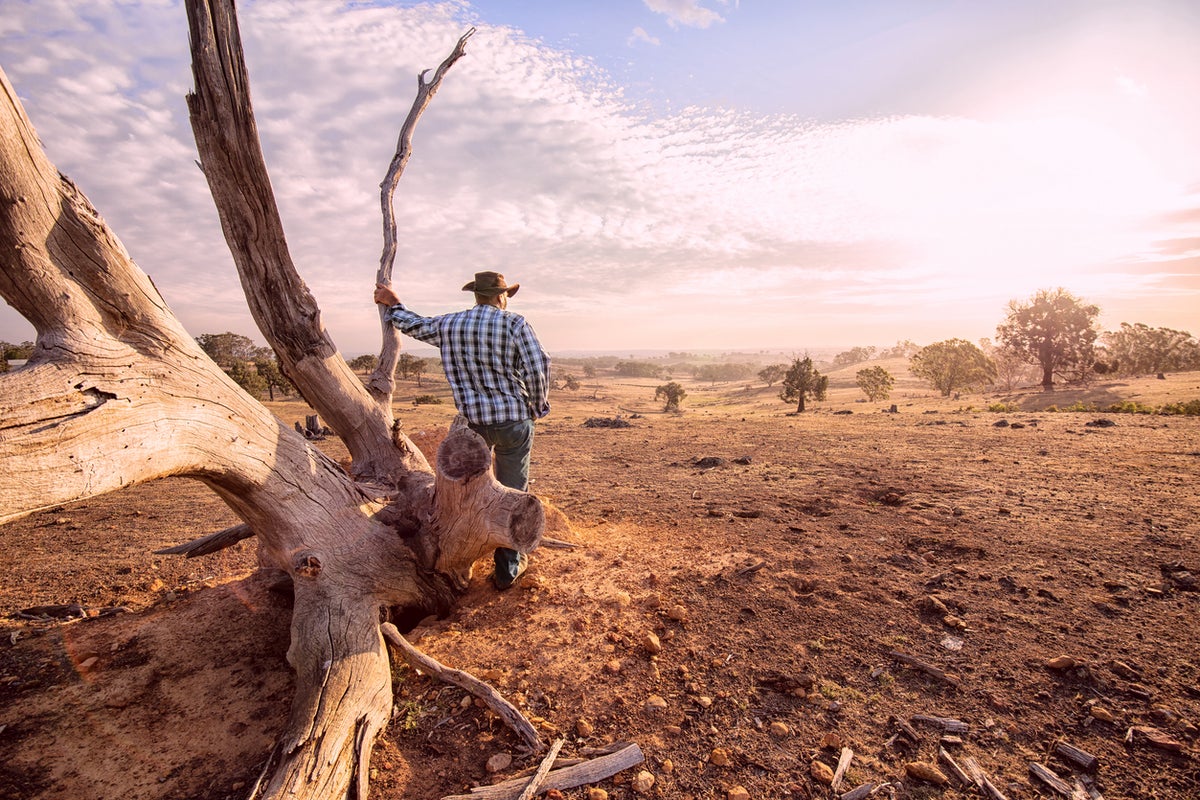
Furthermore, the phenomenon is expected to be supercharged by the emergence of another similar weather pattern – a positive Indian Ocean Dipole, which also tends to lead to a longer and drier dry season across Indonesia and Australia, raising fire and drought risks and leading to broader global extreme weather impacts. This has led to it being dubbed a ‘Godzilla’ El Niño in Indonesia.
Chris Brierly, professor of climate science at UCL, told The Independent: “The forecast is definitely for an El Niño and is at the larger side – whether that counts as a ‘Godzilla’ El Niño doesn’t really matter to someone who’s suffering the impacts of it.”
Climate forecasters monitor ocean temperature anomalies to predict the signature indicators of an oncoming El Niño with the current readings suggesting the 2026-27 event could be the strongest in modern history. El Niño conditions are usually considered to be on the way, once water temperatures in the Pacific Ocean reach 0.5C above normal. Met Office data shows this threshold has already been breached.
“The NASA forecast – I don’t think I believe it – but in the plume I’m looking at, NASA’s going all the way up to 3.5C,” Professor Brierly said. “Either way, this is an event that is coming and is strong.”
He said: “Instead of it being cold around the Galapagos islands and warm in Indonesia, actually, it smears out a bit and rainfall, convection and clouds moves out towards the centre of the Pacific. Obviously if you’re moving what is the driver of a lot of the atmospheric circulation around the globe – if you’re moving that and weakening it, then it is going to impact the rest of the global weather.”
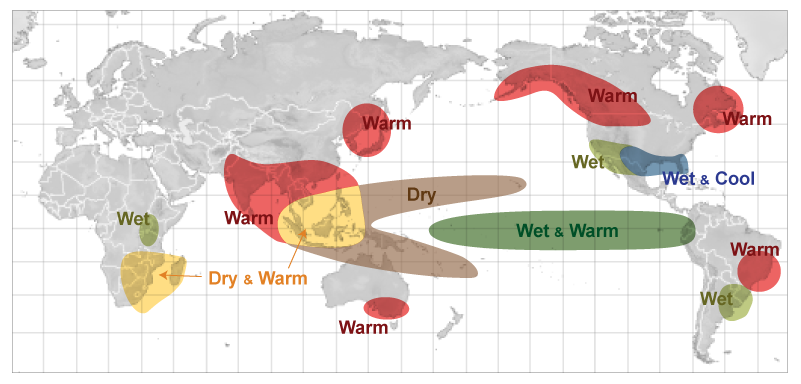
Impacts Across Different Regions
As well as drought conditions in Australia and Indonesia, in North America, the consequences could be heightened risks of intense storms later in the year, which could deliver unseasonably hot spells and heavy rainfall, raising risks of flash flooding and storm damage.
Timothy Osborn, professor of climate science at UEA, explained to The Independent that during El Niño, the resulting “huge region of convective rainstorms [in the Pacific] drives global patterns of weather.”
“When El Niño shifts the region with most convective rainstorms to the central Pacific, the central Pacific gets rainier but it causes drought in the western Pacific (Indonesia and the Philippines) and an increased risk of drought further afield in places like India and Australia.
“It also causes wetter conditions with increased risk of floods in a few regions such as coastal Ecuador and Peru [as well as] parts of the USA and Mexico,” he said.
“If the El Niño is exceptionally strong, which some forecasters predict it will be, then some of these impacts could be very significant with knock-on effects for society such as increased wildfire risk, damaging air quality and poor harvests in regions where El Niño triggers droughts,” he added.
The Met Office agrees that the forecast models point towards the 2025-26 El Niño being “potentially comparable with some of the most impactful episodes in recent decades.”
In terms of time frame, the effects of El Niño begin to peak towards the end of the year, and then usually end around February.
“I think we’re going to see weather events that we’ve never seen in modern history before,” WFLA-TV chief meteorologist and climate specialist Jeff Berardelli, in Florida, said last week.
El Niño years also tend to increase the likelihood of colder than average winters in the UK, studies indicate. This is due to changes to the jet stream, which makes it more likely that cold air from the north is swept further south.