A Remarkable Discovery by a Young Fossil Hunter
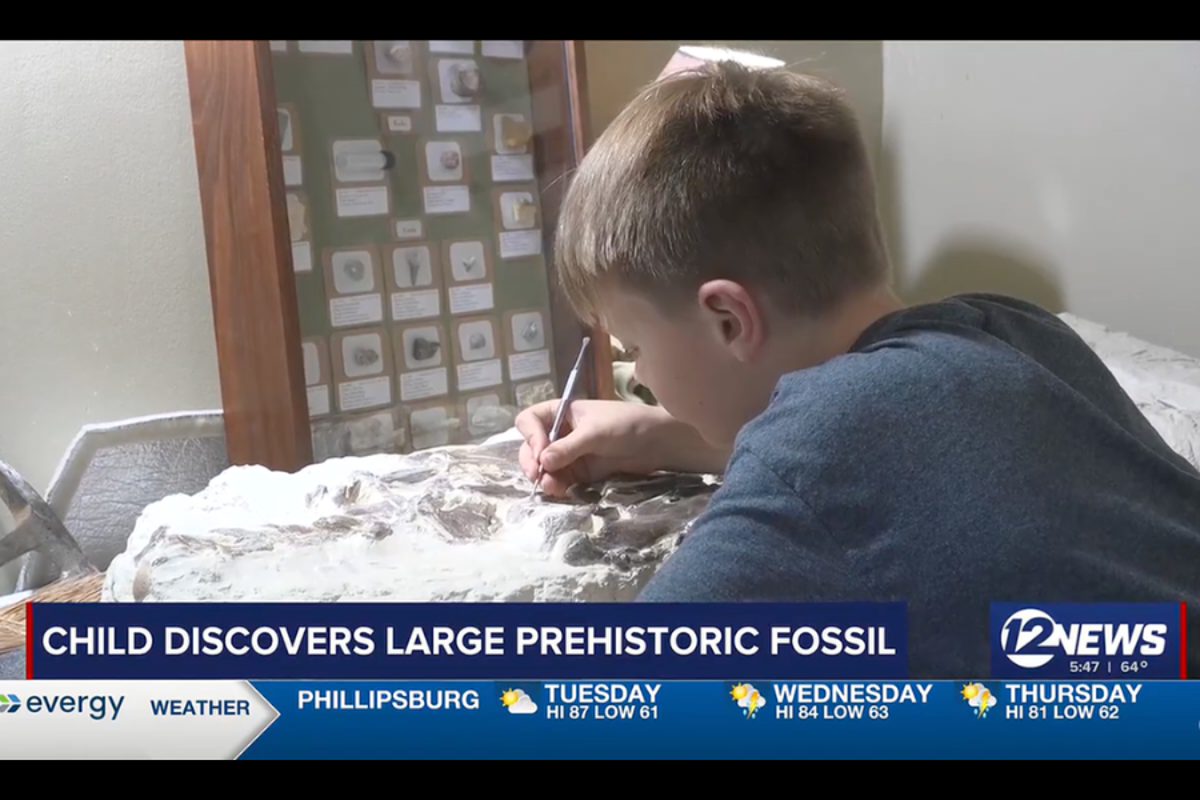
A 12-year-old boy from Kansas recently made an incredible discovery during a trip with his 4H club. While exploring the area with the Sedgwick County 4-H Geology Club, Corbin Bullard found an 80-million-year-old marine fossil buried underground. This remarkable find has captured the attention of experts and locals alike.
Corbin, who was 11 at the time, discovered the fossil in September while visiting Jewell County. The 4-H program is designed to teach children aged 7 to 19 about earth science, rocks, and fossils through hands-on activities. His mother, Wendy Bullard, shared the moment when Corbin first saw the fossil: “He said, ‘Whoa.’ So we looked down and found what I think were seven or eight large vertebrae.”
The excavation process took three separate trips to fully uncover Corbin’s discovery. Although Corbin has always been fascinated by dinosaurs, experts identified the fossil as a tylosaurus, a type of mosasaur, or large marine reptile that lived in an ancient sea covering Kansas during the Cretaceous period around 80 million years ago.
“Pretty much all of the middle of America used to be underwater,” Corbin explained to the news station. 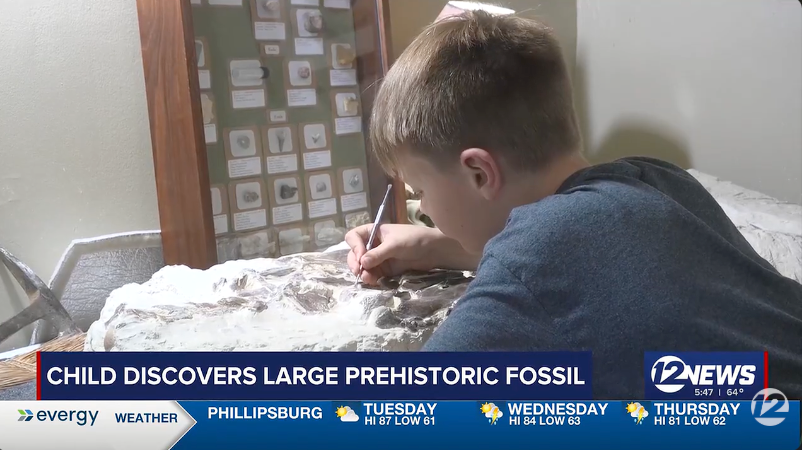
The specific species of the marine creature, known as Tylosauraus proriger, could grow up to 45 feet long and are related to modern-day snakes. These creatures lived during the same time as the dinosaurs but are not classified as dinosaurs themselves. According to National Geographic, they moved through the water using their tails and had paddle-like flippers.
The fossil consists of eight pieces and stretches more than 15 feet in length. Corbin has already spent at least 30 hours carefully cleaning it, he said.
“I feel like it’s very surreal to have had this happen. I’m very proud of Corbin for sticking through it and finding everything,” said Stephanie Hays, the Sedgwick County 4-H agent.
Corbin will soon have the opportunity to showcase his findings at the Sedgwick County Fair from July 8 to 11. This event will give him a platform to share his discovery with the community and inspire others to explore the wonders of paleontology.
The Significance of the Discovery
The discovery of the tylosaurus fossil is significant not only for its age but also for what it reveals about the prehistoric environment of Kansas. During the Cretaceous period, much of the central United States was submerged under a vast inland sea. This ecosystem supported a variety of marine life, including the tylosaurus, which was one of the top predators of its time.
Experts believe that the fossil provides valuable insights into the biodiversity of the region during that era. It also highlights the importance of amateur fossil hunters in contributing to scientific knowledge. Corbin’s dedication and passion for geology have led to a rare and important find that will be studied and appreciated for years to come.
The Role of 4-H in Fostering Scientific Curiosity
The 4-H program plays a crucial role in fostering scientific curiosity among young people. By engaging students in hands-on learning experiences, it helps them develop a deeper understanding of the natural world. Corbin’s discovery is a testament to the impact that such programs can have on inspiring future scientists and explorers.
Through activities like fossil hunting, participants learn about the history of the Earth and the processes that have shaped it over millions of years. These experiences not only educate but also encourage a sense of wonder and appreciation for the planet’s rich geological heritage.
Looking Ahead
As Corbin prepares to present his fossil at the Sedgwick County Fair, he is likely to gain even more recognition for his achievement. His story serves as an inspiration to other young people interested in science and nature. It also underscores the value of perseverance and a love for learning.
In addition to the fair, there may be opportunities for Corbin’s fossil to be displayed in local museums or educational institutions. Such displays can help raise awareness about the importance of preserving and studying fossils, ensuring that future generations can learn from these ancient treasures.
Overall, Corbin’s discovery is a remarkable example of how a single individual’s curiosity and determination can lead to significant contributions to science. It is a reminder of the endless possibilities that lie in the natural world, waiting to be explored and understood.