Mercury’s Ice Deposits: A Rapid Formation from a Cosmic Collision
New research suggests that the ice deposits found near Mercury’s poles may have formed in just one Mercurian day following a massive collision with a comet or asteroid. This study, published in the Journal of Geophysical Research: Planets, offers an intriguing explanation for how water could have reached and remained on the planet despite its extreme surface temperatures.
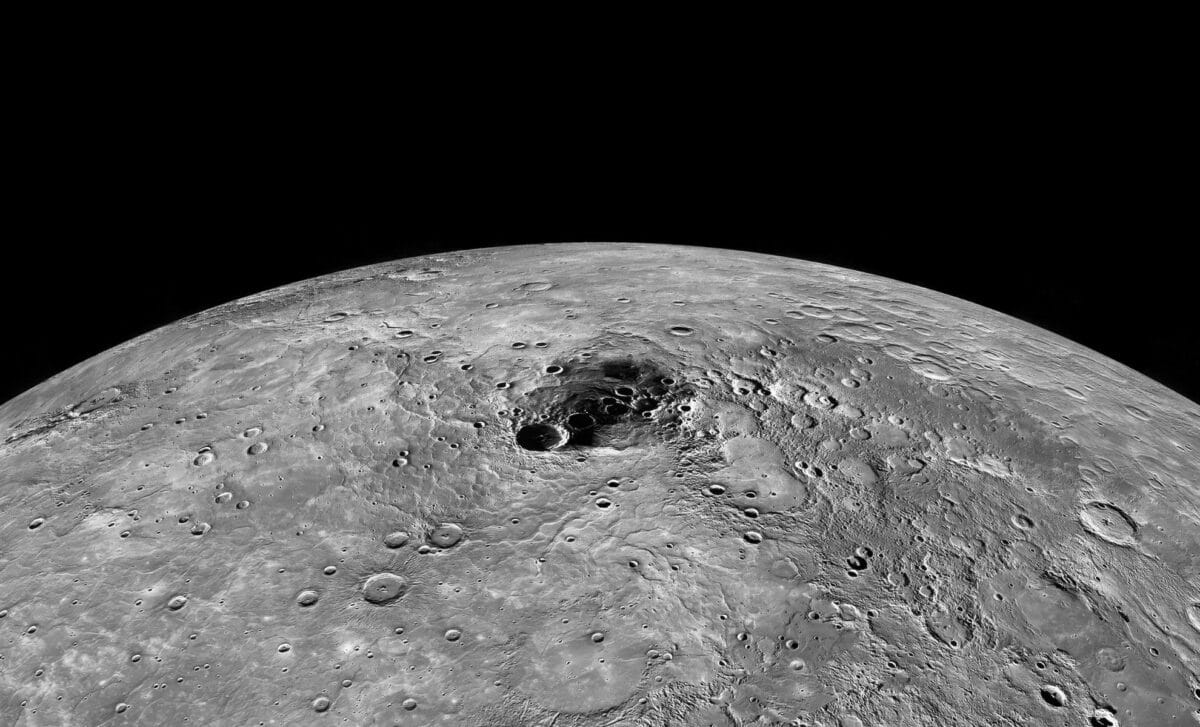
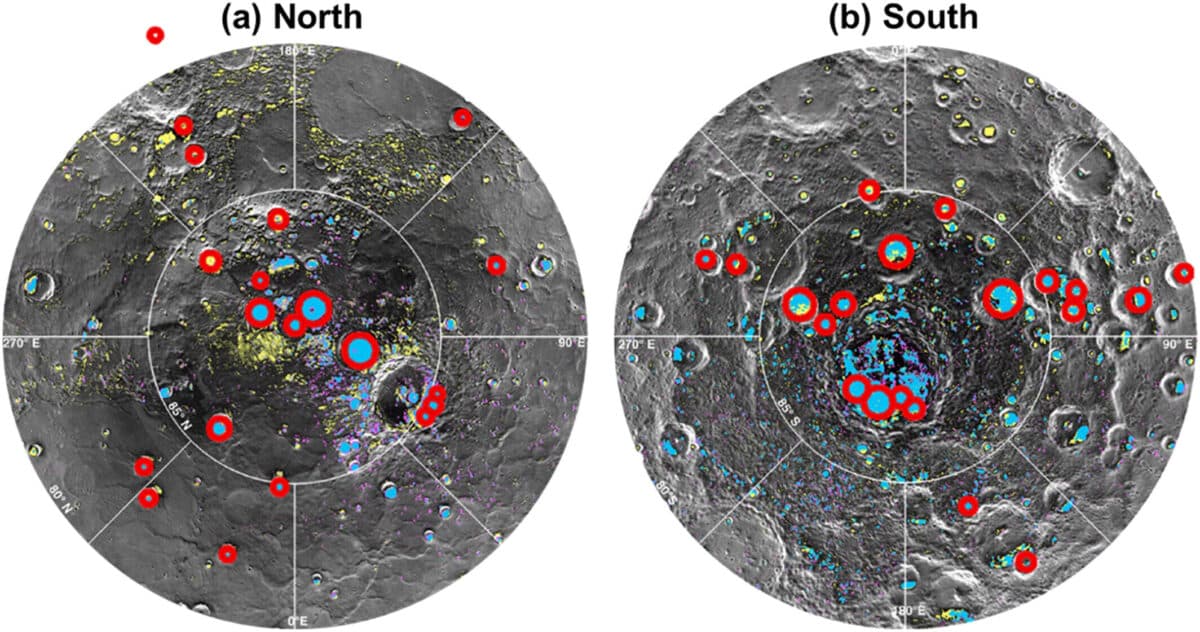
Mercury, the closest planet to the Sun, experiences surface temperatures that can exceed 430°C. Its thin exosphere makes the survival of water seem almost impossible. However, radar observations and data from spacecraft have repeatedly detected bright, reflective regions near the planet’s poles—regions that scientists believe contain ice.
The new study proposes that the impact that created the 97-kilometer-wide Hokusai crater may also be responsible for delivering water to these permanently shadowed craters, where temperatures are low enough for ice to persist over long periods.
Simulating a Cosmic Collision
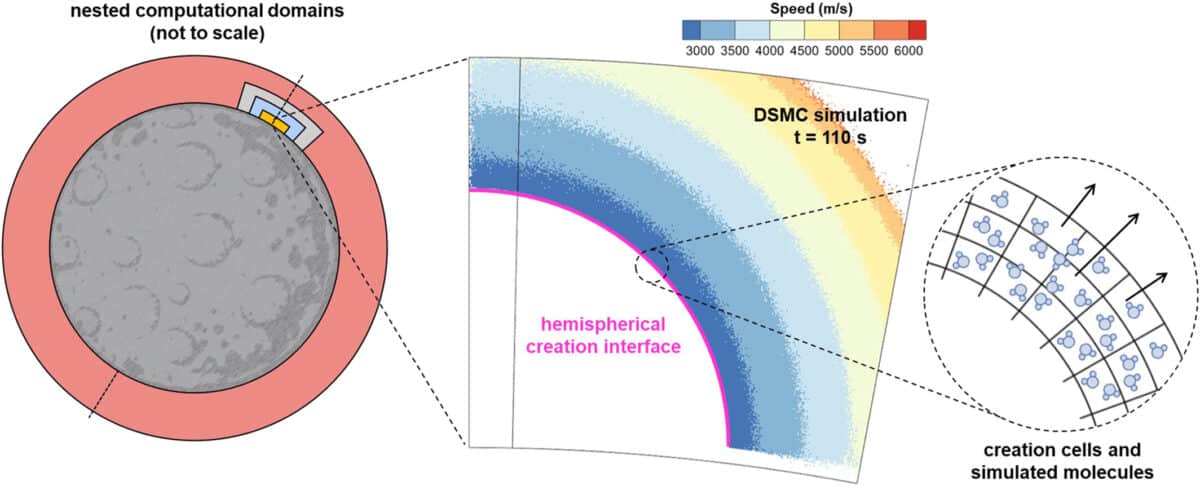
To test this theory, researchers conducted simulations of a collision involving a comet or asteroid approximately 17 kilometers wide traveling at 30 kilometers per second. The models incorporated updated maps of Mercury’s permanently shadowed regions and improved surface temperature estimates.
Two scenarios were compared. In the first, water released by the impact dispersed directly into Mercury’s thin exosphere. In the second, the collision generated a dense, temporary atmosphere filled with water vapor. The results of the second scenario were dramatically different.
Water Vapor Spreads Across Mercury
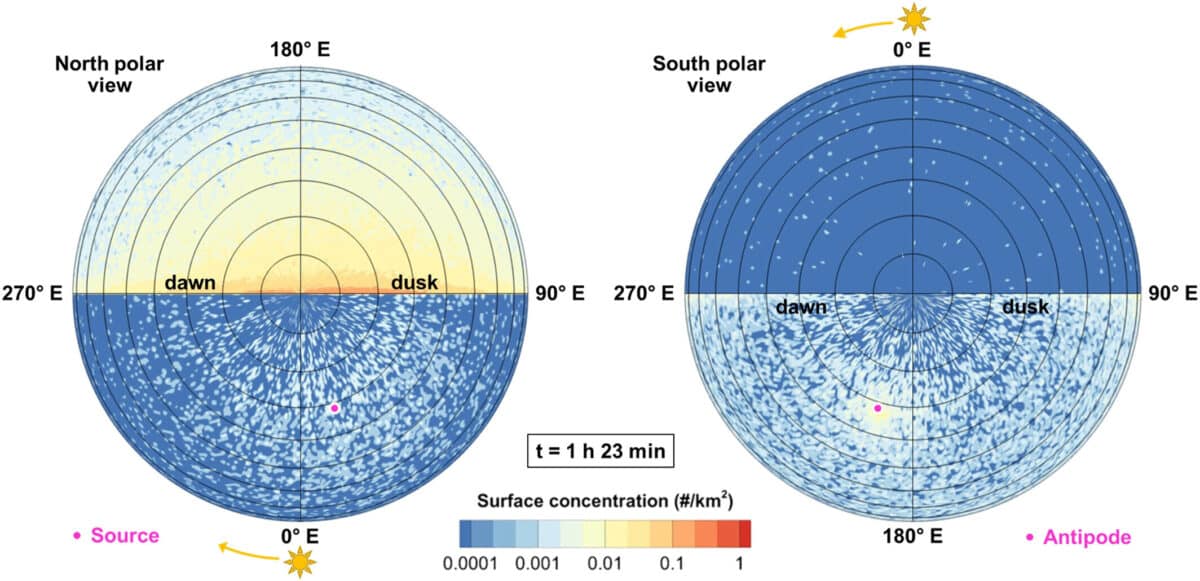
The study found that less than an hour after the impact, a water-rich atmosphere had expanded around the entire planet. While sunlight quickly destroyed some of the water through photolysis, a significant fraction survived and eventually migrated toward the cold polar craters.
A key process identified in the study is atmospheric self-shielding. In this scenario, dense water vapor blocks incoming solar radiation, protecting other water molecules from being broken apart. The paper noted:
“The large amount of water released in a Hokusai-scale impact means that this self-shielding effect has a strong influence; by the end of one solar day, ∼96% of the water vapor released in the collisionless, optically thin simulation was photodestroyed, compared to ∼46% in the impact-generated atmosphere simulation.”
Simulations Show Billions of Kilograms of Ice
The simulations revealed that a Hokusai-scale impact could deliver about 2.3 × 10¹³ kilograms of water ice to Mercury’s polar regions. This amount aligns with the lower end of current estimates for the planet’s ice reserves.
The models also showed a more balanced distribution of ice between Mercury’s northern and southern poles. Because the vapor lasted longer in the denser atmosphere scenario, material released in the northern hemisphere was able to reach southern cold traps.
Increased Preservation of Water
Atmospheric self-shielding significantly increased the amount of water preserved after the collision. In the baseline simulation with a thinner atmosphere, only 3.4% of non-escaping vapor became trapped in cold regions. In the denser atmosphere model, this number rose to 22.4%.
These findings support the idea that Mercury’s ice may have arrived during a short, violent event rather than through slow accumulation over billions of years. Most of the process unfolded within a single Mercurian solar day, equal to 176 Earth days.
Ice Deposits May Still Be Too Thin
Despite the large amounts of ice produced in the simulations, one issue remained. The deposits formed in the models were thinner than the ice layers scientists believe exist on Mercury today.
The study found that the simulated deposits reached a maximum thickness of around 37 centimeters. Radar observations suggest some real deposits may measure several meters thick.
Potential for a Larger Impactor
Because of this discrepancy, researchers think the original impactor may have been larger and slower than the one tested in the simulations. A slower-moving object could potentially preserve more water before solar radiation destroyed it.
The team also highlighted several limitations in the study. The models focused only on water and did not include other volatile materials released during the impact. Longer-term processes such as space weathering and impact gardening were not included either.
Future observations from the BepiColombo mission, which is currently traveling the planet, could help scientists better understand the thickness and distribution of the planet’s hidden ice.