Spacewalk Achieves Scientific and Technical Milestones
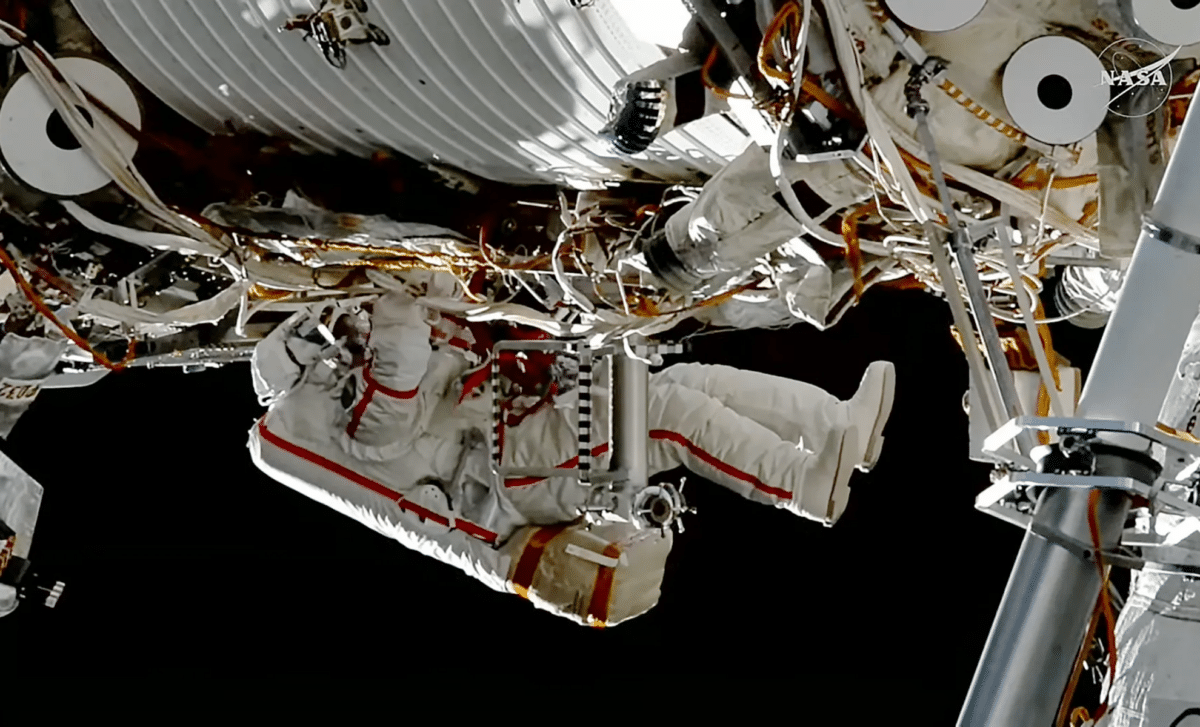
Two cosmonauts successfully returned to the International Space Station (ISS) on Wednesday after completing a well-planned spacewalk that achieved several scientific goals. The operation showcased the ongoing efforts to improve research in microgravity while ensuring the station’s critical systems remain functional.
Science Objectives Achieved During Spacewalk
During the 6-hour, 5-minute mission, Sergey Kud-Sverchkov and Sergei Mikaev accomplished a series of high-priority experiments crucial for understanding life and material sciences in orbit. The team removed a microorganism study from the Poisk module, providing data that could influence future research into microbial growth in microgravity. They also retrieved a cassette from the Nauka module, which contains measurements detailing semiconductor formation in space. This process has potential applications for next-generation electronics both on Earth and in orbit.
In addition, the cosmonauts installed a new device on the Zvezda service module designed to detect bursts of solar radiation from solar flares. These events can disrupt satellite communications and pose risks to astronauts. The data collected will help scientists better understand the behavior of solar particles and improve space weather forecasting.
Addressing Technical Challenges On The ISS
Beyond the scientific achievements, the spacewalk also addressed a technical issue with the Progress 94 cargo spacecraft. One of the Kurs rendezvous antennas had failed to deploy following its March launch. Kud-Sverchkov and Mikaev photographed the antenna and secured it with a tie-down, ensuring it remains safe for future operations. This preventative action is essential for station safety and highlights the dual nature of spacewalks, which often combine research and maintenance.
The operation marked the second spacewalk for Kud-Sverchkov and the first for Mikaev, adding to the ISS’s rich history of 279 spacewalks dedicated to assembly, upgrades, and maintenance. The skill and precision required for these excursions exemplify the coordination between ground teams and astronauts to maintain the station’s research capabilities.
NASA Highlights Continuous ISS Research
NASA emphasized that this spacewalk reflects the station’s ongoing role as a laboratory in orbit, where experiments in microgravity provide insights not possible on Earth. The agency highlights that retrieving and installing experiments in space is essential for advancing fields such as materials science, microbiology, and space weather monitoring. Through social media and dedicated updates, NASA continues to share real-time progress from its crew aboard the ISS, ensuring transparency and engagement with the public.
Key Achievements of the Spacewalk
- Microbial Research: The removal of a microorganism study from the Poisk module provided valuable data on microbial growth in microgravity.
- Semiconductor Formation: Retrieval of a cassette from the Nauka module offered insights into semiconductor formation in space, with potential applications for advanced electronics.
- Solar Radiation Detection: Installation of a device on the Zvezda service module aimed to monitor solar flares, improving space weather forecasting.
- Technical Maintenance: The cosmonauts addressed a malfunction with the Progress 94 cargo spacecraft by securing a non-deployed antenna.
Future Implications
The successful completion of this spacewalk underscores the importance of continuous research and maintenance on the ISS. As space exploration advances, the ability to conduct experiments and address technical issues in orbit becomes increasingly vital. The data gathered from these missions contributes to scientific knowledge and technological innovation, benefiting both space and Earth-based applications.