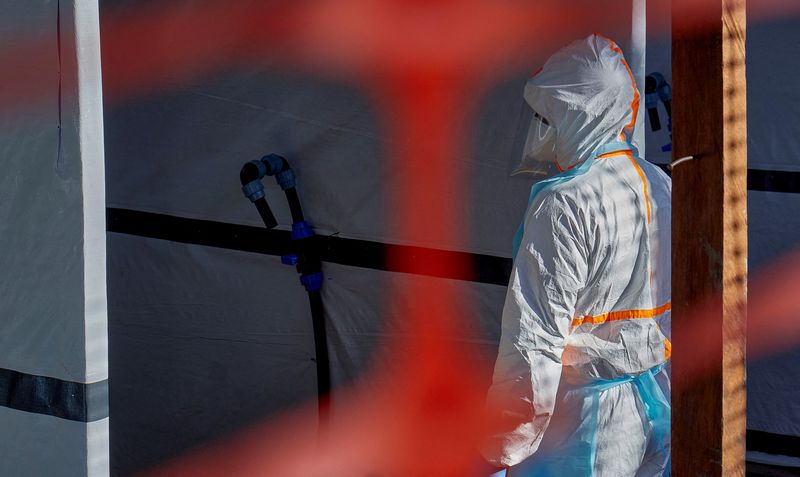
Global Health Efforts to Combat Ebola Bundibugyo
A significant step has been taken in the fight against the Ebola Bundibugyo virus, with the Coalition for Epidemic Preparedness Innovations (CEPI) announcing a $60 million investment to support the development of vaccines. This funding will be allocated to Moderna and two other groups, aiming to accelerate the creation of effective shots against this deadly strain of the virus that has been impacting eastern Democratic Republic of Congo.

CEPI’s Role in Vaccine Development
CEPI, which played a crucial role in the development of vaccines during the height of the COVID-19 pandemic, is now turning its attention to the Ebola Bundibugyo outbreak. Richard Hatchett, the head of CEPI, expressed optimism about the potential to have vaccines ready for trials within a few months. However, he also highlighted the urgency of the situation, noting that there are currently no approved vaccines or treatments for this particular strain of the virus.
Hatchett emphasized that every day counts in the race against this deadly disease. He also pointed out that the promise of vaccines on “a not infinitely distant horizon” should help initiate discussions about who would purchase and fund any roll-out. Despite these positive developments, he cautioned that vaccine development can be unpredictable, and the challenging security situation in eastern Congo could complicate clinical trials.
Current Outbreak Statistics
According to the Africa Centres for Disease Control and Prevention and the World Health Organization, the outbreak has resulted in 282 confirmed cases, including 42 deaths, and around 1,100 suspected cases. In addition to the cases in Congo, nine cases have been confirmed in Uganda, including one death. The global health agencies have declared the outbreak a public health emergency, underscoring the severity of the situation.
Funding for Vaccine Development
CEPI has committed up to $50 million to support the preclinical development and early clinical testing of Moderna’s investigational Ebola Bundibugyo vaccine candidate. This funding will also support manufacturing and progression to later-stage trials if early data are positive. Moderna stated that the funding would be used to advance the vaccine through various stages of development.
In addition to the investment in Moderna, CEPI will also invest up to $8.6 million for a shot developed by the University of Oxford and manufactured by the Serum Institute of India, and an initial $3.2 million for a vaccine developed by the International AIDS Vaccine Initiative (IAVI).
Vaccine Technologies and Past Successes
The IAVI’s single-dose Bundibugyo vaccine candidate uses the same technology as Merck’s approved vaccine Ervebo for the Zaire strain, the first strain of Ebola to be discovered in what was then Zaire and is now Democratic Republic of Congo. This vaccine has shown survival benefit in animal studies.
Oxford’s candidate, ChAdOx1 Bundibugyo, uses the same technology as that of the Oxford/AstraZeneca COVID-19 vaccine. Hatchett noted that Oxford and Serum had demonstrated in a different outbreak last year—Rift Valley Fever in Mauritania and Senegal—that they could make doses ready for trial in around six weeks, far quicker than typical timescales that have in the past run to years.
Ensuring Access to Vaccines
Once a vaccine is developed, Hatchett emphasized that the next challenge is ensuring access to the shots where they are needed. He mentioned that 300,000 doses of Ervebo were needed to bring the 2018-2020 Ebola Zaire outbreak in a similar region of Congo under control.
Additional Funding Commitments
Separately, the global vaccine alliance Gavi committed up to $50 million to the Ebola response, and the World Bank’s Pandemic Fund announced up to $220.6 million in grants. These commitments highlight the international community’s recognition of the urgency and importance of addressing the Ebola Bundibugyo outbreak effectively.