The Art of Reimagining Waste
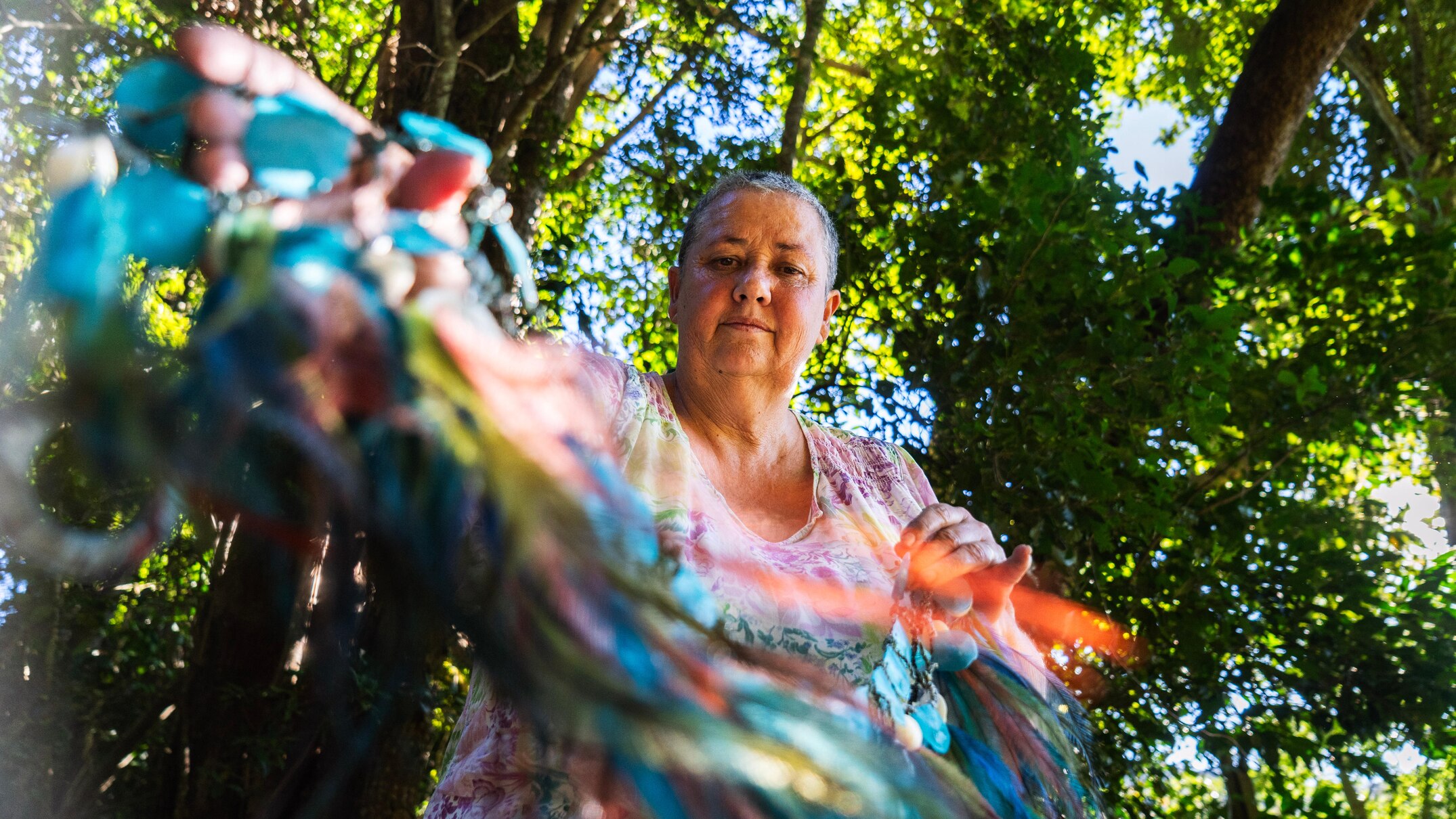
In the front yard of her home, nestled in the picturesque Whitsundays, Felicity Chapman strips the last pieces of flesh and sinew from a strip of barramundi skin. With careful precision, she uses a large-handled knife and a scalpel for more intricate work, following a process she learned entirely through trial and error. Her goal is to give the skins a new life as wearable art.
“I work with fish skins that are destined for the garbage bin,” Ms Chapman said. She also uses barramundi scales to create dance overskirts, headdresses and jewellery. The meticulous work will feature at the Cairns Indigenous Art Fair as part of her collection “Skintight”, which includes tops, skirts and pants made from fish, kangaroo and crocodile leather.
Figuring Out a New Technique
When the idea first came to Ms Chapman, she had no way to transform the skins into a usable material. She noted that while there was preservation among Aboriginal and Torres Strait Islanders for kangaroo and possum skins, there was little information on fish skins. As a woman, using the tanning techniques unique to the Ngaro people in the Whitsundays would have been a breach of cultural law.
Instead, Ms Chapman drew inspiration from First Nations communities in the Northern Hemisphere, adapting techniques for north Queensland’s humid climate. For her, the process is about caring for country and reconnecting with culture.
“My parents didn’t allow us to be brought up with our culture. There was a lot of fear about being the next stolen generation. So, for me, it guides everything,” she said.
Market Waste Reimagined
Ms Chapman sources her raw materials from a fish market in nearby Airlie Beach, run by Callum Patience. “It was a random one. Felicity came in one day, and she wanted to know if fish skins were available,” Mr Patience said. Even though the market tries to use any off-cuts, he said between 20 and 30 kilograms of skins would be thrown away each day.
“So, we give her barramundi skins and coral trout skins, which are normally a by-product that goes into landfill anyway.” The team has been impressed by Ms Chapman’s work. “Felicity has brought in quite a few different samples for us to have a look at, and she dyes them with different pigments, and it’s quite textural, it’s very strong, it’s quite sturdy. It’s quite amazing the stuff she does.”
Growing Interest in Biomaterials
Kamyar Shirvani Moghaddam, an associate professor in fashion and textiles at RMIT University, said biomaterials were a “unique opportunity” to reduce waste across both the food and textile industries. Dr Moghaddam highlighted that fish leather joined a growing list of alternative materials emerging in fashion, including mushroom and pineapple-based leather products.
“We are definitely going to see growing interest in alternative and bio-based materials in Australia, especially from consumers who care about sustainability,” he said.
Using Every Part of the Catch
For Ms Chapman, the practice is about more than just fashion. “Art is such a powerful tool to solve problems,” she said. One of the traditional foundations of all First Nations’ culture is that you fully utilise the resources that you harvest, hunt, gather. “We have very little waste traditionally. So it’s trying to go back to that practice of ‘how do we utilise everything?’”
This approach not only reduces waste but also serves as a reminder of the deep connection between culture, environment, and sustainability. Through her innovative work, Ms Chapman is not only redefining what is possible with discarded materials but also fostering a deeper appreciation for the natural world and the traditions that have long valued every part of the catch.