The New Generation Races Around the Globe: A Look Back and a Leap Forward
More than two decades ago, when the Australian Broadcasting Corporation (ABC) first unveiled Race Around the World, the planet itself felt like a different place. Handheld digital cameras were a novelty, and staying in touch with loved ones back home was often a logistical feat, with one memorable instance seeing a contestant completely out of contact for days in a precarious situation. The original concept aimed to leverage this emerging technology to produce unvarnished, authentic documentaries that explored diverse global cultures. While many participants went on to forge successful careers in media, it was the irreverent John Safran who truly captured the public’s imagination.
Safran masterfully employed the show’s format to craft a series of insightful and often humorous segments. His escapades, including streaking in Israel, hinted that comedy might resonate more strongly with audiences than straightforward travelogues. He ultimately clinched the audience choice award, though his journey was marked by disqualification for covertly filming priests during a mass.
Fast forward to today, and the landscape of content creation has been utterly transformed. The ability to produce short films and share them online is now commonplace, and for a select few, it has even become a viable career path. However, for younger demographics, the ABC might not be the first port of call. Twenty-five years ago, the national broadcaster held a significant appeal for a youth audience, offering them a platform to showcase their documentary aspirations. But in the contemporary media environment, the question arises: what does the ABC offer this demographic in 2026?
Racing Around the World, Again
The new iteration of Race Around the World, helmed by the engaging Zan Rowe, certainly upholds the tradition of whisking contestants across the globe. Crucially, it also bestows upon them a valuable spotlight. In an era saturated with online content, appearing on the ABC provides a distinct advantage, elevating participants above the general digital noise. Perhaps most significantly, the show offers a structured environment for receiving constructive feedback – a point we will explore further.
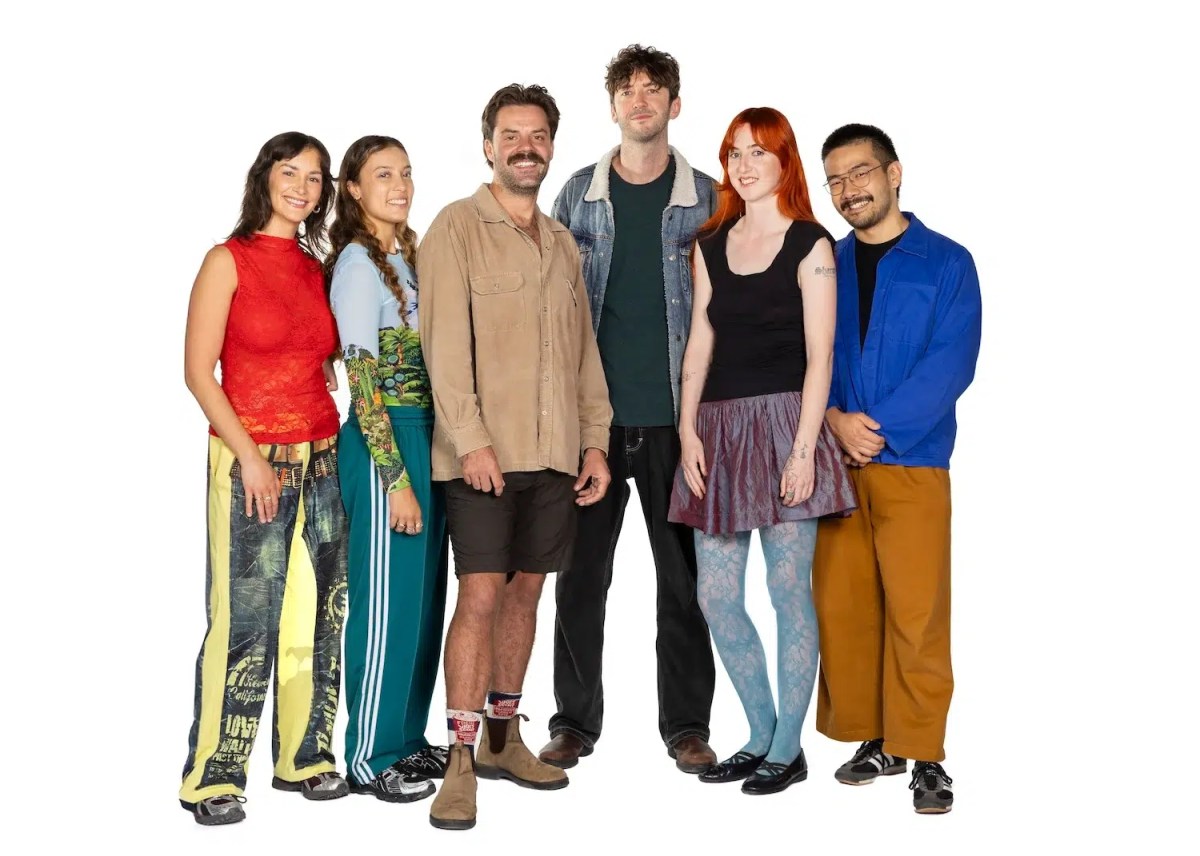
Once the overtly dramatic opening credits roll, the fundamental format remains remarkably consistent with the original. Six emerging filmmakers are dispatched to a new country every ten days. Their weekly challenge is to produce a completed film, ranging between two-and-a-half and four minutes in length.
The contestants are kept in the dark about their next destination until the day before their departure. Fortunately, they have all grown up with filmmaking capabilities readily available on their smartphones, a stark contrast to the technological limitations of the past.
The cast of the new Race Around the World comprises a diverse group of individuals. Elliot, a seasoned video content producer, brings professional experience. Jayden, a marine biologist, offers a unique scientific perspective. Kate, who is described as a lollipop lady but is also an arts school graduate, brings a creative flair. Lucinda, an established internet personality and author, adds a strong online presence. Mikaela, a freelancer with experience in sports marketing and the film industry, possesses a multifaceted skill set. Finally, William, a data scientist with expertise in Artificial Intelligence, brings an analytical approach.
While each contestant possesses their own distinct personality traits, they generally embody the kind of individuals one might anticipate in such a competition. They may harbour anxieties about flying or travel, yet they exude a palpable enthusiasm and open-mindedness, often expressing their hopes of projecting a “cute energy” on camera. Their ambition is clear: they are all vying for the ultimate prize – funding for a half-hour documentary to be broadcast on ABC iView.
The Films: A Blend of Earnestness and Emerging Talent
The films produced by the contestants consistently provide entertainment, even when they occasionally feel a touch overzealous. Kate’s inaugural film, set in India, opens with approximately thirty seconds of a topless middle-aged man dancing silently, complete with earbuds. Eventually, a voice-over clarifies: “Jurgen,” the narration solemnly explains, “likes to dance the negative energy away.” While this moment might not be the absolute funniest in the episode, or even within her film, it certainly comes close.
For the most part, however, these are earnest explorations of people and corners of the world that rarely grace our screens. They are delivered with a dedication that compensates for any rough edges. At times, the subject matter alone proves compelling. Consider the segment featuring dynamite fishermen in the Philippines. On other occasions, a fresh perspective is brought to familiar themes, such as Elliot’s poignant look at a Ukrainian cancer patient.
Observing Race Around the World can, at moments, evoke a disorienting sense of temporal displacement. A group of young individuals embarking on adventures and articulating sometimes pretentious narratives relevant to their lives, broadcast in prime time on the ABC? It prompts reflection on the network that also brings us the measured pace of Grand Designs.
Cultivating Documentary Skills Under Scrutiny
Enter the panel of judges, notably at least a generation older than the contestants. John Safran returns as the resident judge, joined each week by two different guest judges. For the inaugural episode, these are Claudia Karvan and Margaret Pomeranz. Safran, with his firsthand experience of the format’s challenges and the pressures of locating and filming subjects in unfamiliar territories under tight deadlines, offers invaluable insight.
The other judges are tasked with delivering candid and forthright critiques of the completed films. Karvan’s feedback often stems from an emotional response, while Pomeranz delves into the technical and artistic intricacies of what appears on screen, frequently highlighting areas for improvement. Her critiques can be quite direct, with one of her more measured observations being, “It was vaguely amusing to start, and then I don’t know that it went anywhere.”
This type of constructive criticism is a far cry from the fleeting feedback an online audience might provide. One could argue that this element alone justifies the entire project. While creating lighthearted videos about interesting subjects is enjoyable, there exists a discernible level of craft and skill required to produce enduring work. The central question remains: will the contestants develop this level of proficiency before their time on the show runs out? The race is well and truly on.
Race Around the World is broadcast on Sundays on ABC TV and is available for streaming on ABC iView.