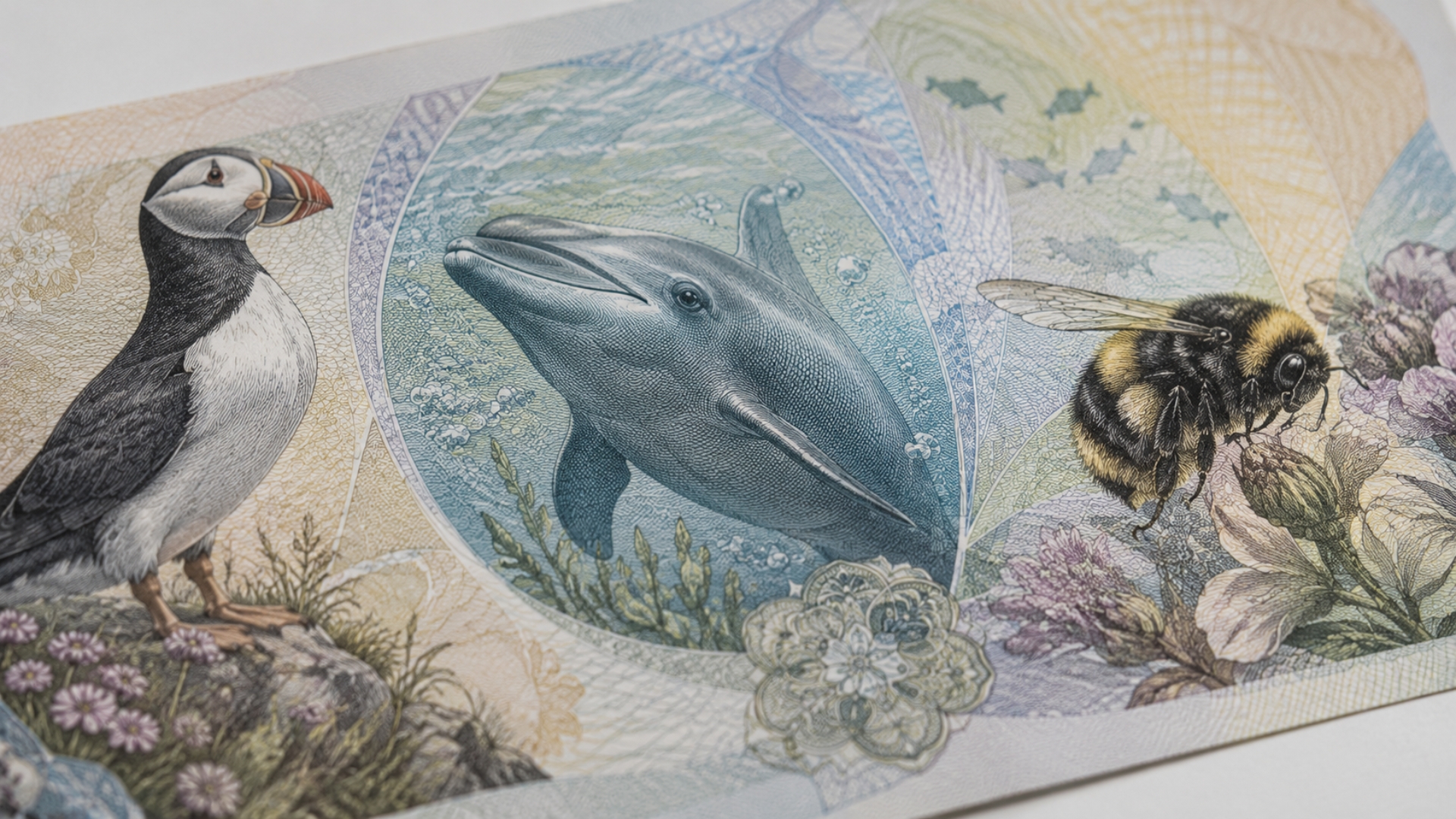
From Monarchs to Marine Life: Could Britain’s Wildlife Grace Our Banknotes?
For generations, the faces gracing British banknotes have been a roll call of the nation’s most esteemed figures. Monarchs, statesmen, pioneering scientists, literary giants, and influential artists have all been immortalised on the currency we use every day. But a fresh wave of proposals suggests that the next chapter in the story of British banknotes might feature a different kind of icon: our native wildlife.
The shortlist being considered for future UK banknote designs includes a fascinating array of creatures, from the charismatic Atlantic Puffin and intelligent dolphins to the industrious bumblebee. This shift reflects a growing desire to celebrate Britain’s rich natural heritage, weaving it into one of the most visible symbols of national identity. The idea has certainly captured the imagination, resonating not only with passionate wildlife enthusiasts but also with those who view currency as a powerful medium for storytelling – a way to communicate a nation’s culture, history, and, crucially, its environment.
A New Canvas for National Identity
Banknotes are far more than mere tools for transactions. They often function as miniature galleries, showcasing a nation’s values, achievements, and enduring heritage. The images chosen for currency can subtly, yet powerfully, shape how citizens perceive their country’s past, present, and future identity.
Traditionally, Britain has leaned towards honouring prominent individuals, drawing from the realms of politics, literature, science, and the arts. However, proponents of wildlife-themed designs argue with conviction that nature itself is equally, if not more, deserving of recognition. This is particularly pertinent at a time when conservation and the preservation of biodiversity have surged to the forefront of public consciousness and concern. Featuring native species on our banknotes could serve as a constant, daily reminder of the breathtaking landscapes and intricate ecosystems that collectively define the United Kingdom.
Recognising Our Iconic Wildlife
- The Endearing Puffin: A Seabird Superstar
Among the contenders generating significant attention is the Atlantic Puffin. With its strikingly colourful bill, unmistakable appearance, and immense popularity among birdwatchers, the puffin has firmly established itself as one of Britain’s most beloved seabirds. Its breeding colonies, typically found clinging to coastal cliffs and scattered offshore islands, draw thousands of eager visitors each year, eager to catch a glimpse of these charismatic creatures.
Despite its widespread appeal, puffins are not without their challenges. They face significant threats linked to climate change, fluctuating food availability due to shifting marine ecosystems, and broader environmental pressures impacting their ocean habitats. The inclusion of the puffin on a banknote could be a powerful tool for raising public awareness about the species itself and the vital importance of the habitats upon which its survival depends.
- Dolphins: Ambassadors for Britain’s Marine Wealth
The waters surrounding the UK are home to several species of dolphins, making them another compelling candidate for banknote recognition. The Common Dolphin and the Bottlenose Dolphin are among the marine mammals frequently observed along Britain’s extensive coastline.
Dolphins possess a broad public appeal, often admired for their remarkable intelligence, complex social behaviours, and their strong association with healthy, thriving marine environments. Featuring marine wildlife on our currency would also serve to underscore the immense significance of Britain’s oceans, which harbour a vast array of biodiversity far beyond what most people encounter on land.
- Bumblebees: The Unsung Heroes of Our Ecosystems
While the humble bumblebee may not possess the sheer size or immediate charisma of larger animals, conservationists consistently highlight its profound ecological importance. Species such as the Buff-tailed Bumblebee play an absolutely vital role in pollinating countless wild plants and agricultural crops across the entire UK.
Pollinators, in general, have become potent symbols of broader conservation anxieties. Many pollinator species are currently under severe pressure from habitat loss, exposure to pesticides, the spread of diseases, and the escalating impacts of climate change. A banknote adorned with a bumblebee would not only celebrate an iconic insect but also acknowledge the indispensable services that pollinators provide to our ecosystems and, crucially, to our food production systems.
Nature’s Enduring Inspiration
The concept of featuring animals on currency is by no means a novel idea. Across the globe, numerous countries have embraced the practice, adorning their coins and banknotes with native wildlife. These species are often chosen as powerful symbols of national pride and natural heritage. Birds, mammals, fish, and insects frequently serve as eloquent ambassadors for biodiversity, simultaneously contributing to visually distinctive and memorable designs.
Wildlife imagery possesses a unique ability to resonate across diverse political, regional, and cultural divides. While opinions on historical figures can often be a source of debate and disagreement, a shared appreciation for nature tends to garner broader public support.
Cultivating Conservation Through Visibility
While a banknote alone cannot single-handedly protect endangered species, its supporters argue that increased visibility is an undeniably crucial factor. Species that are readily recognised and valued by the public are often more likely to garner the support needed for dedicated conservation efforts. Images encountered in our everyday lives can foster stronger connections between people and the natural world around them.
For younger generations in particular, seeing wildlife represented on national symbols could serve as a powerful catalyst, encouraging greater awareness of biodiversity and fostering a sense of environmental stewardship. The educational impact, though perhaps subtle, can be profoundly significant.
Why This Discussion Matters
The ongoing discussion surrounding future banknote designs is ultimately about more than just aesthetics. It represents a deeper reflection of evolving societal perspectives on what truly constitutes a nation’s identity and what aspects of its heritage deserve to be celebrated. Alongside the esteemed historical figures and celebrated cultural achievements, a growing number of people firmly believe that Britain’s magnificent landscapes, its vital ecosystems, and its diverse wildlife are equally deserving of prominent recognition.
Whether the puffin, the dolphin, the bumblebee, or indeed other species ultimately make the final cut, this conversation undeniably highlights the increasing prominence of nature in our public discourse. For conservationists, this growing recognition is, in itself, a cause for considerable encouragement. After all, when wildlife becomes significant enough to warrant a place on a country’s currency, it signals that the protection of the natural world is increasingly being viewed not as a niche concern, but as an integral and essential part of the national story itself.