Racehorse Owners Accuse Racing Victoria of Mishandling Prohibited Drug Cases
Racehorse owners have raised serious concerns about how Racing Victoria handled a series of cases involving a prohibited breast cancer drug, formestane, which could have “catastrophic consequences” for the industry. These concerns were brought to the attention of Racing Minister Anthony Carbines during the height of the controversy.
Two owners sent a letter to Carbines in February, urging him to intervene in the disciplinary process. They cited a lack of scientific rigor in the investigations of trainers whose horses tested positive for formestane, a drug used to treat breast cancer overseas.
A month after the owners submitted their complaint, five Victorian trainers—Smiley Chan, Julius Sandhu, Symon Wilde, Mark and Levi Kavanagh, and Ash and Amy Yargi—were fined $24,000 (with $12,000 suspended) by the Victorian Racing Tribunal. Their horses were also suspended for 12 months after testing positive for the drug.

Just a day after this tribunal case, new research emerged at an international conference in Melbourne, suggesting that horses might naturally produce formestane. This revelation has caused significant uproar, threatening the trust in the integrity of horse racing. Two more cases are set to be heard by the tribunal in the coming weeks.
In their letter to Carbines, seen by this masthead, the owners stated, “ministerial oversight is required to mandate an independent, comprehensive scientific investigation before further disciplinary outcomes are finalised.” One of the owners, Louise Bryant, is part-owner of one of the positive horses, Sirileo Miss. The other owner chose to remain anonymous due to fears of jeopardizing their position in the industry.
They claimed the increasing number of positives—now up to 24 across Victoria, Tasmania, and South Australia—reflects systemic failures in investigation, scientific rigor, and regulatory decision-making by Racing Victoria and associated bodies. They warned that these failures could compromise multiple prosecutions, with potentially catastrophic consequences for the industry’s integrity, international reputation, and public confidence.
Formestane is banned in racehorses because it increases testosterone levels. It is not imported or approved for use in Australia. Despite this, no evidence was found at any of the stables involved, but under racing rules, presentation offences are strict liability offences. That means Racing Victoria does not need to prove how the substance got into the horse, only that it was present.
Carbines referred the owners’ complaints to the state’s racing integrity commissioner, Terrie Benfield, but no action was taken. Another trainer, John Hickmott, is considering taking his case to the High Court to prove his innocence.
“I have said all along, I took my horse to the races clean, and brought him home clean. What happened to the swab after that, I don’t know,” Hickmott told this masthead.
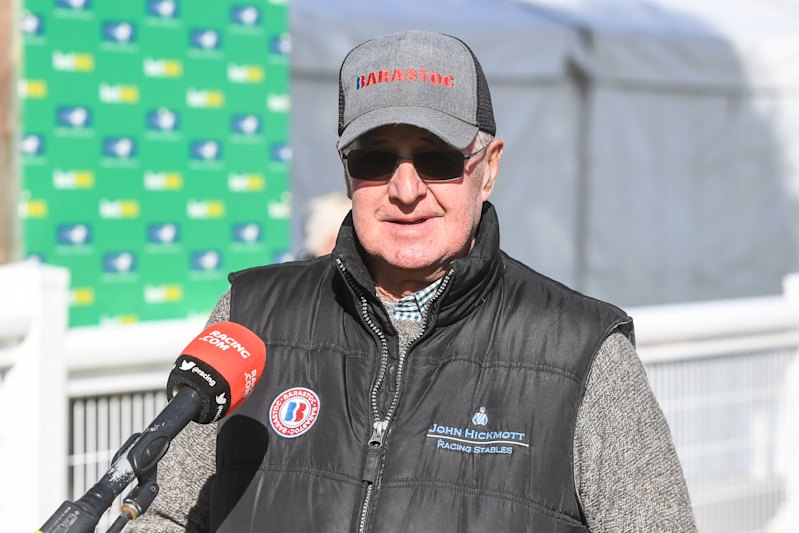
“Somewhere along the line someone has got to stand up, and I’m sick of people telling me that I did something wrong.”
Hickmott, who started training in Wangaratta in 1978 before moving to Murray Bridge in South Australia in 1989, was fined $4,000 and had his horse Classy Kenny banned for 12 months after returning a positive urine sample for formestane at Morphettville races on August 16 last year.
Hickmott said he would take his case “as far as it has to go” to overturn the fine and guilty finding. He has a directions hearing before the South Australian Racing Appeals Tribunal on June 22.
“Nine out of 10 trainers, including me, are not that smart, so somewhere along the lines someone would have left a bottle hanging around or a whatever, but no one has ever found any evidence of any of this substance lying around,” Hickmott said.
“Sooner or later, they would have found it if it was there. But it’s not there.
“Back in the old days, it was rife – people using hormones and whatever. But since that has been outlawed, no one in their right mind would use it.
“And if they did, where would you get this stuff? It’s not on the market. It’s impossible.”
This masthead first reported the emergence of research that could clear the trainers’ names last month. A UK study, commissioned by the British Horseracing Association, found formestane “for the first time” in 92 urine samples of 136 horses (50 geldings, 50 mares, and 36 colts, selected at random), raising the possibility that the substance was endogenous (produced naturally by horses).
UK-based research scientist Marjaana Viljanto presented the study at the International Conference of Racing Analysts and Veterinarians 2026 at Crown Casino on March 24—a event hosted by Racing Analytical Service Limited, a Melbourne lab that detected the formestane positives.
The integrity commissioner’s office told the owners they were aware of the conference, but Benfield did not have the powers to investigate matters within the jurisdiction of courts or tribunals.
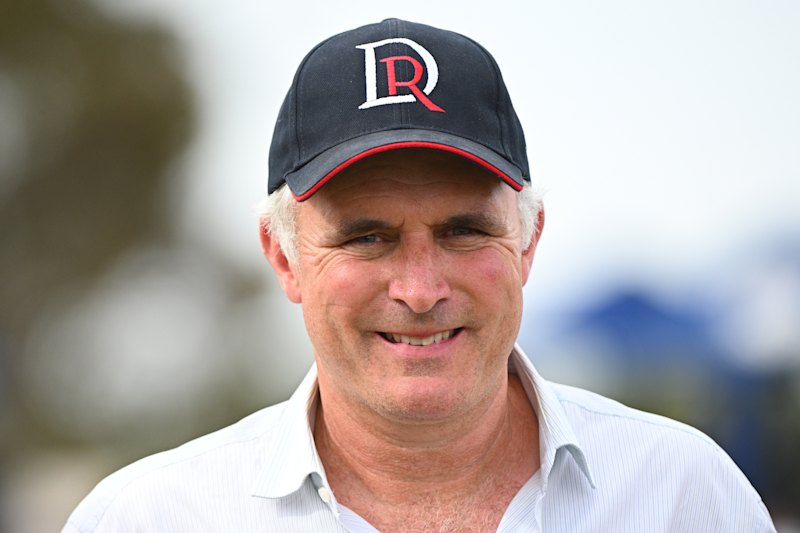
In a letter to the owners, Benfield said racing’s controlling bodies “are responsible for establishing integrity standards and rules” and that Racing Victoria had “belatedly” provided the owners “with an opportunity to be heard.” Benfield said she did not “propose to investigate your complaint at this time.”
“Owners may consider seeking legal remedy to address perceived procedural fairness or decision-making deficiencies,” Benfield said. Benfield said she did not comment on individual complaints.
At the time, Racing Victoria said it had been aware of Viljanto’s presentation at ICRAV 2026, but not “the specific detail.” “We strongly refute any suggestion that our stewards have acted inappropriately in their handling of cases involving formestane and its associated substances,” a Racing Victorian spokesperson said. “All cases have been handled in accordance with the Australian Rules of Racing based on the information available to the stewards at the time.”
A Victorian government spokesperson said it was “appropriate that Racing Victoria and the Integrity Commissioner can conduct their investigations independently of government.”
Racing Victoria is continuing to prosecute cases before the Victorian Racing Tribunal, including separate charges against members of two famous racing families—Patrick Payne and Tom Dabernig, who is the grandson of Colin Hayes. Dabernig is scheduled to appear on July 8, while Payne’s case has been adjourned until August 3.
Payne has reserved his plea, depending on questions he has put to the stewards involving his case that need to be answered by July 8.
This masthead does not suggest Racing Victoria acted improperly or ignored relevant science. At the time of the tribunal hearings, Viljanto’s research had not been published or peer-reviewed—a process that can take 12 months—and its conclusions remain unvalidated.
Racing Victoria has commissioned a study with RASL to determine if formestane and its metabolites occur naturally at low levels in racehorses. This could lead to a testing threshold.
News, results and expert analysis from the weekend of sport are sent every Monday. Sign up for our Sport newsletter.