Bronze Medal Shines Spotlight on Biathlon’s Global Ambitions
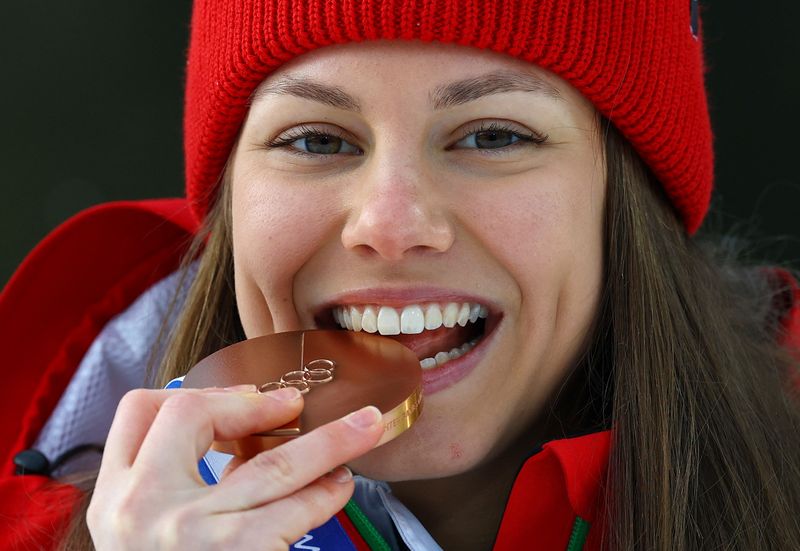
The crisp air of the Milano Cortina Games biathlon venue has once again buzzed with the intense rivalries we’ve come to expect from the traditional European powerhouses of Norway, Sweden, France, and Germany. While these nations consistently vie for Olympic glory, a bronze medal secured by Bulgaria’s Lora Hristova in the women’s 15-km individual race might just be the most telling victory of the Games.
This unexpected podium finish for the unheralded 22-year-old Bulgarian athlete is being heralded as a significant indicator that the International Biathlon Union’s (IBU) ambitious development strategy is yielding tangible results. The IBU has been actively working to broaden the sport’s global appeal, and Hristova’s success offers a powerful testament to the effectiveness of these initiatives in bringing smaller nations onto the world stage.
Dagmara Gerasimuk, the IBU’s development director, expressed her elation at witnessing Hristova’s achievement. “I couldn’t have been more happy watching Lora Hristova at the podium, because for me, it’s kind of like inspiration for the job I do,” she stated from the Olympic biathlon venue. Her words underscore the profound impact such successes have on the ongoing efforts to foster biathlon’s growth beyond its traditional strongholds.
The sport has historically been a domain dominated by a select few, with hosts like Italy also frequently featuring on the medal tally. However, the IBU has injected a significant €1 million into a program aptly named “Closing the Competitive Gap.” This initiative is specifically designed to uplift nations that lack a deep-rooted history in biathlon, providing them with the resources and support needed to elevate their competitive standing.
A Multi-Faceted Approach to Development
Gerasimuk elaborated on the comprehensive nature of the IBU’s support system. “The more active you are, the more you can get, the more potential you have, the more you can get,” she explained. This philosophy extends far beyond mere financial assistance.
- Financial Support: Direct funding is provided to national federations to aid in the establishment and development of biathlon programs.
- Educational Support: The IBU offers comprehensive training and educational resources for athletes, coaches, and officials, ensuring a holistic approach to skill development. This includes sharing best practices and modern training methodologies.
- Infrastructure and Equipment: Support is also directed towards improving training facilities and ensuring access to appropriate equipment, crucial elements for nurturing talent.
- Strategic Planning: The IBU works collaboratively with national federations to develop long-term strategic plans, fostering sustainable growth for the sport within each nation.
Collaboration and Shared Expertise
Remarkably, the established biathlon nations have embraced the IBU’s vision and are actively participating in sharing their expertise. Norway, a perennial powerhouse, has opened its doors to athletes from emerging nations. For instance, Australian biathlete Darcie Morton and siblings Ukaleq and Sondre Slettemark from Greenland were given the invaluable opportunity to train alongside Norway’s elite athletes in the lead-up to the Games.

Gerasimuk highlighted the progress observed in countries like Australia. “Australia is doing quite well right now in the overall system – they are quite settled, they have a club system, they have a concept, and they have a relatively strong board and strategic long-term thinking. For me, this matters the most,” she commented, emphasizing the importance of a well-structured and forward-thinking national framework.
Vision and Long-Term Strategy: The Key to Success
As a former biathlete herself, Gerasimuk stresses the IBU’s commitment to a data-driven and methodical approach. However, she also acknowledges the indispensable role of passionate visionaries in smaller nations. She recalled her initial skepticism about a proposed biathlon program in Spain, which she initially deemed “crazy.” Yet, this program was successfully built from the ground up and is now held up by the IBU as a prime example of what can be achieved.

While passion is a vital catalyst, Gerasimuk underscored that it must be coupled with a clear operational structure and a deep understanding of the support available through the IBU. “It’s important to have this vision, and then a clear structure and an understanding of all the support which is given by the IBU,” she stated.
She expressed a desire for national federations to move beyond short-term, reactive thinking. “Sometimes national federations see one project, and it’s just short-term thinking, they’re just reacting,” Gerasimuk observed. “I simply want them to really think long term, strategically, about partnership and building the community around (biathlon) and I think that this will work.”
Lora Hristova’s bronze medal serves as a powerful symbol of this long-term vision in action, demonstrating that with strategic investment, dedicated support, and collaborative spirit, the global biathlon community can indeed continue to expand and thrive.