
The Power of Avocado and Mango in Improving Heart Health
Cardiovascular disease (CVD) is a major health concern, affecting millions of people worldwide. It encompasses conditions such as high blood pressure, heart attacks, and strokes, and it remains one of the leading causes of death. In the United States alone, nearly 1 million lives are claimed each year due to CVD. Recent studies have highlighted the importance of dietary choices in managing and preventing these conditions.
A new study has revealed that combining two fruits—avocado and mango—could significantly improve vascular health, which is crucial for reducing the risk of artery diseases, blood clots, heart attacks, and strokes. Researchers from Illinois conducted an experiment involving over 80 adults with prediabetes, a condition that increases the risk of developing type 2 diabetes and cardiovascular disease.
Participants were divided into two groups: one followed a low-fat, low-fiber diet, while the other incorporated one cup of avocado and one cup of mango into their daily meals. After eight weeks, those who consumed the fruit duo showed remarkable improvements in their blood vessel function. This improvement reduces the workload on the heart and enhances the delivery of oxygen-rich blood to vital organs.
In addition to better vascular function, participants also experienced measurable improvements in their diastolic blood pressure. This is the bottom number in a blood pressure reading and plays a key role in determining heart strain and the risk of heart attack or stroke.
The researchers attributed these positive outcomes to the fiber, vitamin C, and unsaturated fats found in avocados and mangoes. These nutrients could offer a practical way to enhance heart health without relying solely on medication.

Dr. Britt Burton-Freeman, a professor at Illinois Institute of Technology and the lead researcher, emphasized the significance of this study. “This research reinforces the power of food-first strategies to help reduce cardiovascular disease, particularly in vulnerable populations like those with prediabetes,” she said. “It’s an encouraging message: small, nutrient-dense additions—like incorporating avocado and mango into meals and snacks—may support heart health without the need for strict rules or major dietary overhauls.”
Approximately 115 million Americans have prediabetes, yet many remain unaware of their condition. The study, published in February in the Journal of the American Heart Association, involved 82 prediabetic adults aged between 25 and 70, with an average age of 45. Participants completed weekly questionnaires about their food intake over the past 24 hours.
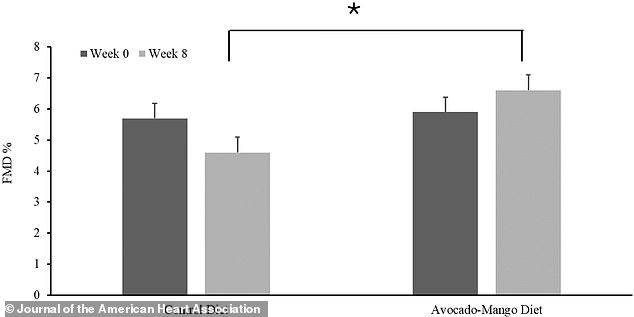
The results showed that those on the avocado-mango diet improved their flow-mediated dilation (FMD), a measure of how much an artery dilates in response to increased blood flow, by 6.7 percent. In contrast, the control group saw a decrease in FMD by 4.6 percent, indicating worsening artery function.
Men who consumed the fruit pairing experienced a notable decrease in their diastolic blood pressure by 1.9mmHg, which could have long-term benefits. However, the difference in blood pressure was not significant in women. There were no changes in overall calorie intake or weight in either group.
One cup of fresh mango contains approximately 2.6g of fiber, which is about seven percent of the recommended daily intake for an average adult, along with 67 percent of the recommended daily intake of vitamin C. Fiber helps blood vessels relax, improving blood flow, while soluble fiber binds to cholesterol and prevents its absorption, aiding in blood pressure management.
Vitamin C protects nitric oxide, a molecule that signals blood vessels to relax and widen. It also acts as an antioxidant, reducing inflammation within the blood vessels. Avocados, rich in fiber and unsaturated fats, help lower cholesterol and triglycerides, reducing the risk of plaque buildup.
Despite these promising findings, the researchers noted that the study had some limitations, including a small sample size and only examining short-term outcomes associated with the avocado-mango combination. Further research is needed to confirm these results and explore long-term effects.