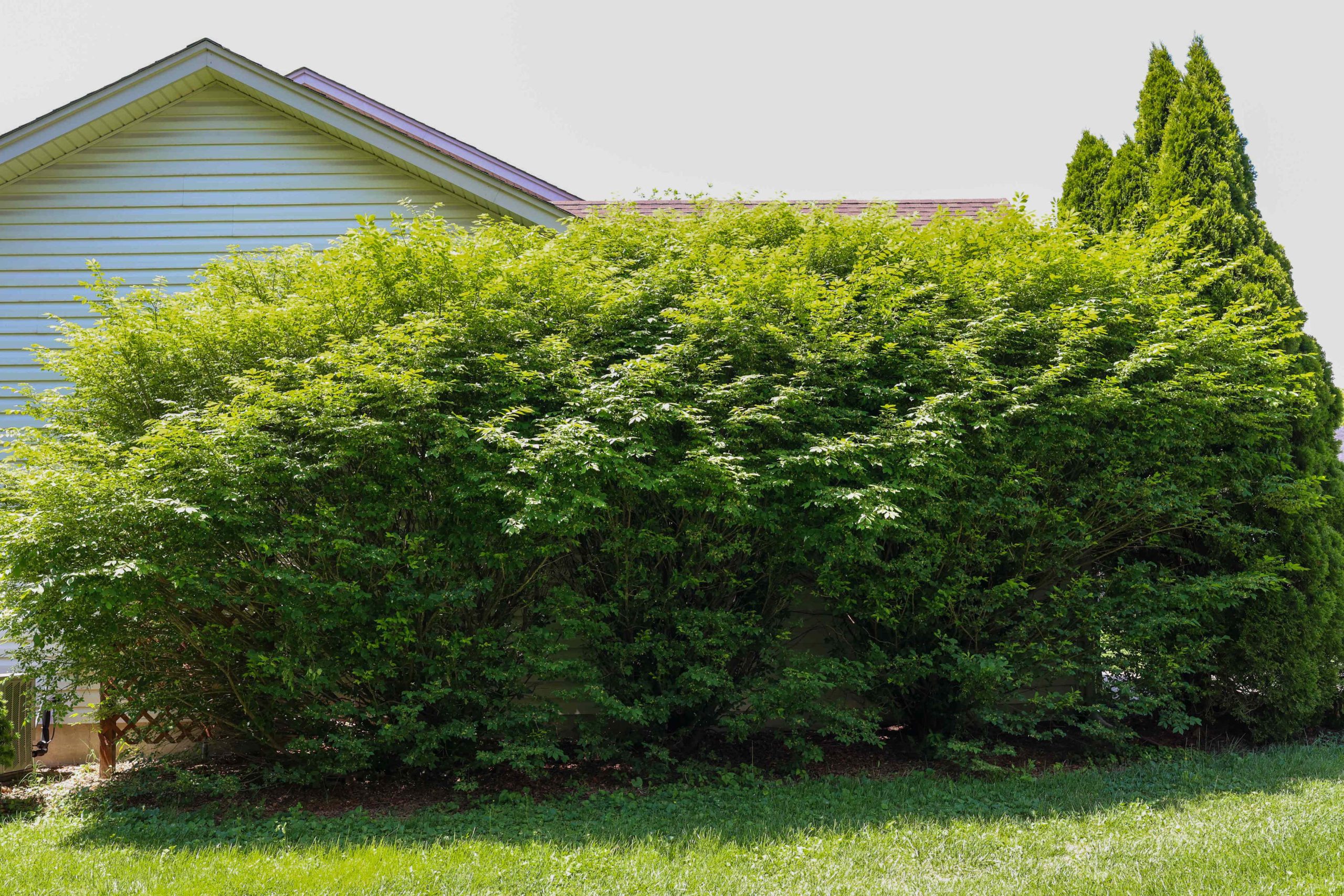
Shrubs never stay the way they look when you first plant them. Many popular landscape shrubs grow a foot or two a year, quickly overtaking everything around them. Before you know it, they’re blocking half the driveway or on the verge of swallowing your house. Even the most demure shrub can outgrow a spot in 10 years. In theory, you can rip these oversized bushes out and start all over. But this isn’t always desirable, especially if you’re relying on your shrubs for privacy. You may even like your giant shrubs despite the fact that they appear out of scale to your house.
We have a few suggestions on how to neaten up your yard and turn those hulking shrubs into an asset. Here’s how to landscape a yard with oversized shrubs and make it beautiful again.
Which Shrubs Should You Remove?
There’s no reason to keep every oversized shrub on your property. Diseased and declining shrubs should be removed. If you’re tired of being scratched by thorns along your walkway, those hollies should go. And if your shrub is invasive, digging it up is an easy call.
Clear The Entryways
Your first step is to provide a clear path down driveways, along walks, and up to doorways. Cut back shrubs that impede or overhang entryways so that you can easily get to the house. Add a fresh layer of mulch to define and freshen up garden beds. These actions alone can make your property look neat and put-together.
On the other hand, you may have a shrub that will never be contained within its space. Homeowners often make the mistake of planting a cute little shrub a foot from the driveway, only to realize it’s going to grow 6 feet wide. Chopping off one side of the shrub only makes it look deformed and lopsided. In that case, you’ll need to remove the shrub or transplant it to a more appropriate spot.
Rescue Windows
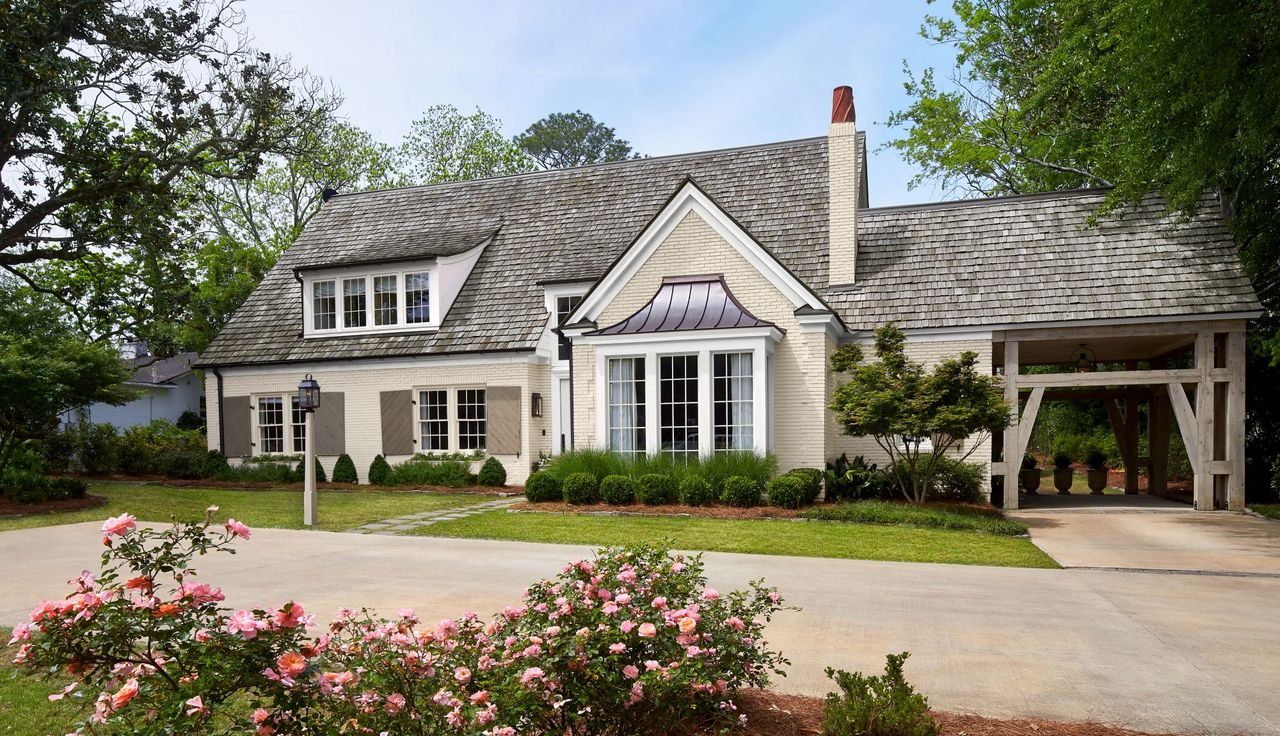
Shrubs that cover windows give a house a feeling of abandonment. Rescue your windows by pruning all shrubs back to a few inches below the sills. Shrubs that flank windows should be trimmed so that they don’t obstruct the view from the sides. Consider whether really tall shrubs can be pruned into a tree form so that they frame the window instead.
When pruning, make sure to remove any growth that is touching the house. Stems shouldn’t grow closer than 2 feet to the foundation. This will help keep insects and moisture off the siding.
Create A View
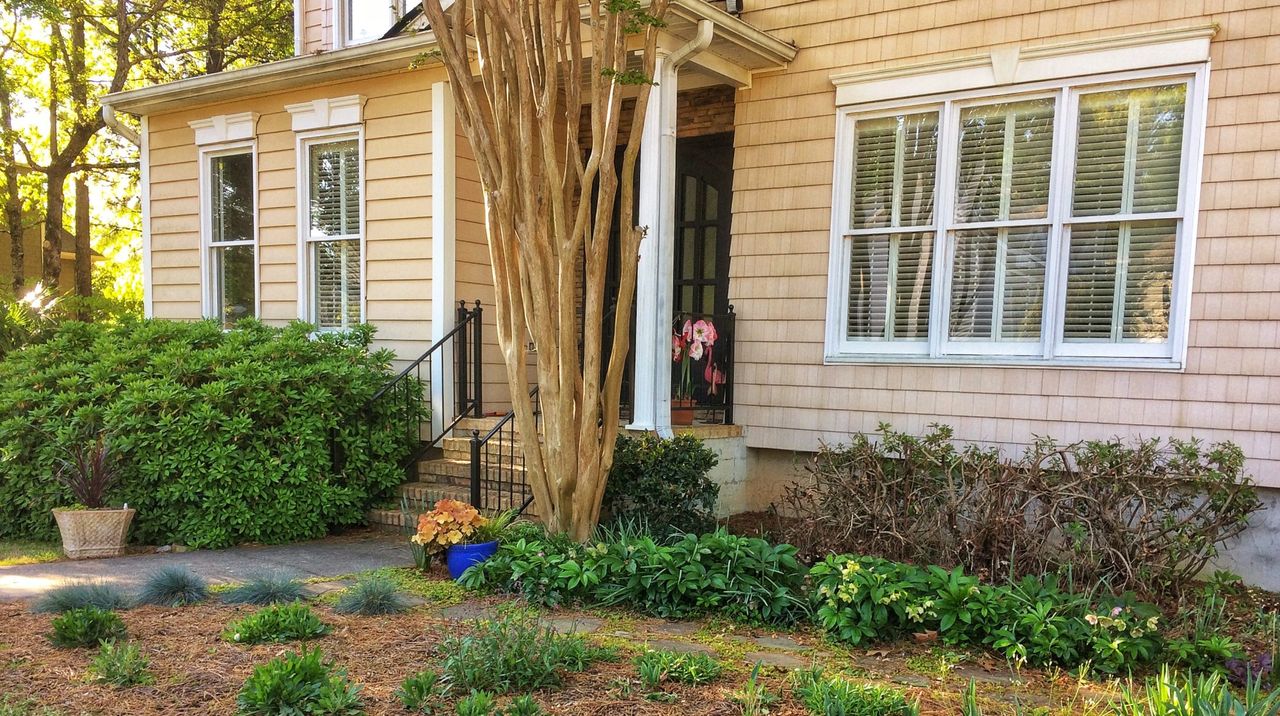
Oversized shrubs that obstruct the view of your home can make your property look dark and foreboding. On the other hand, shrubs can provide much-needed privacy if you live on a busy street. You can preserve some privacy while also making your home feel more welcoming.
Consider strategically pruning the landscape to reveal more of your home. Create a clear sightline up the walk to your front door or reduce the size of shrubs in the middle of your yard. If you want shrubs to hide portions of your property, be strategic about it. Maybe you have a large camellia that shades one corner of your porch where you like to drink your morning coffee, while the rest can be trimmed back.
Pruning can also give you a better view of the landscape if your property overlooks a lake, mountain valley, or leafy park. Stand on your porch and look out the windows to assess what is blocking your view. Prune those shrubs to open up the view.
Layer The Garden
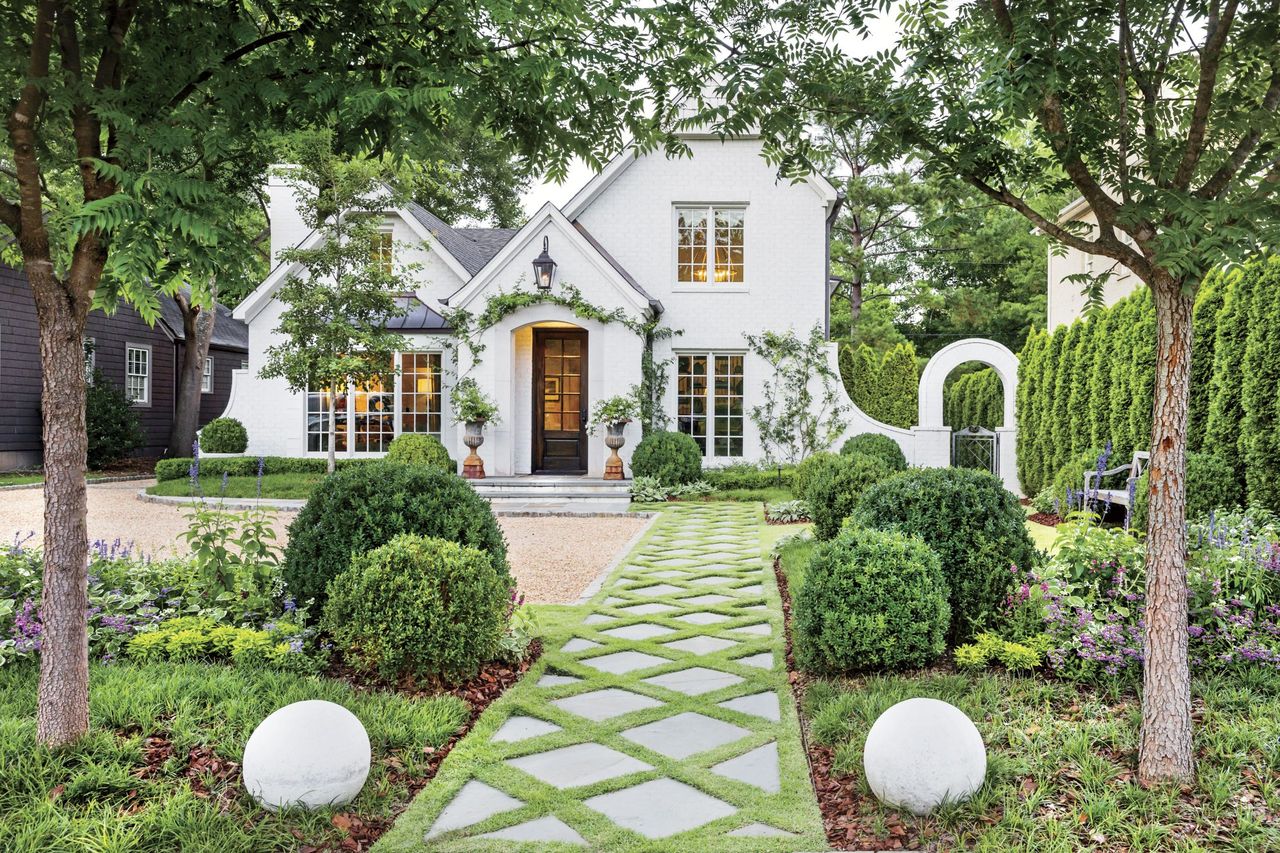
Many properties feature one row of overgrown shrubs along the foundation of the house or a single, oversized shrub growing in the middle of the yard. Both look awkward and unnatural. You can improve your home’s curb appeal by making those shrubs the centerpiece of a garden. With a foundation planting, extend the bed another 3 to 5 feet outward, adding compost to revive the soil. Prune your shrubs as described below. Then layer compact shrubs and perennials in front of the existing plants, providing enough space to accommodate each plant’s mature size. Stagger or vary the plantings to create natural swaths of texture and color.
If you have a lonely clump of shrubs in the middle of your yard, add a new bed around them. Use a garden hose to outline the shape, placing the shrubs at the back and bringing the bed out at least 5 feet in front. A curvy or swooping shape looks more natural than a circle or rectangle. Layer in small shrubs and perennials, transitioning from tallest to shortest. If your oversized shrub will be casting a shadow throughout the day, make sure to choose plants that do well in the shade.
If root competition makes it impossible to plant around your shrubs, you have other options. Group a few large, well-placed planters nearby to spruce up your yard.
Pruning Overgrown Shrubs
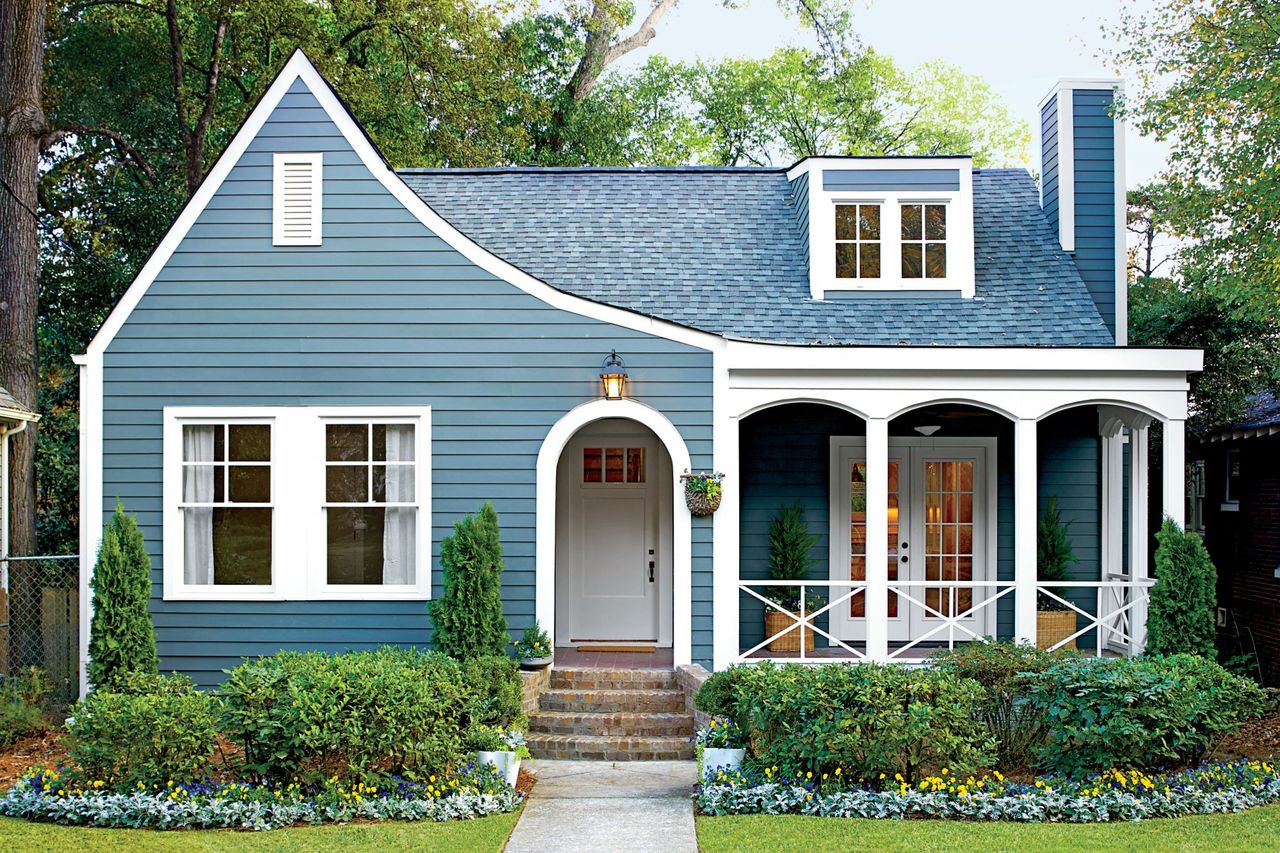
If you haven’t pruned your shrubs in years, you’ll need to take steps to rejuvenate them. Pruning can bring them down to a manageable size while also encouraging bushier growth.
Deciduous Shrubs
Some multi-stemmed shrubs—such as abelia, forsythia, lilac, mock orange, and weigela—produce new canes from the ground each year. The old stems grow thick, woody, and bare over time. To rejuvenate these shrubs, cut three of the thickest canes all the way back to the ground in spring. Do the same in following years as needed. If your shrub has unwanted suckers, cut those back to the ground or chop through the suckering root with a sharp spade and pull out the stem.
Other shrubs can be pruned back by a third each year until they become more manageable. Don’t shear the shrubs, which can cause the center to die out. Instead, cut overgrown stems back to a main branch. Neaten your shrubs by removing any awkward or wayward growth.
A hopelessly overgrown deciduous shrub can be cut back to 6 inches from the ground in early spring. The shrub will produce a new flush of growth and gradually regain an attractive appearance. Flowering shrubs usually take two or three years to bloom after renovation pruning. Reserve this for shrubs that are in your way or in the front of a garden bed where you want more compact plants.
Evergreen Shrubs
Evergreen shrubs are trickier to prune. Many won’t grow back if you cut into dead, brown areas of the bush. Yews are one of the few exceptions, though they can take years to fill in. Prune these shrubs by removing dead branches and shortening overgrown stems. Don’t cut beyond where you see green growth on the branch.
Sometimes the answer is to prune up instead of cutting an evergreen shrub back. If your shrub is mostly dead at the bottom, try shaping it into an attractive tree form by removing lower limbs and neatening the top. This also opens up room for planting a garden underneath. If you don’t get the desired result, you can remove the shrub and replace it. Just be careful to choose one that won’t overwhelm your garden.