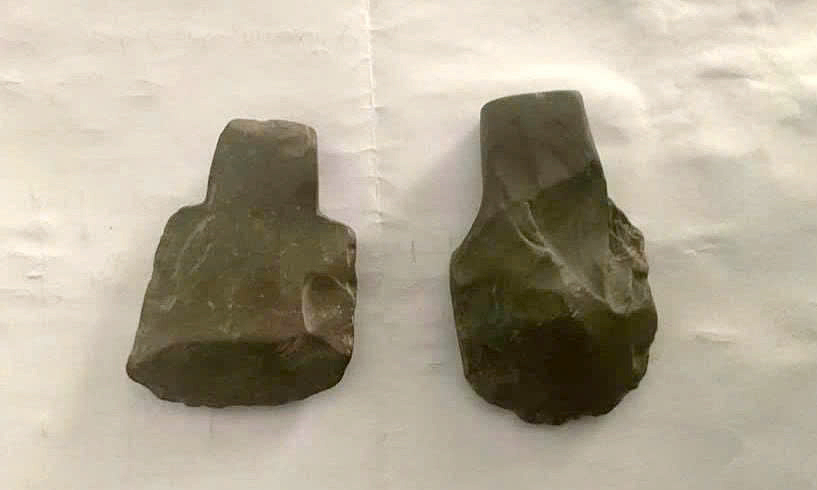
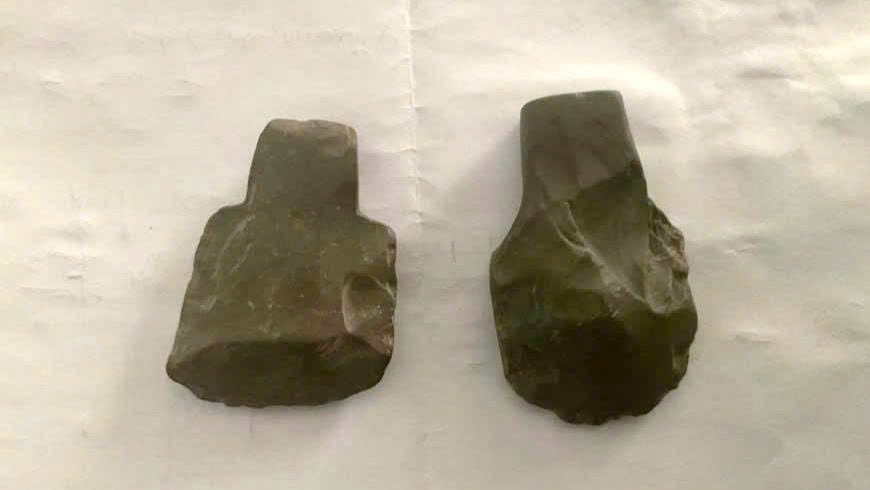
Five ancient stone axes, believed to be thousands of years old, have been found in En Cave, which is part of the Phong Nha – Ke Bang National Park complex in central Vietnam. These significant artifacts were later handed over to the Quang Tri Museum and the Hanoi Museum for research, preservation, and public display. This move aims to enhance the understanding and appreciation of the cultural and historical heritage of the Quang Tri region.
The discovery was made by an expedition team led by Dr. Howard Limbert, a British cave expert and member of the Royal British Cave Association. He and his team found the five stone axes within En Cave, one of the largest caves in the Phong Nha-Ke Bang National Park. The artifacts were found in a sediment layer that showed signs of water disturbance, indicating they belong to an ancient cultural layer.
Two of the axes were presented to the Quang Tri Museum by Howard Limbert, head of the British cave exploration team. A photo captured by VnExpress/Phuc Hoang shows the moment of handover.
Initial assessments suggest that these stone axes date back approximately 6,000 to 8,000 years, placing them in the Neolithic period. They are associated with the Bau Tro Culture, a prehistoric culture known for its early agricultural practices and tool-making techniques. The axes, crafted from siliceous stone, come in two types: sloping-shoulder and broad-shouldered. Their design and wear patterns indicate that they were used extensively by early inhabitants of the region.
Experts believe that this discovery provides additional evidence of human activity within the cave systems of Phong Nha–Ke Bang, a UNESCO World Heritage site renowned for its vast karst landscapes and rich archaeological significance. The area has long been a focal point for researchers studying the evolution of human settlement and cultural development in Southeast Asia.
This find adds to a growing collection of artifacts uncovered in the region, including metal objects, bronze axe molds linked to the Dong Son Culture, bronze Buddha statues, and ancient Cham inscriptions found in caves. These discoveries collectively highlight the long-standing human presence and cultural evolution in central Vietnam.
The Phong Nha–Ke Bang National Park is not only a natural wonder but also a crucial site for understanding the history of early human societies. The discovery of these stone axes reinforces the importance of continued exploration and research in the area, offering valuable insights into the lives of our ancestors and their adaptation to the environment.
As more findings emerge, the region continues to reveal its deep historical roots and cultural richness. The preservation and study of these artifacts play a vital role in safeguarding the legacy of the past for future generations. By learning from these ancient tools, we gain a deeper appreciation of the ingenuity and resilience of early human communities.