The Mystery of the Furongian Gap
Approximately 500 million years ago, a significant event in the history of life on Earth occurred. This period, known as the Cambrian, is marked by an explosion of biodiversity in the fossil record. However, there is a notable gap in this record referred to as the “Furongian gap.” This missing chapter has puzzled scientists for years, as it appears between two periods of rapid evolutionary development.
The Furongian gap is intriguing because it suggests a potential biological crisis. Some researchers believe that environmental instability, changes in ocean chemistry, cooling climates, and a lack of oxygen in ancient seas may have contributed to this decline. However, a new study published in the journal BMC Biology offers a different perspective.
A Rare Fossil Discovery
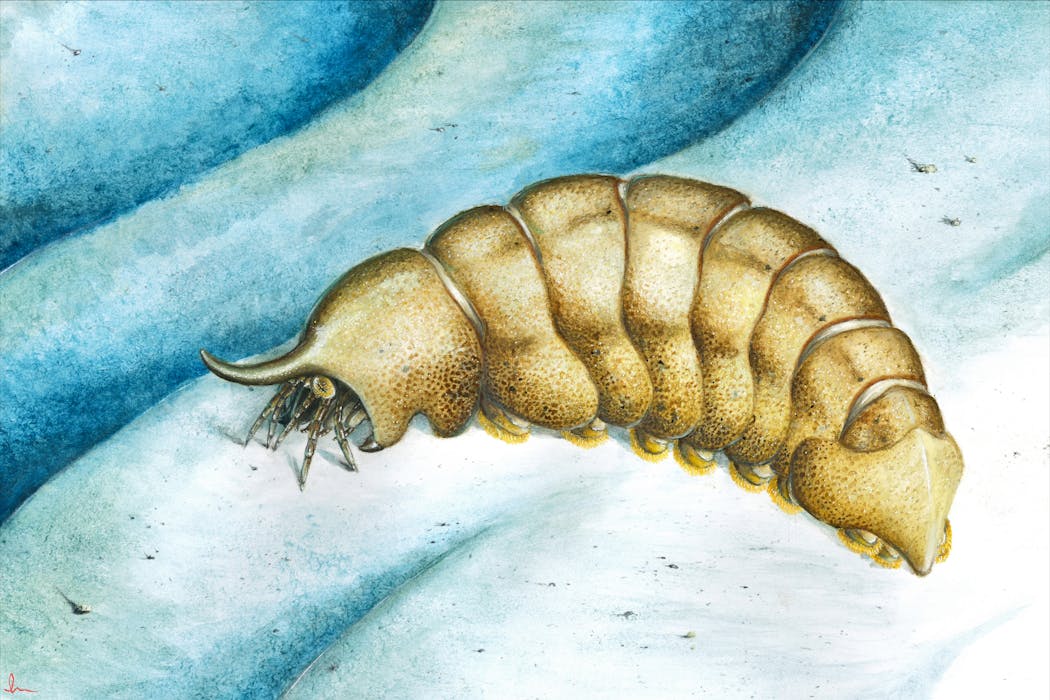
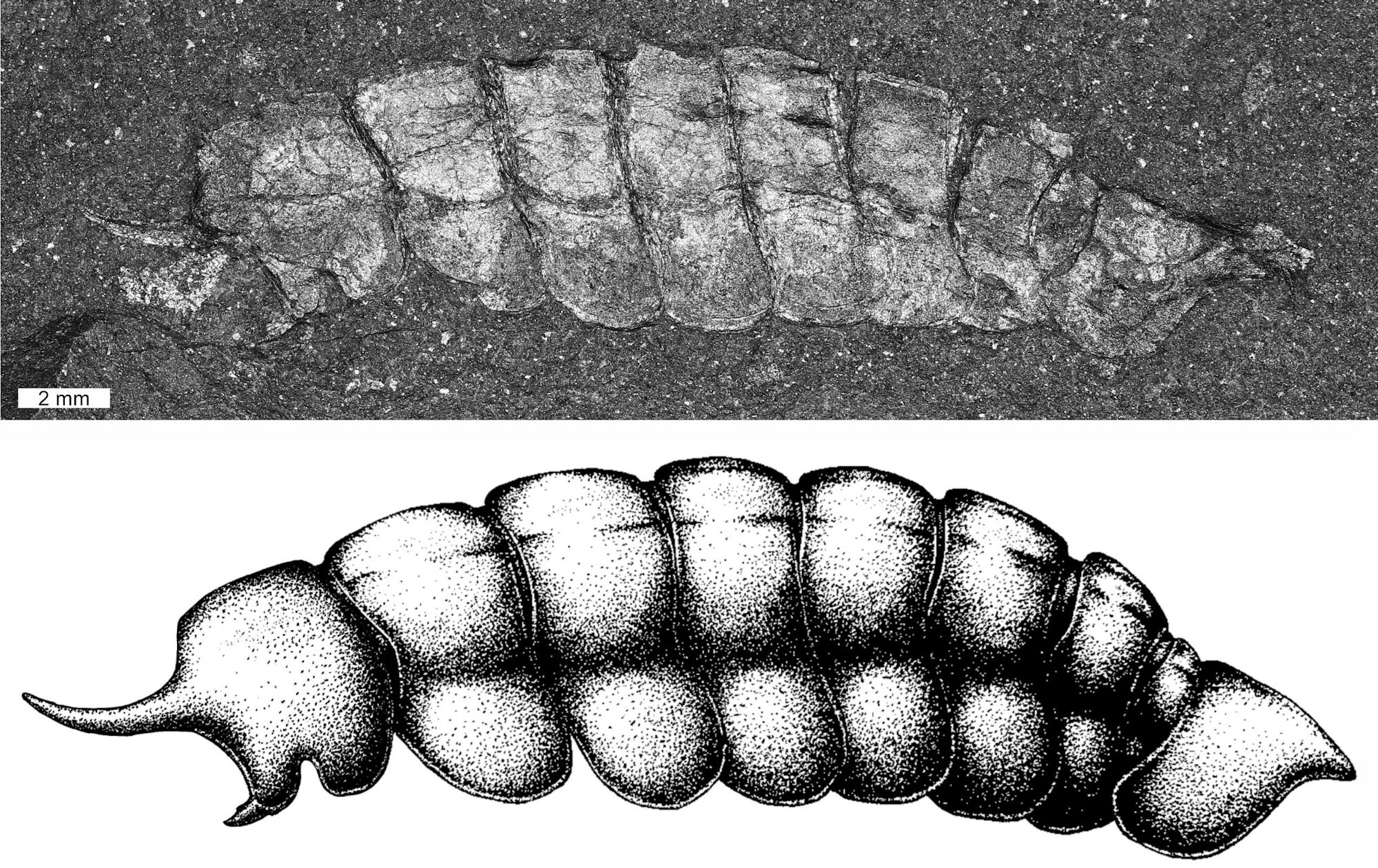
The study introduces a newly discovered 500-million-year-old arthropod from Québec, Canada. Arthropods are animals with exoskeletons, which include creatures like spiders and scorpions. The fossil, named Magnicornaspis garwoodi, belongs to a rare group of early arthropods known as corcoraniids.
These corcoraniids are characterized by their broad head shields, segmented bodies, and defensive spines. The specimen found in Québec stands out due to its two large forward-projecting spines extending from the head. These features suggest that defensive adaptations within the group may have evolved earlier than previously thought.
A Fossil in Museum Storage
The specimen was originally collected in 1962 during geological mapping near Sainte-Anne-de-la-Pocatière in Québec. It came from mudstones within the Rivière-du-Loup Formation, which were deposited in relatively deep marine slope environments during the late Cambrian. These rocks have not received much attention from palaeontologists, making them ideal for reassessment.
For decades, the fossil remained overlooked in the collections of the Smithsonian National Museum of Natural History in Washington DC. This highlights an important aspect of palaeontology: major discoveries do not always come from fieldwork. Museum collections contain vast amounts of under-studied material that can lead to significant insights when re-examined with modern techniques.

Expanding the Picture of Late Cambrian Life
This discovery adds to a growing body of evidence that challenges the idea of a barren late Cambrian world. Studies from China and Sweden have documented other well-preserved fossils from about 497–485 million years ago. Together, these findings suggest that ecosystems remained diverse and ecologically complex during this time.
The new Québec fossil expands this picture geographically. It shows that the ancient Appalachian margin of eastern Laurentia, which included much of present-day North America and Greenland, was a site of excellent fossil preservation. This broadens the known distribution of soft-bodied fossil preservation during the interval and hints that comparable deposits may await discovery elsewhere.
The Furongian gap may not represent a biological collapse at all. Instead, it could reflect an “anthropogenic bias” in the fossil record—distortions introduced by where humans have searched, collected, and studied fossils. Each newly discovered Furongian exceptional fossil site narrows this supposed gap, revealing increasingly sophisticated ecosystems thriving during the late Cambrian.
The Future of Fossil Discoveries
Entire groups of organisms—and possibly even ecosystems—may still await discovery within museum drawers or poorly studied rock formations. The late Cambrian lasted millions of years across vast ancient oceans, yet only a tiny fraction of its environments have been systematically explored for soft-bodied preservation.
The next major fossil discovery may not come from a newly discovered outcrop in a remote desert. It may already exist, inside a museum cabinet, collected decades ago and waiting for someone to recognize its significance.
Russell Dean Christopher Bicknell receives funding from the Australian Research Council. Julien Kimmig is an officer for the German Palaeontological Society.