A New Era for Motorsport at Le Mans
The Motorsport Museum has officially opened its doors in Le Mans, marking the culmination of a massive construction project that was completed in an impressively short time frame. For nearly a year, the former Le Mans 24 Hours Museum was closed while significant changes were made to its structure and exhibits.
During this period, walls were moved, 45,000m³ of earth was displaced, and exhibits were reimagined. The museum now stands as a testament to the dedication and hard work of the teams involved. On 28 May, the M24 – Motorsport Museum opened to the public, adjacent to the gates of the Le Mans circuit.
When met with Pierre Fillon just hours before the inauguration, there was a palpable excitement in his voice. “It’s the culmination of a long-term project,” he said, recalling the president of the Automobile Club de l’Ouest (ACO), the organizer of the Le Mans 24 Hours. “There is enormous pride, above all in the work done by the teams, because this museum represented a real challenge. We’ve been working on it for a long time, but completing it in nine months was a day-to-day challenge.”
Beyond Endurance Racing
The first transformation is reflected in the name itself, which signifies the broader scope of the museum. Gone is the former Le Mans 24 Hours Museum, replaced by a more comprehensive environment that encompasses the entire world of motorsport. This bold approach aims to provide the general public with an unprecedented experience, with the ambition of becoming “the world reference,” as explained by Fabrice Bourrigaud, the museum director.
“We truly believed that Le Mans was the legitimate place to create something that doesn’t exist today: a motorsport museum, meaning a museum capable of telling the great history of motorsport,” he said. “We are in Le Mans, known for the Le Mans 24 Hours, on one of the three most famous circuits in the world alongside Indianapolis and Monaco. We have organised virtually every form of motorsport here, we conceived the first modern motor race in 1906, 120 years ago, so Le Mans was truly the ideal place to do it.”
The museum achieved the seemingly impossible feat of reopening before the 2026 edition of the Le Mans 24 Hours, following the closure after the 2025 editions of the Le Mans 24 Hours and Le Mans Classic.
Twice the Space, 130 Reasons to Visit
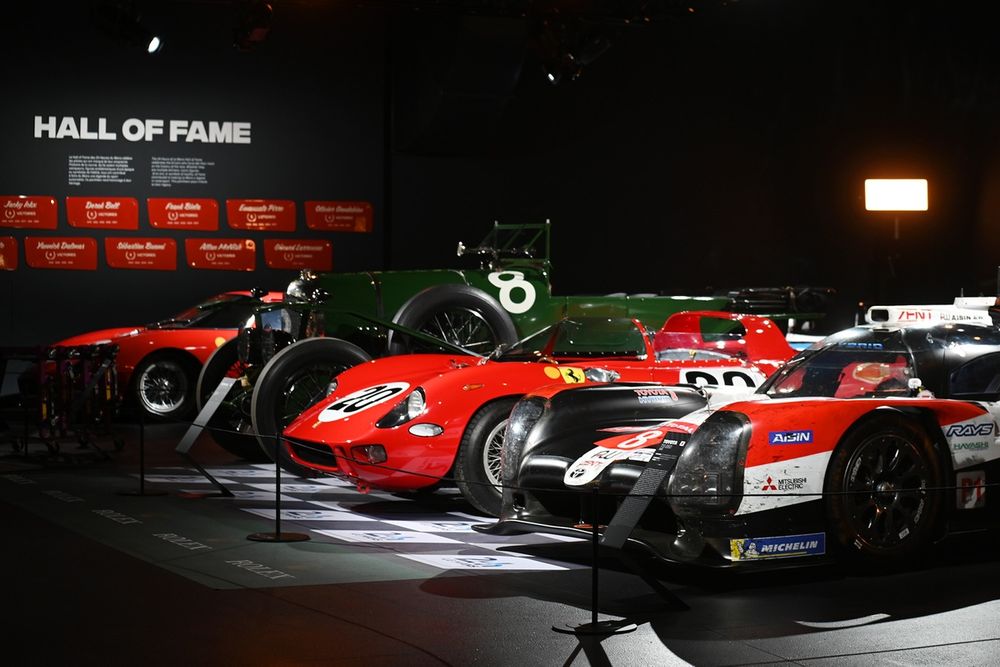
The museum’s surface area has doubled, increasing from 5,000m² to 10,000m². This completely redesigned space has allowed every aspect of the visitor experience to be rethought, firmly bringing the venue into the modern era. From the thrill of a race start to the magic of racing through the night, visitors quite literally journey through the chronology of a Le Mans week while also travelling back through time.
The experience then opens up to other premier disciplines: Formula 1, IndyCar, rallying and even motorcycling. “Previously, we barely had 100 cars, whereas now we are at around 130 in total, because the aim was to showcase them better and tell stories,” explained Fabrice Bourrigaud. “A museum has to tell stories, so we’ve become far more immersive. The idea was to make people feel emotions and sensations.”
Schumacher and Pescarolo Under the Same Roof
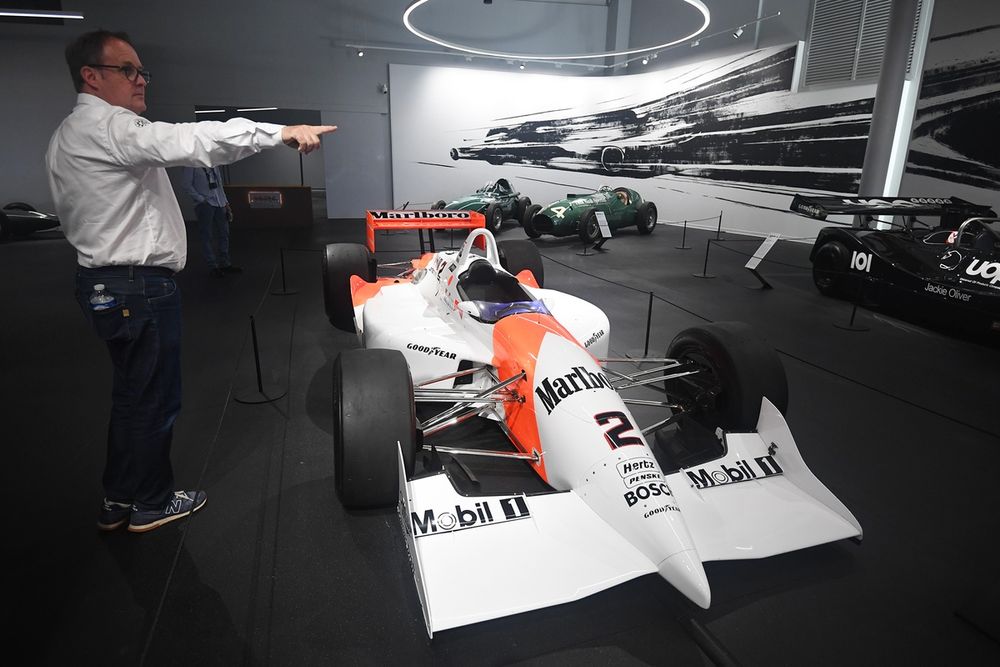
There is impressive attention to detail, down to the flooring, which is identical in every respect to the asphalt surface of Circuit des 24 Heures. The breadth and grandeur of the collection, both in number and in historical relevance, offer visitors a chance to better understand the passion of motorsport. The full-scale dioramas featuring cars, team trucks and full-sized silicone figurines are of particular interest.
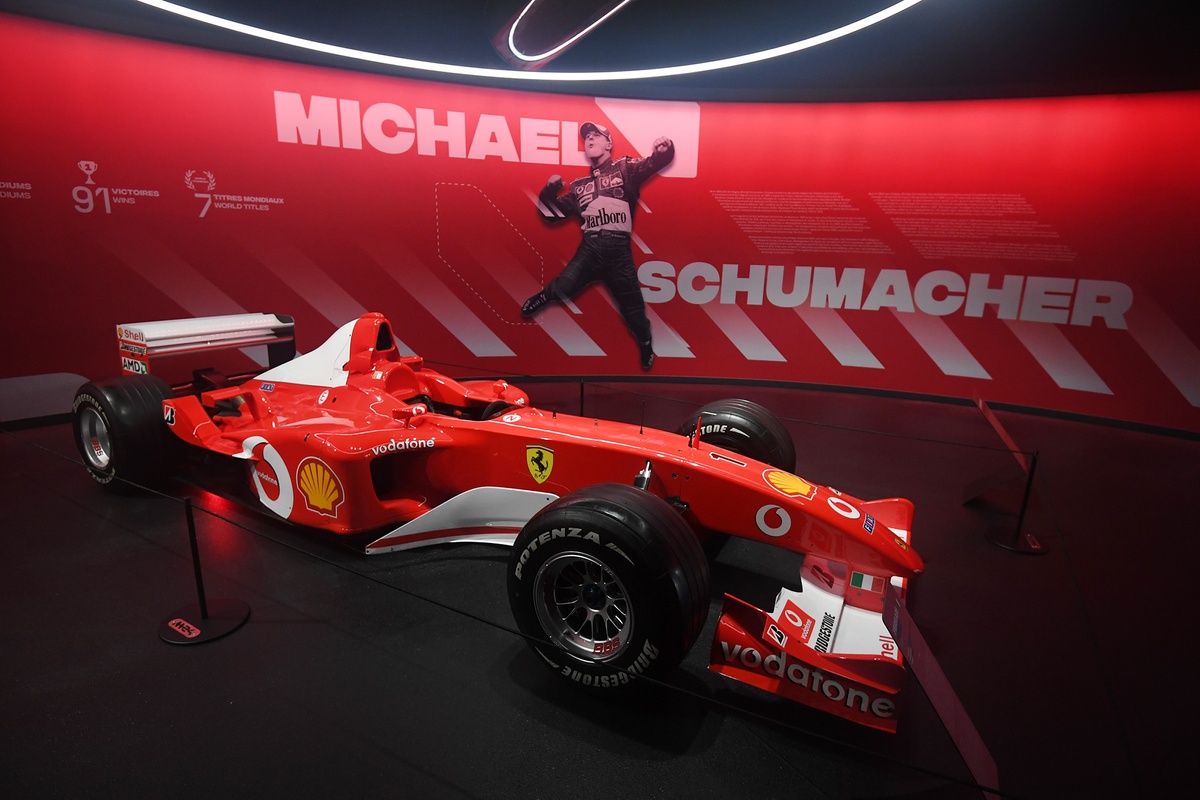
Thanks to Richard Mille’s investment in the project – wanting to share the finest pieces from his collection with the public – combined with the ACO’s archive of 1,000,000 photographs, and above all the priority given to authenticity, the project is unquestionably a success. The setting also houses “remarkable pieces”, exemplified by the Alley of Heroes, which honours two legends at either end: Michael Schumacher and Henri Pescarolo.
“This Ferrari F2002 of Michael Schumacher is a car with which he utterly dominated, and we are proud to have it in the museum,” said Fabrice Bourrigaud, though entirely incapable of selecting just one car that makes him especially proud: “To choose is to give something up! It’s difficult… The winning Bentley from 1924, which is an extraordinarily rare piece, is something truly exceptional.”
A Museum for All
As I love human stories, and because this is all about adventure, there is the Rondeau, with the story of this child of Le Mans who built his own car to race in the Le Mans 24 Hours and managed to win the race by beating Porsche and Jacky Ickx: it’s the ultimate fantasy. On the Formula 1 side, Jacky Ickx’s Ferrari from 1970 gives me goosebumps, and then there’s Sebastien Loeb in rallying…
“The collection we are presenting illustrates this partnership between the ACO and Richard Mille. We have the potential for 400 cars, so there is a great deal still in reserve! Because this museum has to stay alive, the permanent collections must rotate. And there is also a space dedicated to temporary exhibitions, with major themes beginning in 2027.”
The doors are now open, just in time for the 2026 Le Mans 24 Hours, and will certainly become one of the must-see stops for any racing enthusiast, young or old.