Rising Salmonella Cases in England
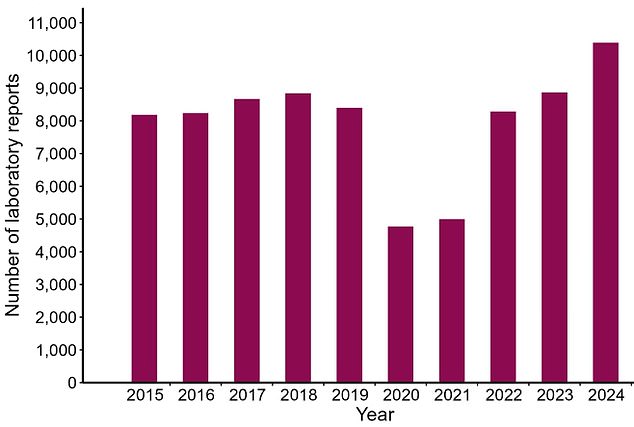
Health officials in England have issued a warning about the increasing number of salmonella cases, a dangerous foodborne illness that has reached its highest level in a decade. According to new data from the UK Health Security Agency (UKHSA), over 10,400 cases were recorded in 2025. While this figure is similar to the previous year, it highlights that infections remain consistently high rather than showing a sharp increase.
Salmonella is commonly found in poultry, eggs, and unpasteurised dairy products. It can cause symptoms such as diarrhoea, vomiting, and fever, and in rare cases, it can be life-threatening. In 2025, there were 13 outbreaks reported, affecting 269 people. However, these numbers represent only a small portion of the total cases.
London had the highest number of salmonella infections, with 2,329 cases reported. Dr James Cooper, Deputy Director of Food Policy at the Food Standards Agency, said: ‘Public safety is our highest priority, and we are working closely with the UKHSA to understand the reasons behind these infections and take action to protect public health. We encourage consumers to check Food Hygiene Ratings at food.gov.uk when they are eating out.’
He also advised people to reduce their risk of food poisoning at home by following the 4Cs of food hygiene: chilling, cleaning, cooking, and avoiding cross-contamination.
Preventable Infections
Officials warned that many salmonella cases are preventable and often result from simple hygiene mistakes in the home, such as undercooking meat, poor storage, and cross-contamination in kitchens. Salmonella is typically spread through contaminated food but can also pass between people or through poor hand hygiene when handling raw ingredients.
Young children, older adults, and those with weakened immune systems are most at risk of serious illness. Dr Gauri Godbole, Deputy Director for Gastrointestinal Infections at UKHSA, said: ‘We are seeing consistently high levels of gastrointestinal infections in England. These infections spread in many ways – through contaminated food or water, contact with an infected person, or contact with infected animals or their environment. Washing hands thoroughly with soap and water can help prevent infection.’
She added that anyone suffering from diarrhoea or vomiting should avoid preparing food for others and stay away from work or school until at least 48 hours after symptoms stop.
Other Foodborne Illnesses
Campylobacter, another leading cause of food poisoning, also remained widespread, with nearly 69,400 cases reported in 2025. This reinforces concerns about persistently high levels of foodborne illness. Meanwhile, separate figures show that listeria infections continue to pose a serious risk, particularly to vulnerable groups.
There were 181 cases reported in England and Wales last year, including 28 deaths. Among pregnancy-related infections where outcomes were known, nearly a third resulted in miscarriage or stillbirth. Listeria is typically caught through contaminated chilled or ready-to-eat foods, and while often mild, it can lead to life-threatening complications in older people, pregnant women, and those with underlying health conditions.
Simple steps such as washing hands thoroughly, keeping raw and cooked foods separate, and refrigerating leftovers promptly can significantly reduce the risk of infection.