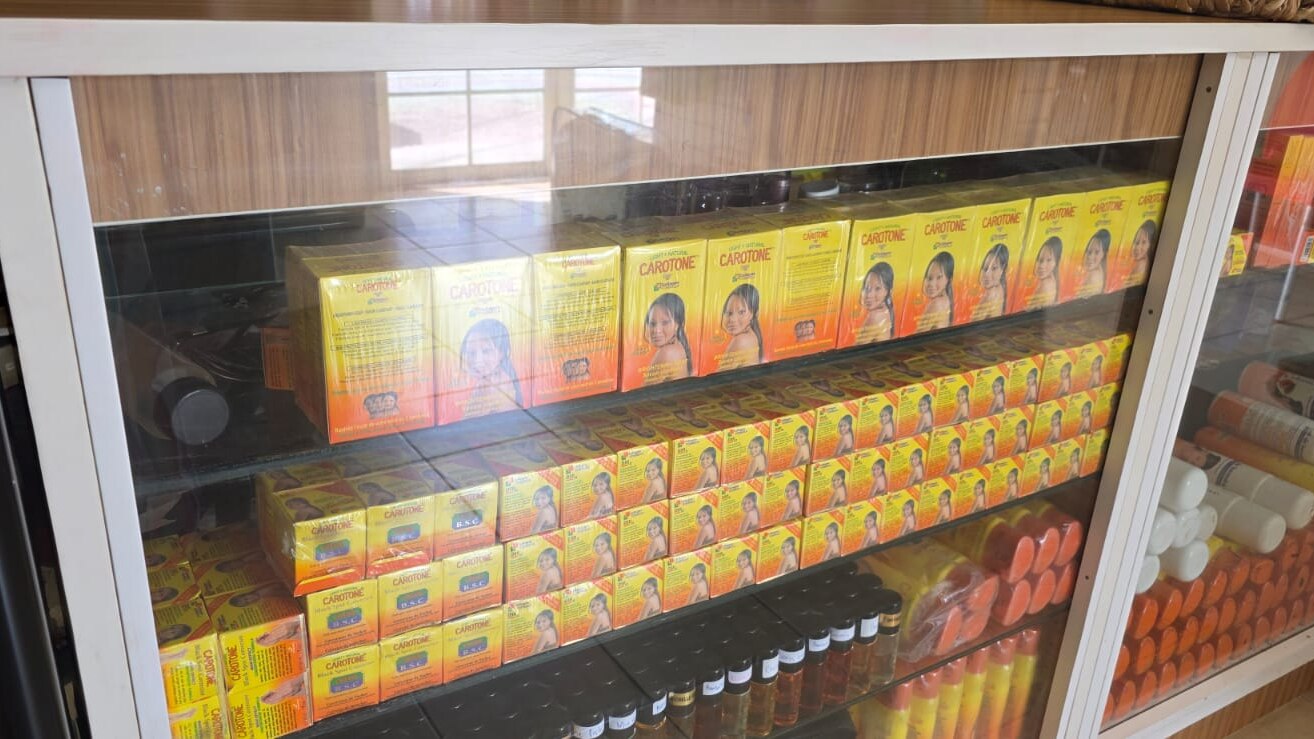
The Rise of Skin Brighteners in Tonga
Pauline Bourke recalls the time when skin brighteners gained popularity in the early 2000s. Today, she sells beauty products to Tongan youth who continue this trend. “I believe they use these products to become more beautiful, their skin becomes clearer… [they hope] their girlfriend or their boyfriend will also see them as more beautiful,” she shared with ABC’s The Pacific.
Skin whiteners and brighteners are common in Tonga. Whiteness is a beauty ideal that some Pacific people strive for, while those with darker skin tones often face discrimination. This phenomenon is known as colourism — the prejudicial or preferential treatment of people, usually of the same race, based on their skin tone.
The issue of whiteness can be traced back to the region’s colonial past, and today some individuals are fighting against it.
A Personal Battle Against Racism
As Apple TV’s Chief of War cast accepted the best ensemble performance award at the Film Independent Spirit Awards, Black-Hawaiian actor Moses Goods spoke in Native Hawaiian. The celebration was short-lived when he faced online trolling.
“I know we should let these things go and pay them no mind, and usually I do, but this one was different,” Goods said on Instagram. “This one was rooted in hatred and racism and not only that, it was from another Native Hawaiian. I’m a f** popolo [Black person] with no koko — no Hawaiian blood, using the N-word freely and laughing about it. It’d be one thing if I did something offensive, but what was my offence? My offence is that I’m Black.”
The issue extends beyond the digital realm. 531pi radio host Carolanne Toetu’u noted that it has permeated parts of Pacific culture. “Growing up into a teenager, you’d say things like, ‘what a waste, they’re so good-looking but they are Black,’” Ms Toetu’u said.
Historical Roots of Colourism in the Pacific
Maile Arvin, an expert in race and settler colonialism at the University of Hawaii, explained that these attitudes were influenced by the Pacific’s history. “It’s most obvious in the name Melanesia which refers to the Black islands,” Dr Arvin said. “Polynesia, the word just means many islands. And then Micronesia means small islands. So, the actual names are not racial in the sense that Melanesia is.”
She mentioned that 19th and 20th century anthropologists like Louis Sullivan portrayed Polynesians as “whiter and nobler.” Sullivan took physical measurements and photographs, compiling data such as hair types and nose lengths to justify his claims. Despite the work being debunked, Dr Arvin believes this history of elevating whiteness continues to influence Pacific societies.
“There is sometimes some understanding that Melanesians are understood to be folks with the darker skin, and therefore have a particular history with really explicit racism against them, which is tied to that,” she said. “I think it’s important to see it as an origin story of the way we often unconsciously believe certain racial ideals in contemporary life.”
Experiences of Melanesian Contestants
Melanesian contestants competing at beauty pageants have also experienced colourism in recent years. May Torowi Hasola represented Papua New Guinea at the regional competition in 2024 where she received a torrent of abuse for her skin tone.
“It was disappointing experiencing colourism, and especially when I put myself out to be of service, and to be someone who really champions women here in Papua New Guinea,” Ms Hasola said. “I was really blessed that I had such a strong family and people and friends that I could … rely on to uplift me and hold me during this time.”
Despite the online abuse, she said the role was one of “the biggest honours of my life” and that she represented all regions in PNG.
Celebrating Diversity
Moses Goods wants people to celebrate diversity. He emphasized the importance of events like FestPAC, the Pacific’s largest arts and culture festival, in learning from other cultures and celebrating difference. “When you’re in the middle of that environment and you see the different beautiful shades around you and know that we’re all connected, we all come from the same thing,” he said.
[map]
You can watch the full story and episode of The Pacific on iView.