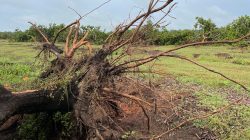
A new report has highlighted the urgent need for action to address Western Australia’s “biodiversity crisis,” calling for immediate measures to reverse the alarming rate of native vegetation clearing. According to the Conservation Council of WA, 51,000 hectares of land have already been approved for clearing, with an additional 128,000 hectares currently under application. This growing trend is a major concern for environmentalists and conservation groups who are urging the government to take decisive steps.

On Thursday, the state’s leading conservation body released a comprehensive report titled Back from the Brink: A Protection Agenda for Nature. The document outlines 36 key recommendations aimed at transforming the way nature is protected in Western Australia. These include expanding the Environmental Protection Authority’s strategic assessments, reviewing the Biodiversity Conservation Act, limiting the use of environmental offsets, and re-evaluating the prescribed burning program in the south-west.
Matt Roberts, executive director of the Conservation Council of WA, emphasized that the report highlights real-world examples where current policies are failing to protect the environment. He said the recommendations come from a broad coalition of experts across the environmental sector.
Roberts pointed to the severe degradation of the Swan Coastal Plain and the large-scale land clearing for mining in the Pilbara as critical issues that are often overlooked. He criticized the lack of regulatory brakes on land clearing, stating that industry-focused fast-tracking systems are undermining environmental protections.
The report was developed in collaboration with conservation groups, Aboriginal leaders, and environmental specialists, forming a “collaborative roadmap” for necessary reforms. It specifically addresses the impact of land clearing on endangered species such as black cockatoos in the south-west, and the northern quoll and ghost bat in the Pilbara.
Roberts also referenced recent federal reforms to the Environment Protection and Biodiversity Conservation Act and a memorandum of understanding between Environment Minister Murray Watt and WA Premier Roger Cook. He argued that these developments have created a system that prioritizes approvals over proper environmental assessments.
“The rhetoric around balancing nature and industry is not new, but we have failed to achieve this balance for decades,” he said. “These 36 recommendations represent the necessary changes to restore that balance.”
Professor Kingsley Dixon from the University of Western Australia’s School of Biological Sciences described the report as a powerful call to action from scientists and the community. He warned that Western Australia, which is more biodiverse than 98% of other countries, is witnessing its natural heritage unravel before our eyes.
Roberts stressed that the report’s recommendations are not unreasonable demands. However, they cannot be easily incorporated into slogans about fast-tracking or maintaining economic growth. Instead, they are essential for restoring balance to the environment.
Key recommendations include:
- Protecting critical and remnant habitats by establishing well-substantiated and enforceable buffer zones.
- Implementing a moratorium on land clearing in areas where native vegetation cover is critically low.
- Introducing early filtering for projects that are unlikely to meet environmental standards before they reach the EPA.
- Requiring the Department of Biodiversity, Conservation and the Arts to publish biodiversity audits.
- Strengthening mine site rehabilitation and environmental compliance.
- Ensuring the EPA’s independence and expanding its role to assess greenhouse gas emissions during evaluations.
In response to the report, Aaron Morey, chief executive of the Chamber of Minerals and Energy WA, urged caution against policies that might drive investment to countries with weaker environmental standards. He emphasized the importance of supporting the Paris Agreement and achieving net-zero emissions by 2050.
Morey also noted that global demand for resources will continue to rise, and it is crucial to ensure that policy choices do not compromise environmental or social outcomes.
Regarding the issue of prescribed burning in the south-west, Roberts acknowledged the debate surrounding the practice. He pointed out that emerging technologies could lead to a more informed discussion about how to manage fire in a way that minimizes damage to the landscape. However, he warned that current practices have led to irreversible loss of trees and uncontrolled fires that have had severe impacts on local ecosystems.