An Unexpected Visitor Stopped Shoppers in Their Tracks
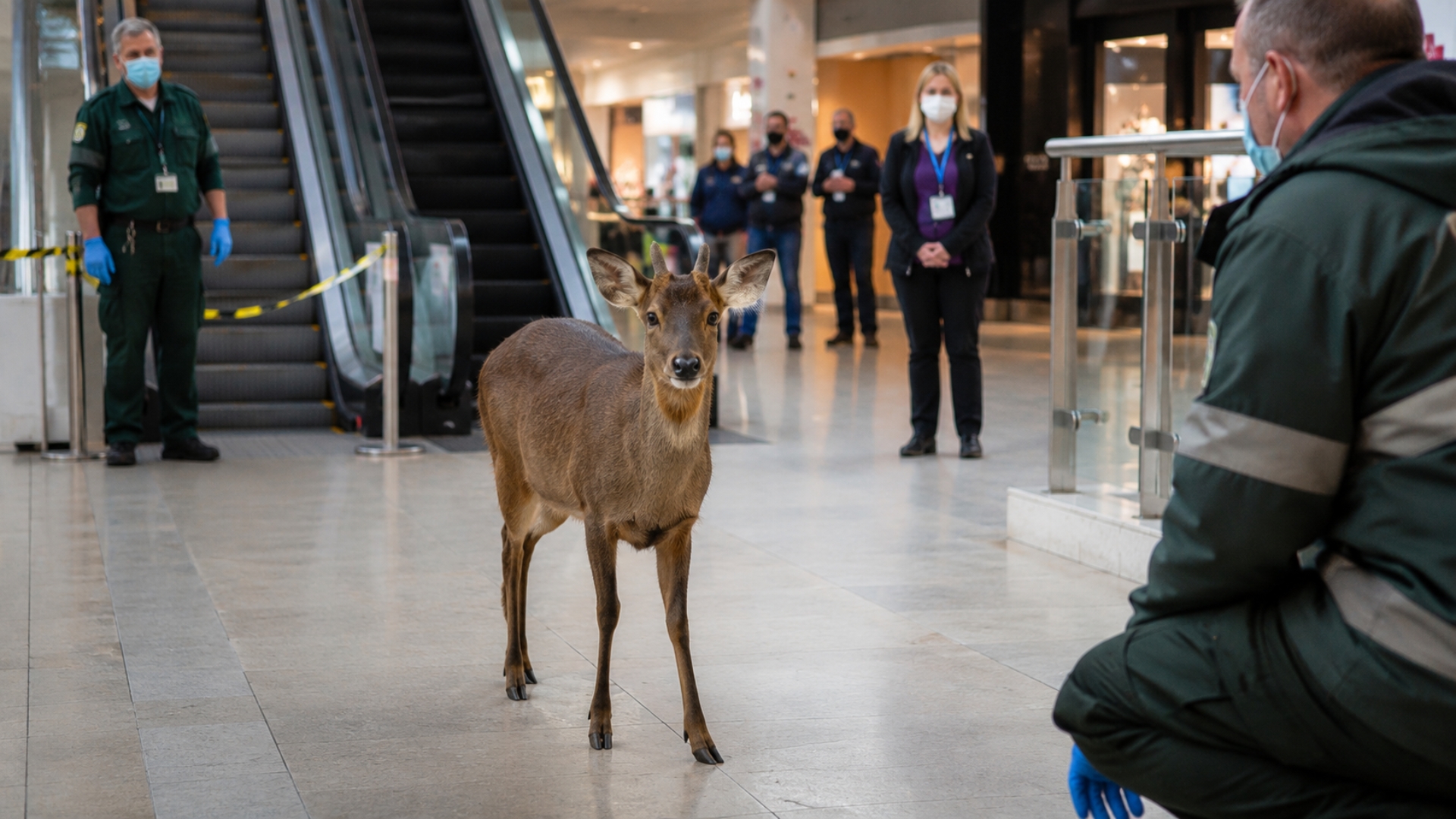
Few people expect to encounter a deer while visiting a shopping centre. That is why staff and shoppers in Norwich were left surprised when a muntjac deer became trapped in an escalator inside the city’s Chantry Place shopping centre. Emergency responders and wildlife specialists were called to the scene after reports that the small deer had become stuck and was unable to free itself.
Fortunately, the incident ended without serious injury to either the animal or the people involved. But the unusual rescue offered a reminder of how wildlife increasingly finds itself navigating landscapes designed entirely for humans.
Muntjac Deer Have Become Masters of Adaptation
Although the scene appeared extraordinary, the species involved is known for turning up in unexpected places. Muntjac deer are not native to Britain. Originally from parts of Asia, they were introduced during the late nineteenth and early twentieth centuries and have since established populations across much of England and Wales.
Unlike larger deer species that often rely on extensive woodland, muntjacs are highly adaptable. They can survive in small patches of habitat, suburban green spaces, gardens, railway corridors, and woodland fragments close to towns and cities. Their small size helps them move unnoticed through environments that would be difficult for larger deer to navigate.
Urban Landscapes Create New Hazards
The Norwich rescue illustrates a growing reality for wildlife living alongside people. Animals frequently move through urban areas in search of food, shelter, mates, or safe travel routes. Roads, fences, buildings, glass walls, drainage systems, and transport infrastructure can all create unexpected hazards.
For a muntjac, an open entrance to a shopping centre may simply appear as another route through the landscape. Once inside, however, escalators, polished floors, automatic doors, and crowded indoor spaces can quickly become dangerous obstacles. Many wildlife rescue incidents involve animals that accidentally enter environments they are poorly equipped to understand.
Why Muntjac Numbers Continue to Grow
Muntjac deer have proven remarkably successful in Britain. Unlike some native deer species that breed seasonally, muntjacs can reproduce throughout the year. Females may become pregnant again shortly after giving birth, allowing populations to increase rapidly where conditions are suitable.
Combined with their ability to use fragmented habitat and avoid human attention, this reproductive strategy has helped the species expand across much of southern and central England. Their success has also generated concerns among conservationists and land managers. High densities of muntjacs can affect woodland vegetation, young tree growth, and native plant communities, particularly in sensitive habitats.
Wildlife Encounters Are Becoming More Common
While a deer trapped in an escalator remains an unusual event, wildlife encounters in urban settings are becoming increasingly familiar. Foxes, badgers, deer, wild boar, and numerous bird species now regularly use towns and cities as part of their wider range. In many cases, animals are not actively seeking human contact. They are simply responding to landscapes that offer food, shelter, or travel opportunities.
As development continues to fragment natural habitats, wildlife and people are likely to cross paths more frequently. The challenge is ensuring those encounters remain safe for both.
A Small Rescue With a Bigger Message
The Norwich incident was ultimately resolved through the efforts of staff, rescuers, and wildlife specialists who worked to free the deer and ensure its welfare. What could have become a tragic story instead became an unusual reminder of nature’s resilience and adaptability.
The muntjac was not trying to become a shopping-centre attraction. It was behaving as wild animals often do—exploring, moving through unfamiliar territory, and responding to the opportunities and obstacles it encountered. Its unexpected appearance inside a busy urban building highlights a broader conservation reality.
As human development expands, the boundary between wildlife habitat and human space becomes increasingly blurred. For one small deer in Norwich, that boundary happened to end at the foot of an escalator. But the story reflects a much larger question about how people and wildlife will continue to share the same landscape in the years ahead.