A Car Graveyard Few Automakers Want to Remember
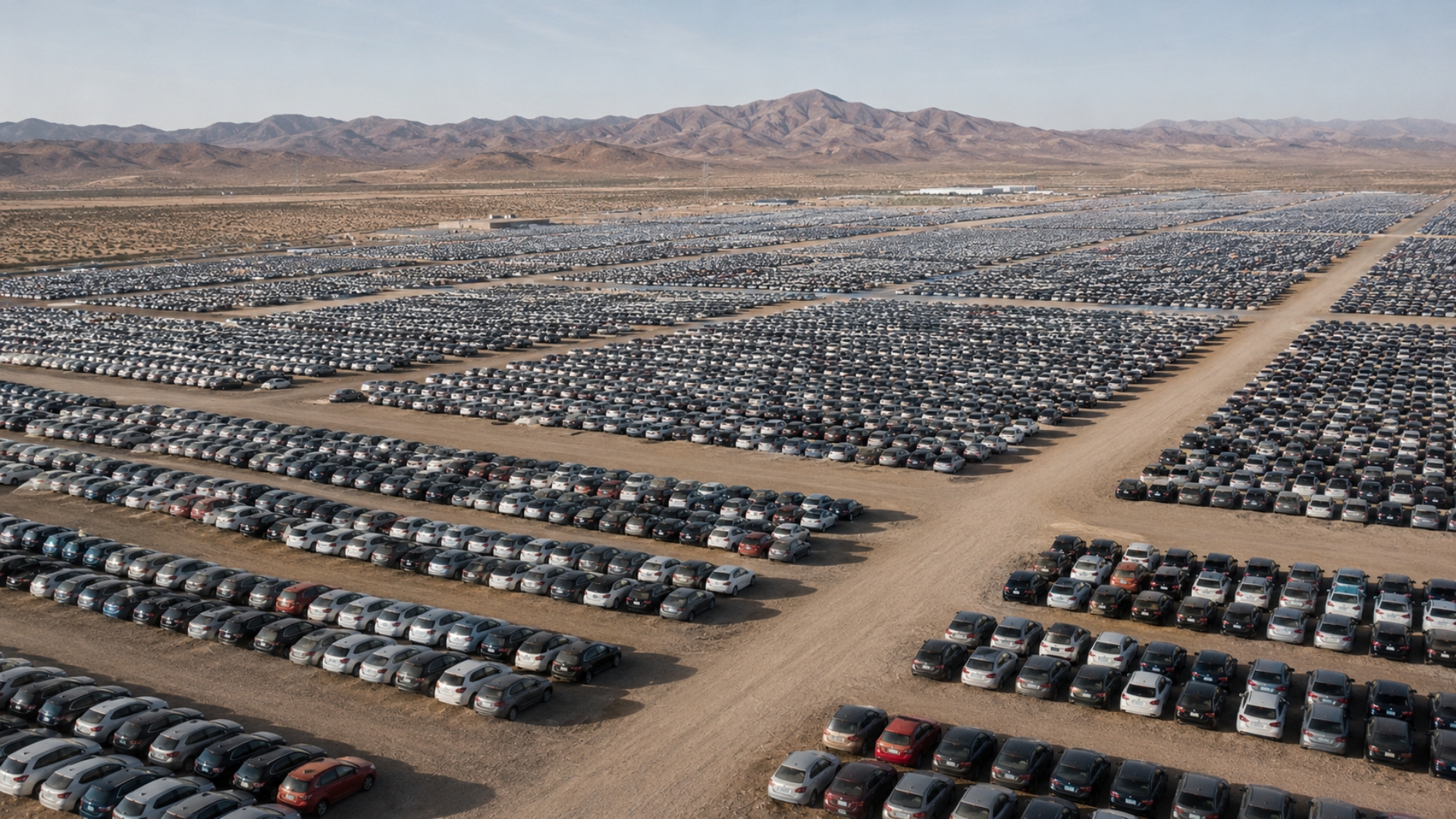
From above, the scene looks almost unreal. Rows upon rows of Volkswagen and Audi vehicles stretch across former military bases, desert storage sites, and large industrial properties. What appears to be a dealership inventory on a massive scale is actually one of the most visible remnants of Dieselgate, the emissions scandal that reshaped Volkswagen’s future and accelerated its shift toward electrification.
Years after the scandal first emerged in 2015, hundreds of thousands of affected vehicles remain tied to the aftermath of the company’s settlement efforts. The sheer scale of the storage operation remains one of the most extraordinary consequences of the crisis.
Dieselgate Became One of the Costliest Scandals in Automotive History
The scandal erupted when regulators discovered that certain Volkswagen Group diesel vehicles had been equipped with software designed to recognize emissions testing procedures. During official testing, the vehicles could alter engine behavior to meet regulatory requirements. In normal driving conditions, emissions levels could be significantly higher than those recorded during certification tests.
The revelation triggered investigations around the world and led to billions of dollars in fines, settlements, vehicle buybacks, and legal expenses. For Volkswagen, the financial damage eventually exceeded $30 billion globally, making Dieselgate one of the most expensive corporate scandals in automotive history.
Why So Many Cars Ended Up in Storage
One of the largest elements of Volkswagen’s U.S. settlement involved buying back affected vehicles from owners. Thousands of customers accepted compensation offers and returned their cars rather than waiting for repairs or emissions modifications. As a result, Volkswagen suddenly became the owner of an enormous fleet of vehicles that could not immediately return to public roads.
The company stored the cars at dozens of facilities throughout the United States, including large desert sites where the dry climate reduced the risk of deterioration. At the height of the buyback program, aerial photographs of the storage facilities attracted global attention. The images showed an automotive inventory unlike anything the industry had previously seen.
Not Every Vehicle Was Destined for the Crusher
While many people assumed the cars would eventually be destroyed, the reality has been more complicated. A significant number of vehicles were repaired to comply with regulatory requirements and later resold. Others were used for parts, research, testing, or other approved purposes.
However, not every vehicle could be economically returned to service. Some remained in long-term storage as legal proceedings, regulatory decisions, and logistical challenges unfolded. The result is that years later, substantial numbers of former buyback vehicles continue to exist within the broader Dieselgate legacy.
The Desert Lots Became Symbols of a Turning Point
The images of thousands of abandoned diesel cars carry significance beyond simple waste. They represent a moment when confidence in diesel passenger vehicles collapsed in the United States. Before Dieselgate, Volkswagen had heavily promoted diesel technology as an efficient alternative to gasoline engines. After the scandal, that strategy became effectively impossible to sustain.
The fallout helped accelerate a wider industry shift toward electrification. Volkswagen itself ultimately responded by investing tens of billions of dollars into electric vehicle development, creating dedicated EV platforms and launching products such as the ID family of vehicles.
In many ways, the desert storage lots became monuments to the end of one era and the beginning of another.
The Cars Tell a Story Bigger Than Volkswagen
What makes the abandoned vehicles so fascinating is not simply their number. Many of them remain relatively modern, usable automobiles. Unlike traditional automotive graveyards filled with wrecked or obsolete vehicles, these cars became stranded because of a regulatory and corporate crisis rather than age or mechanical failure.
That distinction gives the story an unusual character. The vehicles themselves were not necessarily the problem. The controversy centered on how they were certified and marketed. As a result, the rows of parked Volkswagens and Audis continue to serve as physical reminders of how quickly trust can disappear when a major manufacturer loses credibility.
A Decade Later, Dieselgate Still Casts a Long Shadow
The automotive industry has changed dramatically since 2015. Electric vehicles have moved from niche products to strategic priorities. Emissions compliance has become an even greater focus. Regulators, investors, and consumers now scrutinize environmental claims more closely than ever before.
Yet the sight of hundreds of thousands of former Dieselgate vehicles still lingering in storage demonstrates how long the consequences of a major scandal can endure. For Volkswagen, the company has largely moved forward, transforming itself into one of the world’s biggest EV investors. But scattered across desert storage facilities and former military bases remains a reminder that some chapters of automotive history take far longer to close than anyone expects.