The Controversial Communication Method Dividing the Autism Community
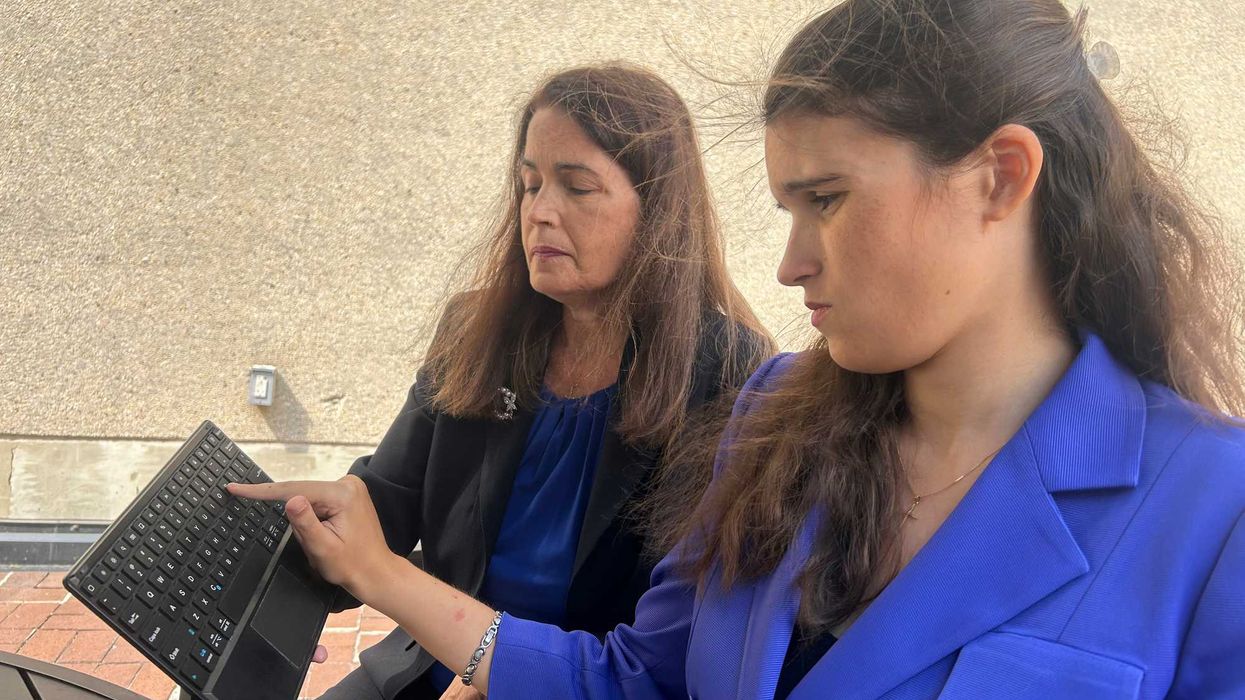
Elizabeth Bonker, a 28-year-old who is unable to speak, harbours a significant ambition: she wants government agencies to fund training in assisted spelling for individuals with autism. This communication technique, which involves pointing to letters on a board or using a keyboard with physical assistance from another person, has garnered fervent support from many families but faces strong opposition from leading professional organisations.
Bonker, who uses a wireless keyboard to communicate, recently sat down to discuss her mission. “We are misunderstood and underestimated,” she typed, her voice occasionally punctuated by humming or groaning as she carefully selected letters. Her plea is for all non-speaking individuals over the age of five to be given the opportunity to explore assisted spelling.
Supporters of assisted spelling, often referred to as “spellers,” claim it has transformed the lives of thousands. Bonker herself is an example, and she has powerful allies, including Robert F. Kennedy Jr., who appointed her and another autistic speller to a 20-member autism panel. This panel, heavily populated by parents who attribute their children’s autism to vaccinations, has become a focal point for the debate.
At a recent panel session, three other members shared how their non-speaking adult children were learning to communicate through spelling. The panel even passed a resolution, incorporating Bonker’s language, stating that “robust” communication programs are crucial for autistic individuals. Bonker has actively lobbied the Department of Health and Human Services to endorse training in assisted spelling for those who desire it.
However, the scientific and professional communities remain deeply sceptical. Leading organisations for autism science, psychology, and speech pathology point to research that suggests these methods are flawed, or even fraudulent. The underlying premise of assisted spelling, that individuals with autism possess normal cognitive abilities but are trapped in uncooperative bodies, is questioned. Critics argue that assisted spelling is not autonomous communication, likening the facilitator’s role to that of a Ouija board operator, potentially influencing or even dictating the speller’s output.
For many within Kennedy’s “Make America Healthy Again” community, the controversy echoes the contentious claims linking vaccines to autism, a notion they refuse to dismiss. They perceive the resistance to assisted spelling as a continuation of perceived harm inflicted by the medical establishment, which they believe also denied them helpful treatments. Louis Conte, a parent of a child with autism, articulated this sentiment in a publication allied with Kennedy, stating that limiting access to spelling is not merely restricting expression but “erasing identity.”
In response to Kennedy’s panel, mainstream autism experts and advocates formed the Independent Autism Coordinating Committee. At their meeting, Amy Lutz, a senior lecturer and autism advocate, voiced strong opposition to diverting resources to “debunked interventions like spelling.” She argued that it’s a waste of time and prevents individuals subjected to these methods from accessing evidence-based education, likening the interactions to turning people into puppets.
A Spectrum of Beliefs and Treatments
The autism landscape is incredibly diverse, encompassing a wide range of perspectives from individuals with autism, their families, researchers, and service providers. Disagreements abound regarding the causes of autism, with some pointing to vaccines or environmental exposures, while others attribute the rise in diagnoses to changes in diagnostic criteria. Treatment approaches also vary wildly, from mainstream therapies to alternative remedies, and debates rage over the best educational settings, from classroom inclusion to residential care. For some, autism is viewed as a difference rather than a disability.
Dr. Audrey Brumback, a child neurologist, highlights this shift in perception, noting that a diagnosis of autism for a young child can be perceived as a tragedy, whereas for a teenager, it can be viewed as positive news – a confirmation of their unique identity.
Despite decades of research, effective treatments for autism have remained elusive. Dr. David Mandell, a professor of psychiatry and pediatrics, describes the results as “very disappointing.” For children with severe autism, who require constant care for conditions like epilepsy and often have limited verbal language, the challenges are immense. Tracy Simmons, whose 17-year-old son Noah has autism, poignantly noted that special education could be aptly described as “spelling special education with a dollar sign,” reflecting the significant financial burden of care.
Many parents have explored a plethora of unconventional treatments, including dietary changes, hyperbaric oxygen therapy, and even experimental stem cell injections. More recently, therapies involving leucovorin, a drug used in cancer care, have been promoted, with some suggesting it could benefit a significant portion of children with autism. However, evidence supporting these interventions is often scarce, making it difficult to ascertain their efficacy, especially when multiple treatments are used concurrently.
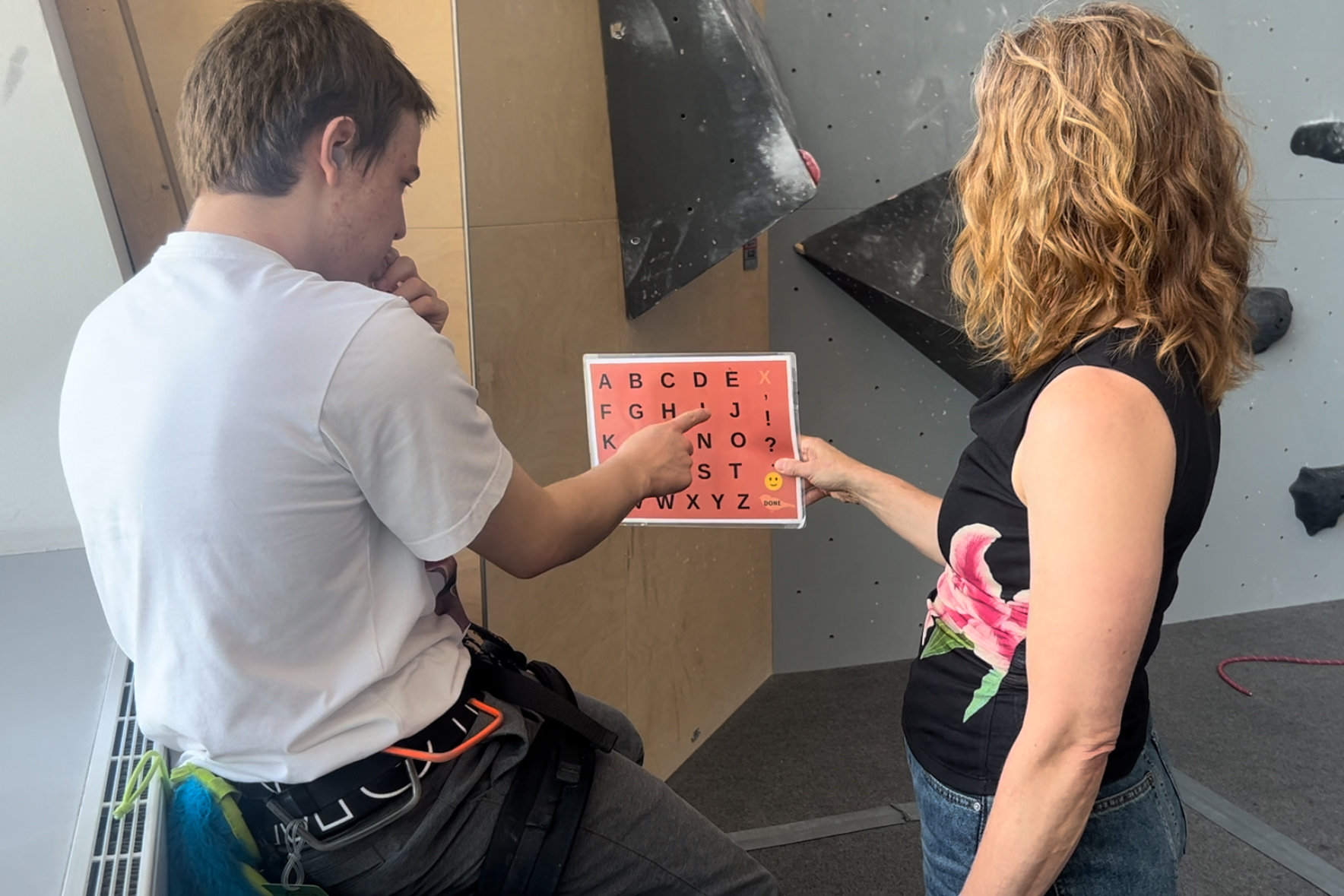
Noah Simmons has spent two years learning to spell and type. At a climbing center in Gaithersburg, Maryland, he communicated with the aid of his mother, Tracy Simmons, who is holding a laminated sheet with the alphabet. (Arthur Allen/KFF Health News)
Noah’s Journey: A Glimpse into Assisted Spelling
Noah Simmons, a 17-year-old with autism, has dedicated two years to learning assisted spelling and typing. Through this method, he has experienced a profound shift in his ability to connect with the world. “Im a new person. I have friends, I write, climbing,” he typed during a Zoom session with his mother, Tracy Simmons. “Conversation. I can have one. I have a say. Im human now.”
His progress is vividly illustrated at an indoor climbing centre. After a challenging climb, Noah, with his mother by his side holding an alphabet sheet, managed to spell out, “Im going to crush it again!” This moment, along with subsequent keyboard sessions, showcased his ability to communicate.
However, Tracy Simmons acknowledges the complexities. When she refrains from offering verbal prompts or ceases to hold the alphabet board, Noah often struggles and requires assistance. She candidly admits that the facilitator can inadvertently influence the speller’s words. Despite his physical achievements in climbing, Noah faces challenges with fine motor skills, anxiety, and body control. “He’s working on becoming an independent typer. He can do it short amounts of time,” she explained. “But at times he gets overwhelmed.”
The assisted spelling method itself has a history dating back to the early 1990s in the United States. Initially, facilitators physically guided the spellers’ hands to letter boards, operating under the belief that intelligence was present but physically inaccessible. Within a few years, however, numerous studies cast doubt on the efficacy of these methods, with a 2018 review finding no evidence that spellers could identify words or objects without their facilitators. The technique has also been linked to false accusations of sexual abuse, sometimes targeting individuals who were sceptical of the spelling process.
A subsequent development was the Rapid Prompting Method, developed by Soma Mukhopadhyay, and a similar approach called Spelling to Communicate, championed by speech pathologist Elizabeth Vosseller. Both methods involve a facilitator holding the letter board and relying on prompts. Neither Mukhopadhyay nor Vosseller responded to requests for comment, and they have reportedly declined to subject their systems to rigorous testing. Bonker views these demands for testing as a lack of respect for individuals with disabilities.
When questioned about her own reliance on her mother for communication after 23 years as a speller, Bonker typed, “I can do it in certain environments that don’t include interviews with strangers.” Her mother explained that individuals with severe autism often need coaches to manage anxiety.
The public has also been exposed to assisted spelling through media appearances. Woody Brown, another prominent speller, communicated through his mother, Mary Brown, on the Today show, promoting his novel. While Mary Brown articulated eloquent sentences she attributed to Woody, the letters he typed on screen appeared nonsensical, raising questions about his authorship, especially given Mary Brown’s background as a Hollywood script analyst. The Browns did not comment on these inquiries.
The podcast The Telepathy Tapes also brought assisted spelling to prominence, featuring individuals with profound autism allegedly demonstrating clairvoyant abilities through spelling. Critics, however, suggest that the facilitators were subtly guiding the spellers, thereby controlling the narrative. Bonker expressed appreciation for the podcast host’s inclusion of her non-profit group’s information, stating, “I believe nonspeakers have many gifts. And I believe what they say.”
The debate over assisted spelling is now unfolding in educational boards and courtrooms, as parents seek funding for their children’s spelling lessons. In New York, advocates for spellers have criticised a state senator for proposing legislation that would require payments for communication methods ensuring patient autonomy.
Vikram Jaswal, a psychologist who works with spellers, has observed individuals with severe autism who can type independently, though he notes this is a rare ability. He stresses the need for further research to identify who might best benefit from such techniques.
Tracy Simmons remains a staunch believer in the method, as does her son, provided he feels in control of his communication. As she shared a story Noah had “written” with her assistance, she reflected on the long road to independent typing, acknowledging that while he “writes all the time in his head,” consistent independent typing may still take years.