Historical Shipwrecks Listed as Protected Sites
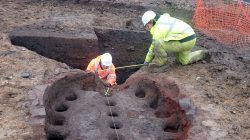
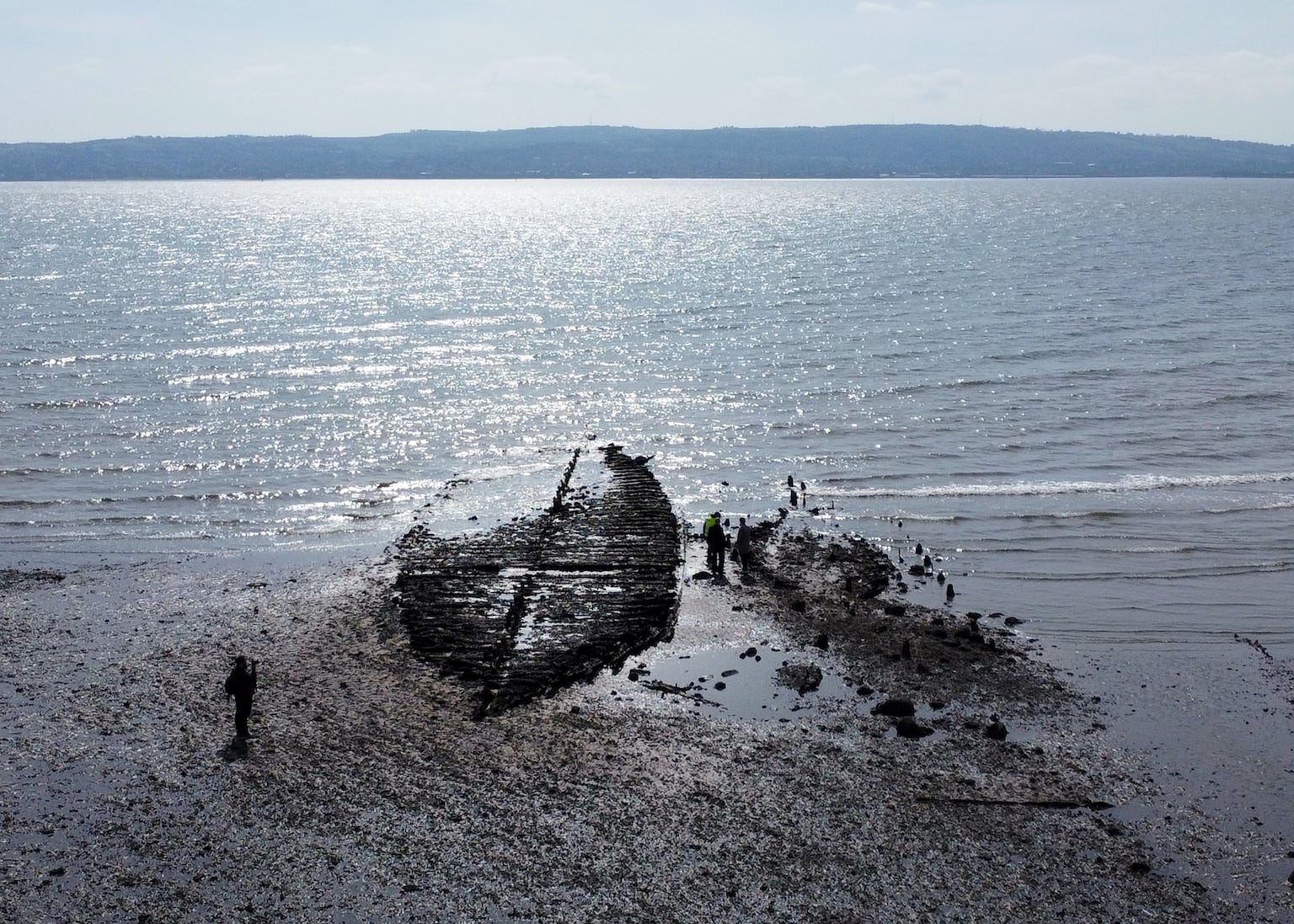
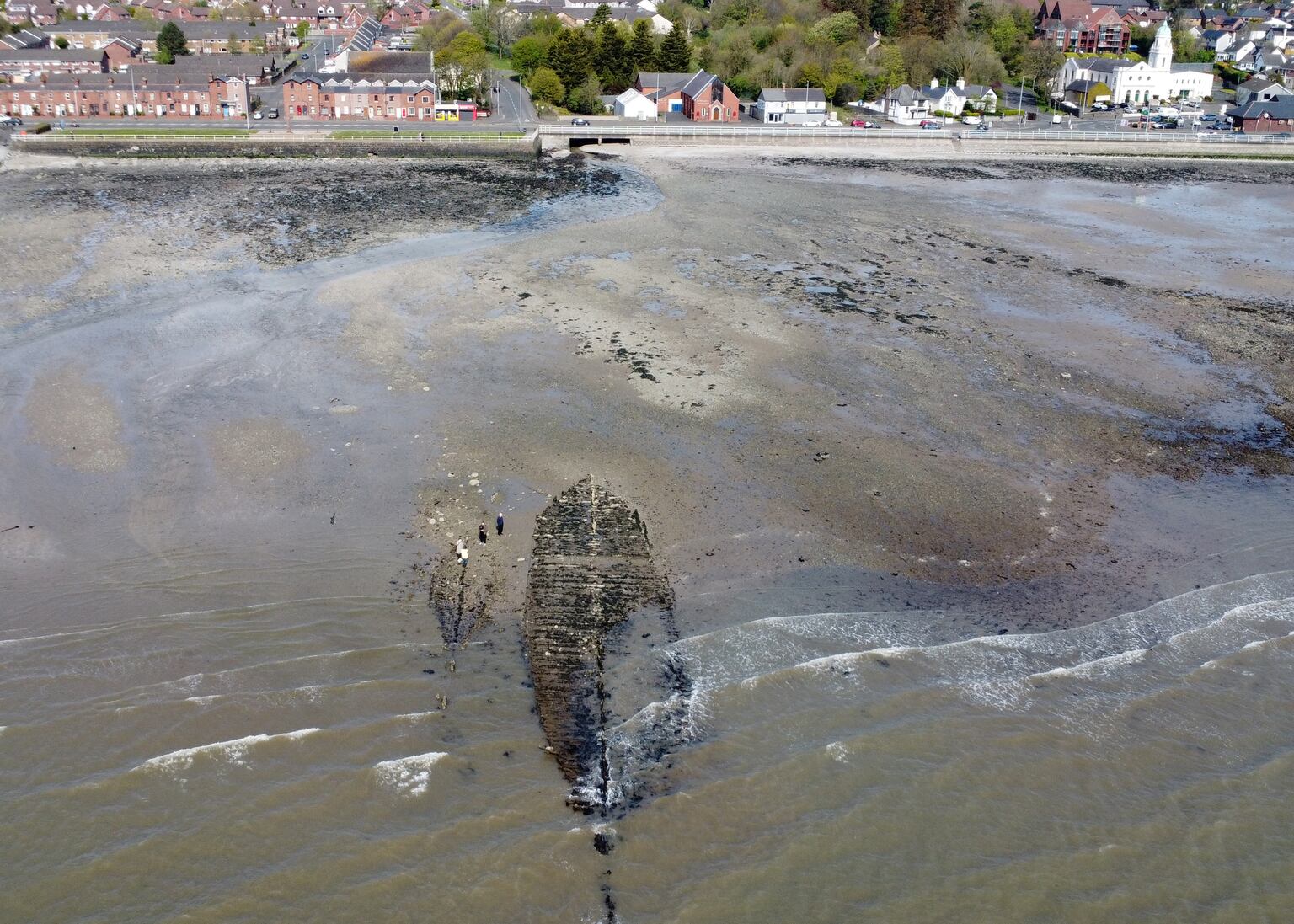
A group of ship ruins located on the shore of Belfast Lough have recently been listed as a protected site due to their “rare” nature and “national significance.” These hulks of three vessels, found along the coast at Whiteabbey, form part of one of the latest historical sites to receive ‘scheduled monument’ status. While visible from the main Shore Road at low tide, the full detail of the wrecks can be seen upon closer inspection—this includes the remainders of the keel, floor timbers, and planking.
The largest of the three is almost 60 meters long and 10 meters wide, while two smaller vessels, both around 20 meters long, are located between posts that would have once held a pier above them. Speaking to The Irish News, Liam McQuillan, senior archaeologist at the Department for Communities (DfC), explained that the boats were not “true shipwrecks.”
“They were deliberately dragged up on to the coast, probably in the 1800s, and deliberately dismantled,” he said. “What you see is the leftover from that process, but for some reason, because of the sediments here where they have been buried, they’ve been very well preserved.”
McQuillan noted that the ships have been present for at least 100 years, as evidenced by photographs showing a pier being constructed around two of the vessels. “They would have been very typical of merchant craft that would have sailed up and down Belfast Lough in the 19th century,” he added.
He emphasized that the ships represent a “rare” example of preserved boats from the period. “Having one vessel of this age in this state along the coast would be quite rare, but having a group of three like this, and possibly more below the water line, would be even rarer,” he said. “They’re really of national significance and that’s why we’ve designated them as scheduled monuments.”
Unique Opportunity for Public Engagement
Now one of over 2,000 scheduled historic monuments across the north, these wrecks offer an unusual opportunity where people can actually see them up close. Unlike many other designated vessels along the coast, which tend to be submerged, these wrecks are accessible during low tide. Members of the public are encouraged to “look but not touch” to preserve their integrity.
“If people remove things from them, that diminishes their significance and reduces the research potential that they currently offer,” McQuillan said.
Historical Significance of the Site
McQuillan also highlighted how these wrecks reflect the maritime history of Whiteabbey. “These were probably connected to the spinning mill, predating the pier,” he said. “They were probably an original way of transporting the coal to the coast here—this really contributes to the narrative about how Whiteabbey has evolved as a place since the industrial revolution.”
He noted that while many in the local area may have known about the wrecks, they might not be aware of just how old they are. “When we started to do that research and found that they have been lying here for over a hundred years, that the materials used in them indicate probably the 19th century, that really adds something for the local people as well as to what they have in value along the coastline here,” he said.
Preservation Efforts and Future Research
The designation of these ship ruins as scheduled monuments ensures that they will be preserved in their current state as far as possible. This decision underscores their importance not only as historical artifacts but also as valuable resources for future research and education.
Archaeologists and historians are eager to continue studying these remnants to gain deeper insights into the maritime activities of the 19th century. The preservation of such sites helps maintain a tangible connection to the past, allowing communities to appreciate and learn from their rich heritage.
As more people become aware of the significance of these shipwrecks, there is hope that they will serve as a reminder of the region’s historical and cultural legacy. By protecting and promoting these sites, we ensure that future generations can also witness and understand the stories embedded in the landscape.