The Global Energy Shift and the Rise of Green Leadership
The ongoing geopolitical tensions, particularly the US-Israel war on Iran, have sparked a significant shift in global energy dynamics. Analysts suggest that this conflict may have inadvertently accelerated a worldwide transition toward renewable energy, with China emerging as a key player in this transformation.
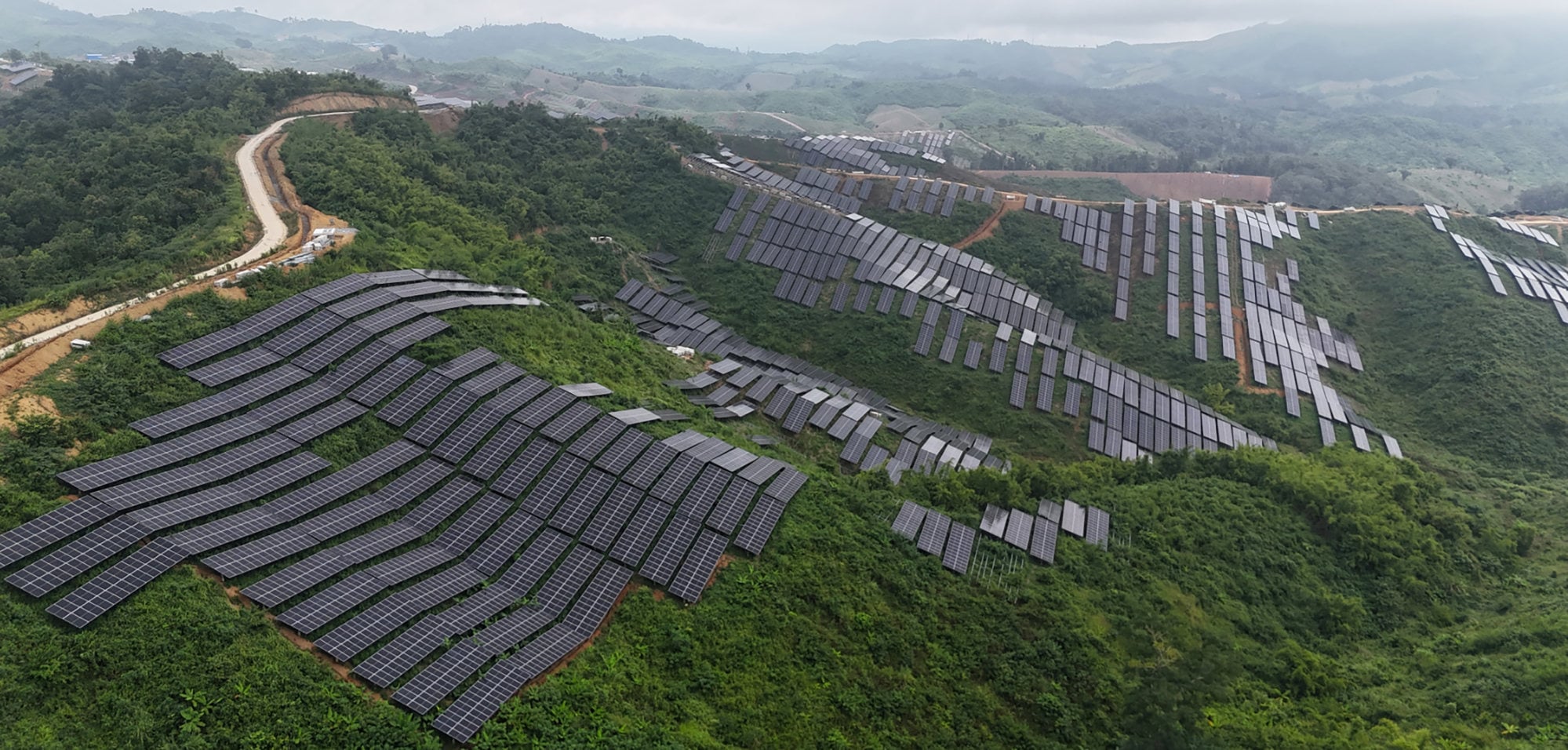
In Cuba, the prolonged US energy blockade has led to an unexpected solution: solar panels from China. These panels have not only provided an alternative to fossil fuels but have also set a new standard for energy independence. Over the past 12 months, the share of solar power in Cuba’s national electricity generation increased from 6% to over 20%, according to Microgrid Media, a California-based publication tracking global renewable energy capacity.
This shift has been crucial in neutralizing the impact of the oil blockade, which had previously been a primary tool of the US in its efforts against Cuba. By embracing solar energy, Cuba has demonstrated a model of resilience and self-sufficiency that is gaining attention globally.
By 2028, when all 92 Chinese-financed solar parks are expected to be operational, Cuba could generate up to 2,000 megawatts of power—equivalent to the current fossil fuel-generated capacity of the country. This development highlights the growing influence of Chinese investment in renewable energy infrastructure.
The global energy crisis, described by the International Energy Agency (IEA) as the worst in history, has intensified the race toward renewable power sources, electric vehicles (EVs), and clean energy infrastructure. China leads in all these areas, driven by its dominance in the photovoltaics supply chain.
According to a study released in February, there were 354 Chinese-backed renewable energy projects in Asia at the end of last year, along with 126 in Africa and 42 in Europe. This initiative was a joint effort by the International Institute of Green Finance (IIGF) based in Beijing and the Institute of Development Studies at the University of Sussex in Britain.
Solar energy constitutes the largest portion of these projects, reflecting China’s leadership in the photovoltaics supply chain. In Laos, a 1,000MW solar project developed by the China General Nuclear Power Group began operations on April 7. This project will feed into a regional power market aimed at reducing Southeast Asia’s reliance on fossil fuels, a region heavily affected by the Iran war.
Chijioke Nwaozuzu, a professor of petroleum economics at the University of Port Harcourt, noted that China appears well-positioned to benefit from the conflict. He pointed out that the war could accelerate global demand for renewable energy and EVs, as people seek to avoid future oil shocks.
The International Renewable Energy Agency (Irena), based in Abu Dhabi, highlighted in an April advisory that countries investing significantly in renewable energy have fared better during the crisis. China, with its diversified energy mix, relies on oil and gas for only about 4% of its needs, while coal accounts for around 60%, renewables for 30%, and nuclear for 6%.
Some of the worst-affected Asian economies depend on fossil fuels for as much as 50% of their power, according to Irena, whose members include 170 countries and the European Union (EU).
In Europe, with 406 gigawatts of solar energy and 246GW of wind power installed, the EU avoided Euro58 billion (US$68 billion) in additional fossil fuel costs attributed to the war. Spain and Portugal, with extensive solar panel and battery technology deployment, managed to avoid some of the worst effects of supply disruptions. In contrast, Italy, with less renewable coverage and greater reliance on natural gas, fared less well.
Official data showed that, for the first time in 2025, EU countries generated more energy from renewable sources than from fossils. David Brown, head of energy transition at research firm Wood Mackenzie, noted in a March 20 assessment that higher oil prices would speed up the adoption of electric vehicles, as petrol costs remain a key factor for new buyers.
In the US, crude oil prices of $90 per barrel could make owning a new vehicle more cost-effective for EVs by 2029. At the same price point, American demand for pre-owned electric vehicles could grow by as much as 40% annually.
Wood Mackenzie also noted that countries importing cheaper Chinese-made EVs would experience a quicker transition. Brazil has become the largest foreign market for electric carmaker BYD this year, while Canada reduced tariffs on some Chinese EV models from 100% to 6%.
In Wood Mackenzie’s view, the Middle East conflict “could be a tailwind for EV adoption.” Higher oil prices and energy security concerns, combined with increasing renewable capacity, support a “base case outlook for around 80 million new EVs for the global passenger segment from 2026 to 2030.”
According to Irena, renewable energy accounted for 49.4% of installed energy capacity worldwide at the end of 2025, a figure projected to increase as costs for renewables and storage technologies continue to decline.
Meanwhile, the IEA forecasts that global oil demand will fall by 1.5 million barrels a day in the second quarter of this year—the largest drop since the coronavirus pandemic. In March alone, supplies fell by 10.1 million barrels due to restrictions in the Strait of Hormuz, causing the largest disruption ever seen to OPEC supply.
Nwaozuzu emphasized that the damaged energy infrastructure in the Middle East will keep supplies tight in the short-to-medium term, prompting countries to explore renewable alternatives. “The war in Iran may have inadvertently triggered an irreversible phase in the energy transition,” he said.