The Invisible Infrastructure of Modern Life
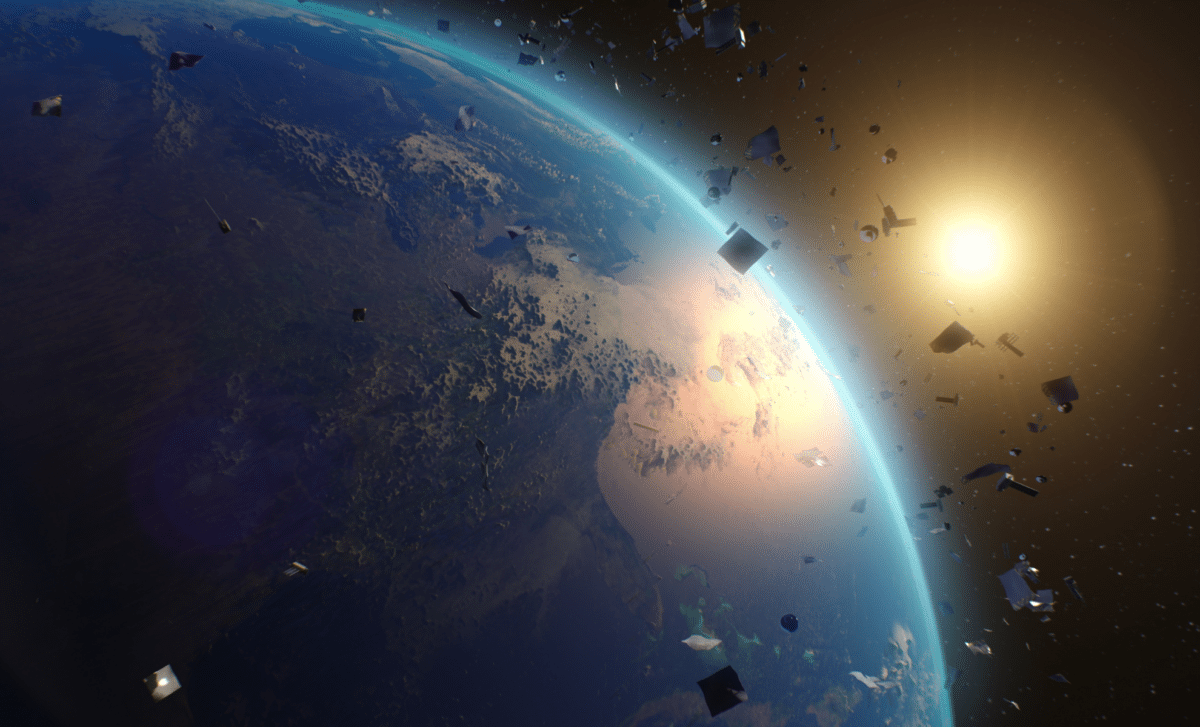
Far above Earth, thousands of satellites move in precise, coordinated paths, forming an invisible infrastructure that powers modern life. From global communications to navigation and weather forecasting, this orbital network depends on constant control and split-second decision-making to avoid disaster. Yet new research suggests that this delicate balance may be far more fragile than previously understood. A study published on arXiv and led by Sarah Thiele, now at Princeton University, finds that if satellite operators lose the ability to coordinate or maneuver spacecraft, a catastrophic collision in low Earth orbit could occur in as little as 2.8 days.
The CRASH Clock Reveals A Narrow Window For Disaster
The study introduces a new analytical tool called the Collision Realization And Significant Harm (CRASH) Clock, designed to estimate how quickly a major collision could occur under degraded conditions. Using satellite catalog data from June 2025, the researchers modeled scenarios where spacecraft could no longer perform avoidance maneuvers or where tracking systems became unreliable.
The results point to a dramatic shift in orbital risk. A serious collision could happen in about 2.8 days if maneuvering capability is lost. When expanding the model to include all tracked objects in low Earth orbit, the timeframe extends slightly to 5.5 days. These numbers mark a sharp contrast with earlier conditions: in 2018, before the rise of mega-constellations, the same risk window stood at 164 days.
This compression of time reflects the increasing density of satellites and debris. Modern orbital traffic is no longer sparse or forgiving. Instead, it operates more like a tightly packed system where small disruptions can escalate quickly. The CRASH Clock captures this shift with stark clarity, showing how little margin for error remains in today’s space environment.
Solar Storms As A System-Wide Threat
The study emphasizes that the greatest risk may not come from direct impacts, but from disruptions to the systems that prevent them. Satellites rely on continuous tracking, communication, and precise maneuvering to avoid collisions. A major solar storm can interfere with all of these simultaneously.
When solar activity intensifies, Earth’s upper atmosphere heats and expands. This increases drag on satellites, pulling them away from predicted trajectories and forcing operators to make frequent adjustments. During the May 2024 Gannon Storm, nearly half of all active satellites had to maneuver due to these effects.
The challenge grows when communication and navigation systems are also affected. If operators cannot reliably track satellite positions or send commands, the risk compounds rapidly. The study highlights how this combination, physical disruption and operational blindness, creates the conditions for a sudden and severe breakdown in orbital safety.
Mega-Constellations And The Density Problem
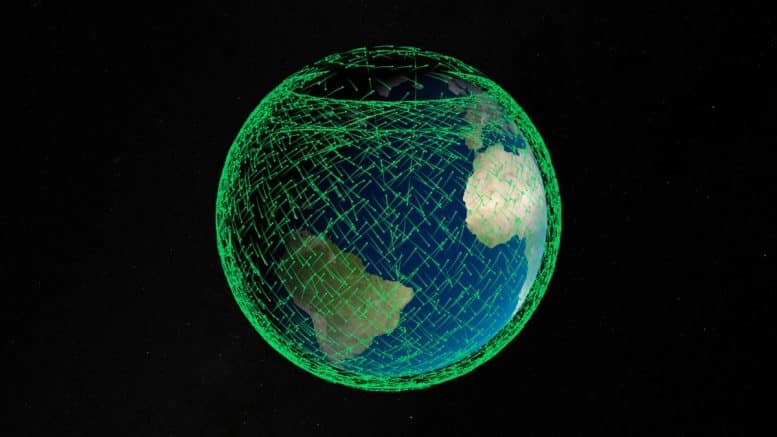
The rapid expansion of satellite networks like Starlink has transformed low Earth orbit into a far more congested region. These mega-constellations are designed to provide global internet coverage and other services, yet their scale introduces new challenges.
According to data cited in the study, Starlink satellites alone performed over 144,000 collision avoidance maneuvers in a six-month period between late 2024 and mid-2025. That translates into a constant stream of adjustments, with avoidance actions occurring every few minutes across the network.
This level of activity underscores how dependent the system has become on active management. At altitudes around 550 kilometers, satellite density now exceeds the peak concentration of tracked debris found at higher orbits. The study identifies these dense regions as particularly vulnerable, where even a single failure could have cascading effects.
The presence of more objects also increases the frequency of close approaches. Encounters within one kilometer occur roughly every 36 seconds across low Earth orbit. While most do not result in collisions, each represents a potential risk that must be actively managed.
Why One Collision Changes Everything
The concept of Kessler Syndrome often dominates discussions about orbital risk, describing a long-term cascade of collisions that could render parts of space unusable. The new study shifts focus to a more immediate concern: the impact of a single major collision.
Even one high-speed impact can generate thousands of debris fragments. These fragments spread across orbital paths, increasing the likelihood of further collisions and complicating satellite operations. Past events, such as the 2007 Fengyun-1C anti-satellite test and the 2009 collision between Iridium 33 and Kosmos 2251, continue to shape the debris environment today.
The current situation is more precarious due to higher object density and reliance on real-time coordination. A single disruption, especially during a solar storm, could trigger a chain of events that unfolds much faster than previously anticipated.