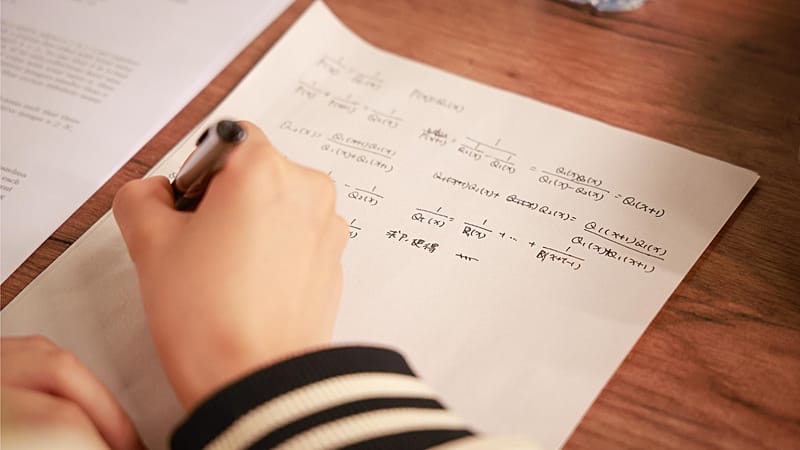
More than half a million young competitors took part in the preliminary rounds of this year’s Tashkent International Mathematics Olympiad (TasIMO), highlighting a growing global interest in science and technology. This trend has led to increased participation in mathematics competitions, with students from various backgrounds seeking to challenge themselves and develop their skills.
The competition brought together 350 finalists from 13 countries at a mountain resort in the Tashkent region. Organised by Nordic International University, TasIMO combines national qualifying rounds with an international final, where students compete in age-based categories designed to test mathematical reasoning and problem-solving abilities.
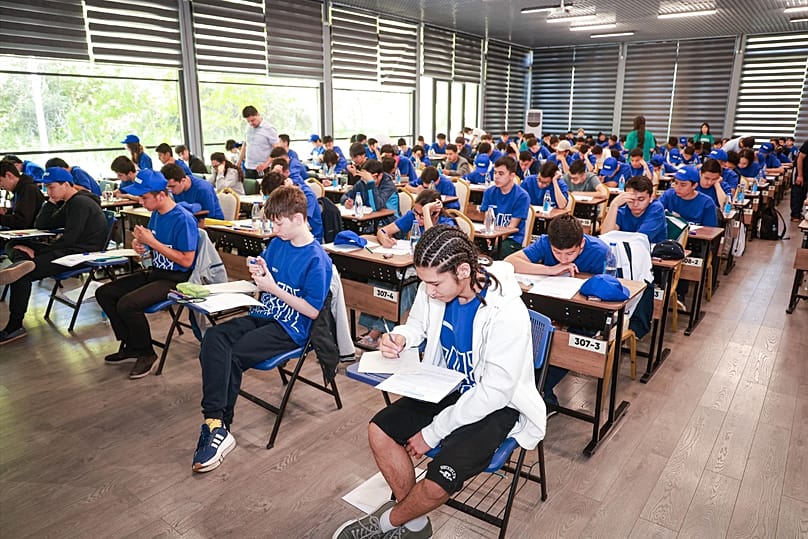
Participants and jury members came from across Europe and Asia, reflecting the increasingly international nature of academic competitions focused on mathematics and science. The event was held in a region deeply connected to the history of mathematics. Muhammad al-Khwarizmi, the ninth-century scholar widely regarded as one of the founders of algebra, was born in what is now Uzbekistan. Additionally, the word “algorithm” derives from the Latinised form of his name.
A gold medal and a wider message
Martina Krasimirova, a 16-year-old from Sofia, has attended every edition of the competition since its launch. This year, she secured her third consecutive gold medal.
“This is my third time coming to this Olympiad. The problems have become harder and harder every year, which I really love,” she said.
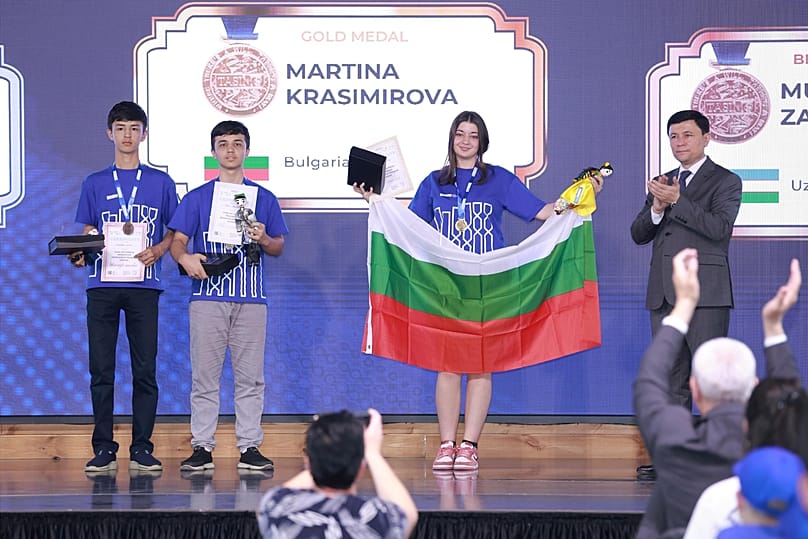
While Krasimirova won the gold medal, the achievement holds significance beyond just the result itself. As a girl, she faces the common perception that mathematics is not for girls. She believes that every win is an opportunity to inspire other girls to try and not be afraid of mathematics.
“I am a girl, and most people believe that maths is not for girls. It is not only here. It is everywhere in the world. Every time I win, I feel like I inspire some girls to try out and not be scared of mathematics,” she said.
Many education systems continue to struggle with the underrepresentation of women in advanced mathematics and several STEM-related fields, despite progress in recent years.
More than an examination
The competition is about more than just solving mathematical problems. Participants spend several days together discussing solutions, exchanging ideas, and meeting peers from different countries who share similar interests.
Altai Beysan, who travelled from Kazakhstan for his first TasIMO, said these exchanges were among his strongest memories of the event.
“After the Olympiad, we shared our solutions, our thoughts, our expectations about our scores. That is the distinguishing atmosphere of Olympiads in general, and TasIMO gave this opportunity to feel it again,” Beysan said.
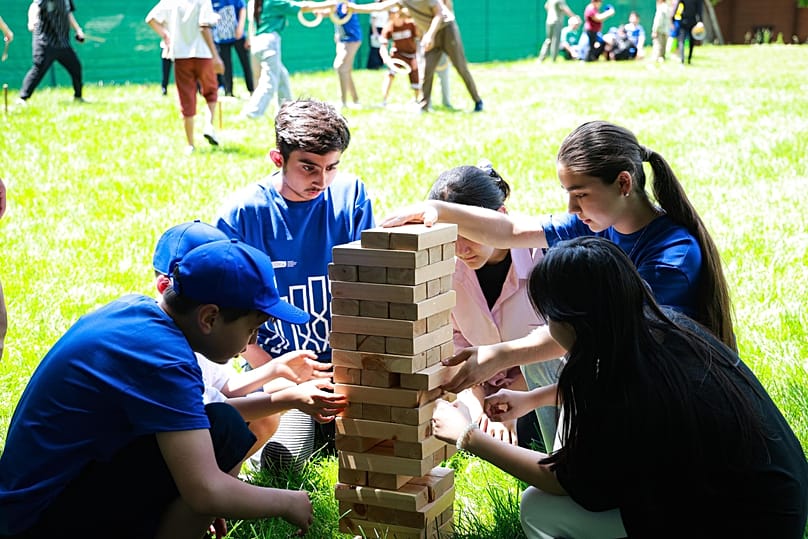
Alongside the mathematics contests, students participated in sports competitions, team challenges, and cultural activities designed to encourage interaction between participants from different countries. Ivan Chan, a jury member from Malaysia who also attended last year’s edition, said these activities played an important role in the overall experience.
“If you think from the perspective of the students, these activities are exactly what they needed to have a long-lasting, memorable experience,” he said.
Growing international interest
The rapid growth of TasIMO comes as many countries invest more heavily in science, technology, engineering, and mathematics (STEM) education. This is driven by increasing demand for highly skilled specialists in fields ranging from engineering to artificial intelligence.
Marek Murin, a jury member from Slovakia and a member of the problem selection committee, noted that both the academic and organisational aspects of the competition had evolved since his first participation.
“TasIMO is an emerging international Olympiad. It is very nice to see all of the hard work coming together, from the organisational perspective, from the problem selection committee, and from the students whose hard work is going to be rewarded accordingly,” he said.
Chan added that competitions like this can help encourage interest in mathematics and science.
“Such initiatives are great because they promote mathematical excellence and give out the message that students’ efforts and mathematical talents are being appreciated in this country. For a country that is developing to be competent in technology and science, this is crucial,” he concluded.