Virgin Galactic Launches Groundbreaking Mission to Study Menstruation in Space
Virgin Galactic has unveiled plans for a new mission set to take place in 2027, titled ‘Operation Period–01’ or OP–01. This mission is dedicated to studying menstruation in microgravity, marking a significant step forward in space research and human health.
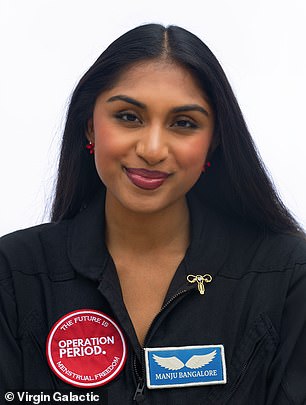
The mission will be led by Manju Bangalore and Priya Abiram, the founders of Operation Period, a Gen Z-led organization focused on reproductive health and space innovation. Ms. Abiram emphasized the importance of this research, stating: “By studying menstruation in microgravity, we have the opportunity to potentially unlock insights for astronauts, as well as help inform future biomedical research on Earth, from reproductive science to chronic conditions that remain under-researched and under-funded.”
This initiative represents the first dedicated research mission to explore menstruation in space, despite the fact that over 100 women have already traveled to space. According to Ms. Bangalore, “This mission is about more than a scientific first; it’s about correcting a fundamental design gap.” She added that human spaceflight has historically been built around a narrow definition of the human body, and the goal is to expand that definition to ensure future space exploration reflects the full diversity of human experience.

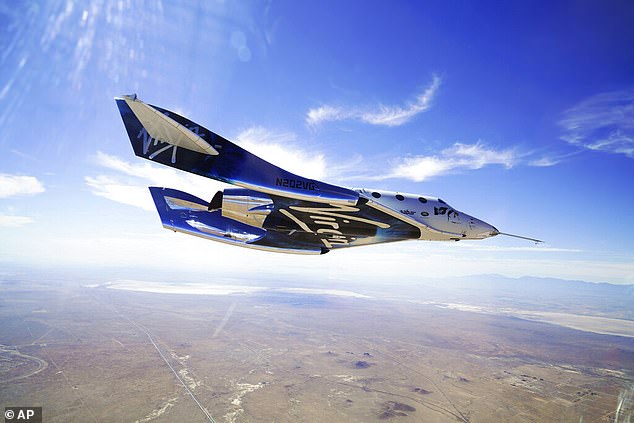
Details about the mission are still being finalized, including the spacecraft, launch date, and mission duration. However, Virgin Galactic has confirmed that the mission will be suborbital, meaning the spacecraft will travel into outer space but will not reach orbit around Earth.
The research design is being led by Ms. Bangalore and Ms. Abiram, who are described by Virgin Galactic as “emerging voices at the forefront of reproductive health and space innovation.” Ms. Bangalore holds a B.S. in Physics and Mathematics from the University of Oregon and a M.S. in Astronautical Engineering from the University of Southern California. She has conducted research on multiple parabolic flight campaigns. Meanwhile, Ms. Abiram has a B.S. in Mechanical Engineering and an M.Eng. in Aerospace Engineering from Cornell University, and has worked with NASA, Blue Origin, VAST, and Boeing.
During the mission, the research will focus on two key areas: menstrual fluid dynamics and menstrual product performance. According to Virgin Galactic, the findings could lead to the development of period products suitable for space travel and broader medical innovations.
Amber Favaregh, Director of System Analysis & Research at Virgin Galactic, stated: “At Virgin Galactic, we are committed to enabling human-tended research that expands the scope of what can be studied in space. This mission with Operation Period is a powerful example of how Virgin Galactic can continue to support real-time, in-flight scientific investigation into long-overlooked areas of human health, helping advance more inclusive and innovative exploration that delivers insight for both space and life on Earth.”

Further details about the mission timeline, research payloads, and additional collaborators will be announced in the coming months. Currently, NASA does not have any specific guidelines for how female astronauts manage their periods in space. Some use sanitary products like pads or tampons, while others opt for hormonal pills to stop their periods entirely. However, as missions become longer, this could become a challenge, according to Varsha Jain, a space gynaecologist at King’s College London.
“An issue is that, for a three-year mission (say, to Mars and back), you’d need about 1,100 pills to keep periods away – and the flight needs to cope with carrying and disposing of all the packaging, including the cost of launching any extra payload into space. The same problem applies to sanitary products,” she explained in an article for The Conversation.
In 2022, a research group called AstroCup sent two menstrual cups into space, and found that they held up with no damage. This suggests they could offer female astronauts a reusable solution on future missions.
On the Operation Period website, the team explained: “Astronauts should ideally have informed choices regarding whether they menstruate during missions, what products or suppression methods they use, and how those decisions intersect with operational systems and personal health considerations. OP–01 should be understood as part of the natural maturation of human spaceflight research and human-centered systems design as space becomes more accessible, not as evidence that menstruation is inherently incompatible with spaceflight.”