Capturing the Calm Before the Storm
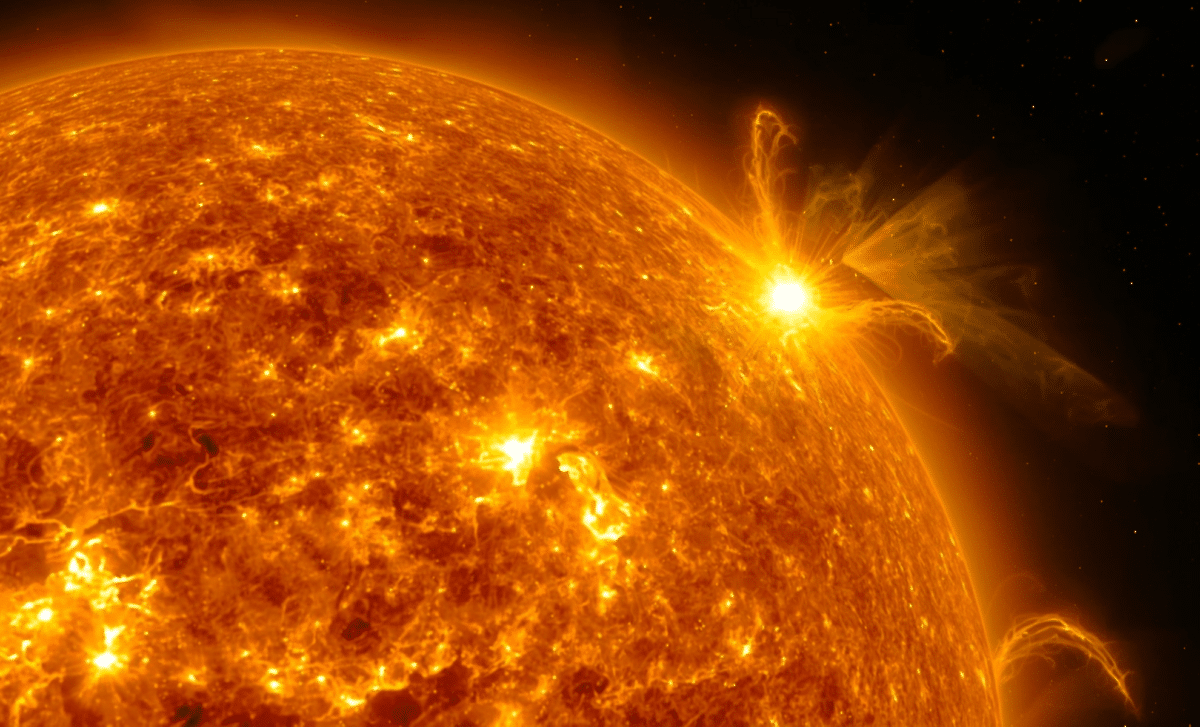
On October 3, 2024, a powerful X9.0-class solar flare erupted from the sun, marking one of the most intense solar events ever recorded. This event was preceded by a series of observable phenomena that scientists were able to capture in remarkable detail. Researchers led by Louis Seyfritz at the New Jersey Institute of Technology have provided an unprecedented look into the processes that lead up to such powerful solar flares.
The team focused on three key properties of the light emitted from the sun’s plasma: turbulence, velocity, and brightness. By tracking these changes over time and using wavelet analysis—a mathematical technique for identifying repeating patterns—they were able to reconstruct a detailed timeline of the flare’s pre-eruption phase. This dataset is one of the most complete pre-flare observations ever collected, offering insight into solar dynamics that were previously invisible.
Rhythmic Oscillations Hint At Hidden Processes
Analysis of the data revealed two distinct sets of oscillations occurring before the flare. A shorter cycle, repeating roughly every 7–10 minutes, appeared alongside a longer cycle of about 18–21 minutes. These fluctuations were concentrated along the boundary between regions of opposing magnetic polarity, suggesting that they represent multiple interacting physical processes within the sun’s plasma.
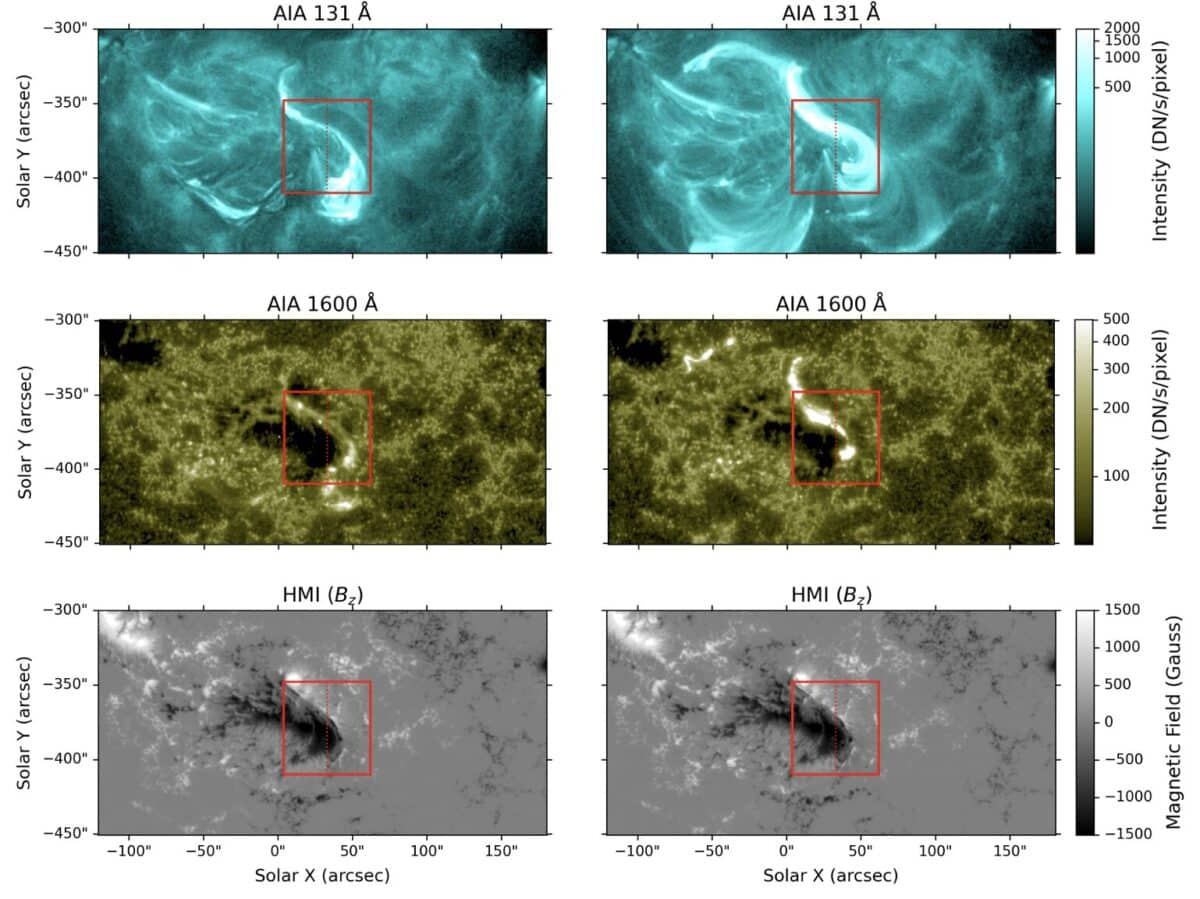
These rhythmic patterns indicate that the solar atmosphere is far from static. The shorter oscillations may reflect local turbulence and energy transfers within the plasma, while the longer ones could hint at large-scale magnetic reorganizations. Observing both simultaneously offers new clues about the mechanisms that destabilize the sun’s magnetic field before a major eruption.
Gradual Destabilization Leads To Abrupt Explosion
Alongside these oscillations, the team documented a steady rise in turbulence, velocity, and brightness beginning roughly three hours before the flare. This gradual increase points to a slow accumulation of energy and tension in the sun’s magnetic field, likely driven by the twisting of a magnetic flux rope.
Approximately 15–20 minutes before the flare, the rise intensified sharply. Plasma began rushing outward, signaling the onset of magnetic reconnection, the process that releases enormous amounts of energy and powers solar flares. This transition from slow destabilization to sudden eruption marks the critical window in which warning signs could be detected, potentially opening the door to improved forecasting techniques.
Toward Predicting Solar Eruptions
While these observations come from a single event, they offer a promising framework for identifying pre-flare signals in other regions of the sun. If similar patterns are found in future events, astronomers could gain the ability to anticipate powerful solar flares, helping protect satellites, power grids, and astronauts from harmful radiation.
The study represents a major step toward understanding the complex prelude to solar explosions. By piecing together the interplay between plasma fluctuations and magnetic field destabilization, Seyfritz and colleagues provide a roadmap for both scientific inquiry and practical space weather forecasting.