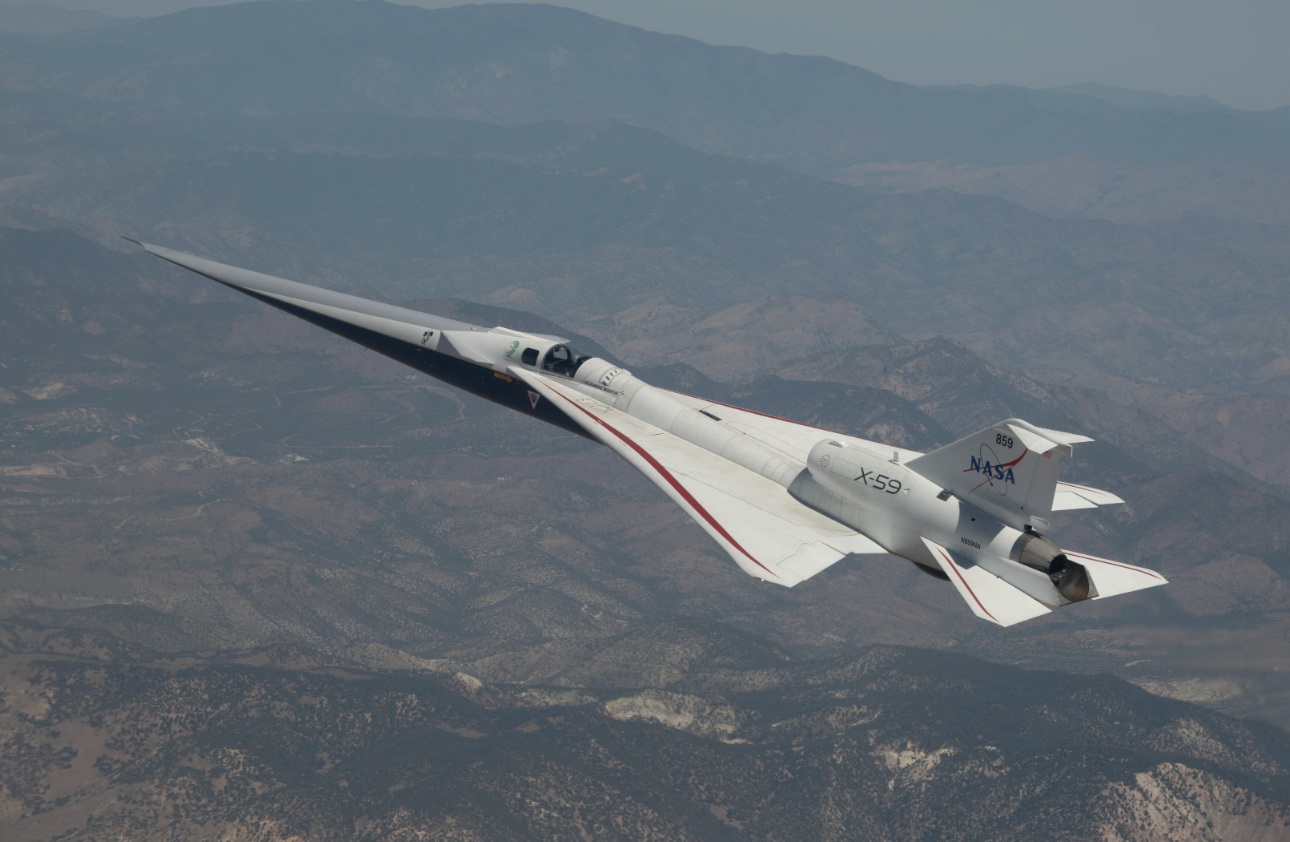
NASA’s X-59 aircraft is preparing for a significant moment this month as it enters a new stage of testing that aims to “shape the future of supersonic travel.” This phase is part of the Quesst mission, a broader initiative to bring commercial supersonic flights closer to reality. If successful, the X-59’s testing program could provide essential data to influence future regulations and aircraft design, potentially paving the way for a new generation of quieter supersonic jets that can operate over land.
The space agency has announced that the X-59 will conduct a series of test flights in early June, with engineers preparing for the aircraft to fly faster than the speed of sound for the first time. NASA stated that the X-59 is expected to exceed 630 miles per hour (mph) at an altitude of approximately 43,000 feet during these initial supersonic tests. This achievement is described as “a major milestone for the aircraft.” Following this, the X-59 will undertake a “mission conditions” flight, during which it is expected to reach Mach 1.4, or around 925 mph, at roughly 55,000 feet.
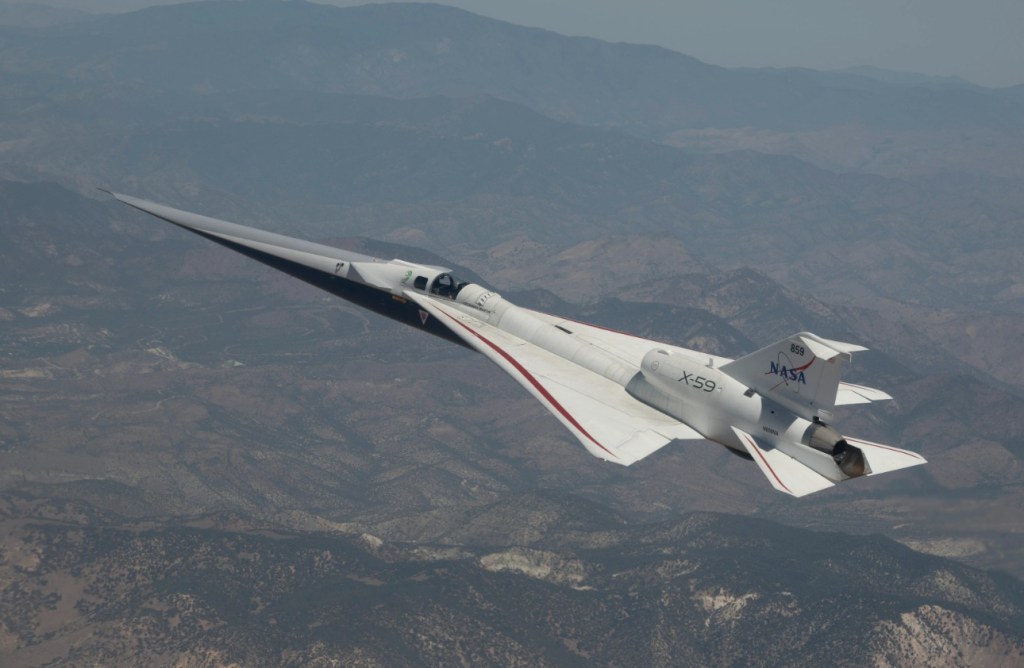
These benchmarks are not arbitrary. NASA explained that the speed and altitude targets are crucial because they align with the long-term goal of flying over U.S. communities and gathering public feedback on the quieter sonic signature the aircraft is designed to produce. The X-59 plays a central role in NASA’s efforts to reduce the disruptive sonic boom typically associated with supersonic flight. By softening that boom into a quieter “thump,” the agency hopes to make commercial supersonic aircraft viable over land.
According to Cathy Bahm, project manager for the Low Boom Flight Demonstrator, the latest phase of testing represents more than just incremental progress. “These flights not only deepen our confidence in the X-59’s performance—they mark our progression toward the future phases of the mission that will ultimately help shape the future of supersonic travel,” she said in a statement.
However, NASA emphasized that the upcoming flights are not yet intended to prove the aircraft’s quiet capability. While the X-59 is specifically designed to avoid producing the loud booms typical of supersonic travel, its early testing phase comes with limitations. The aircraft will be accompanied by a traditional supersonic chase plane, meaning any subtle sonic “thump” produced by the X-59 may be masked by louder booms from the escort aircraft. The chase plane will also carry specialized instruments, including a shock-sensing probe, to gather early data on the X-59’s shock waves.
Beyond reaching mission conditions, the X-59 will also be tested at its maximum capabilities during this phase. That includes achieving a top speed of Mach 1.6—about 1,218 mph—and reaching altitudes of up to 60,000 feet. Despite these capabilities, NASA stressed that the aircraft will not operate at supersonic speed throughout testing. Instead, engineers will continue flying a mix of subsonic and lower-altitude missions to monitor performance across a range of conditions and ensure the aircraft behaves as expected.
Bahm said that each step in the testing program “brings us closer to Phase 2, and to the future of commercial supersonic flight.” Quesst Phase 2, set to begin later this year, is “when teams will begin to measure the aircraft’s supersonic flight signature to verify that it’s producing a quiet supersonic thump, as designed,” NASA explains.
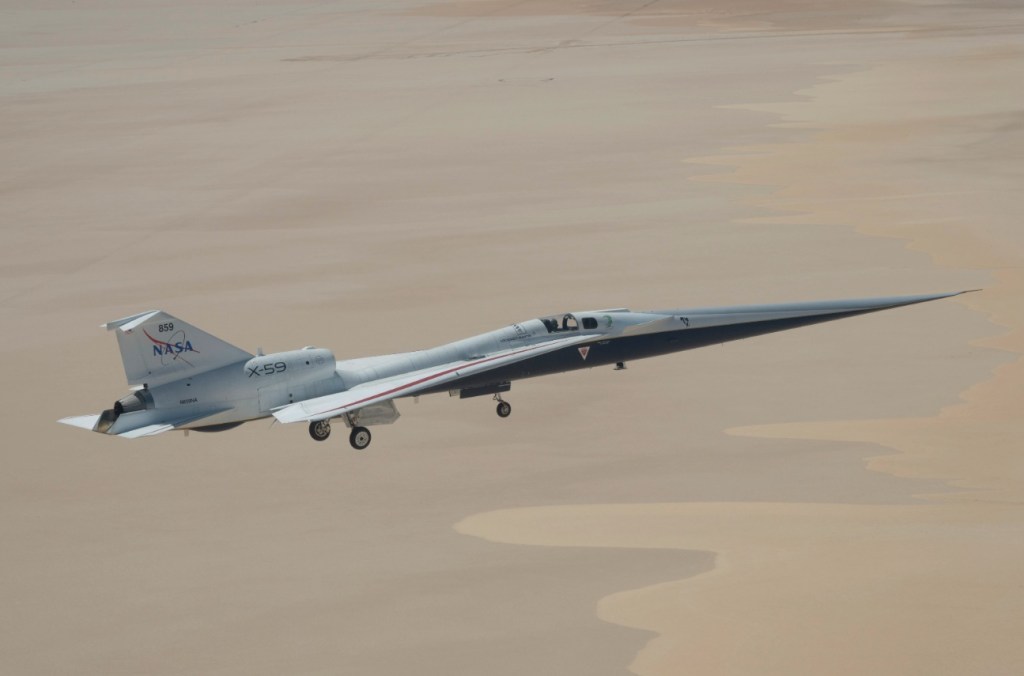
The push to revive commercial supersonic travel has gained momentum in recent years, driven by both private aerospace companies and government-backed research programs. U.S.-based Boom Technology has made notable progress, with its XB-1 demonstrator becoming the first commercial-type aircraft to break the sound barrier in January 2025 since the Concorde did in 2003. That milestone allowed key technologies for its planned Overture passenger aircraft. The company aims to introduce Overture—a 64- to 80-seat jet designed to fly at around Mach 1.7—by the end of the decade, with some projections reportedly targeting commercial service around 2029–2030, although the program still faces regulatory and financial hurdles.