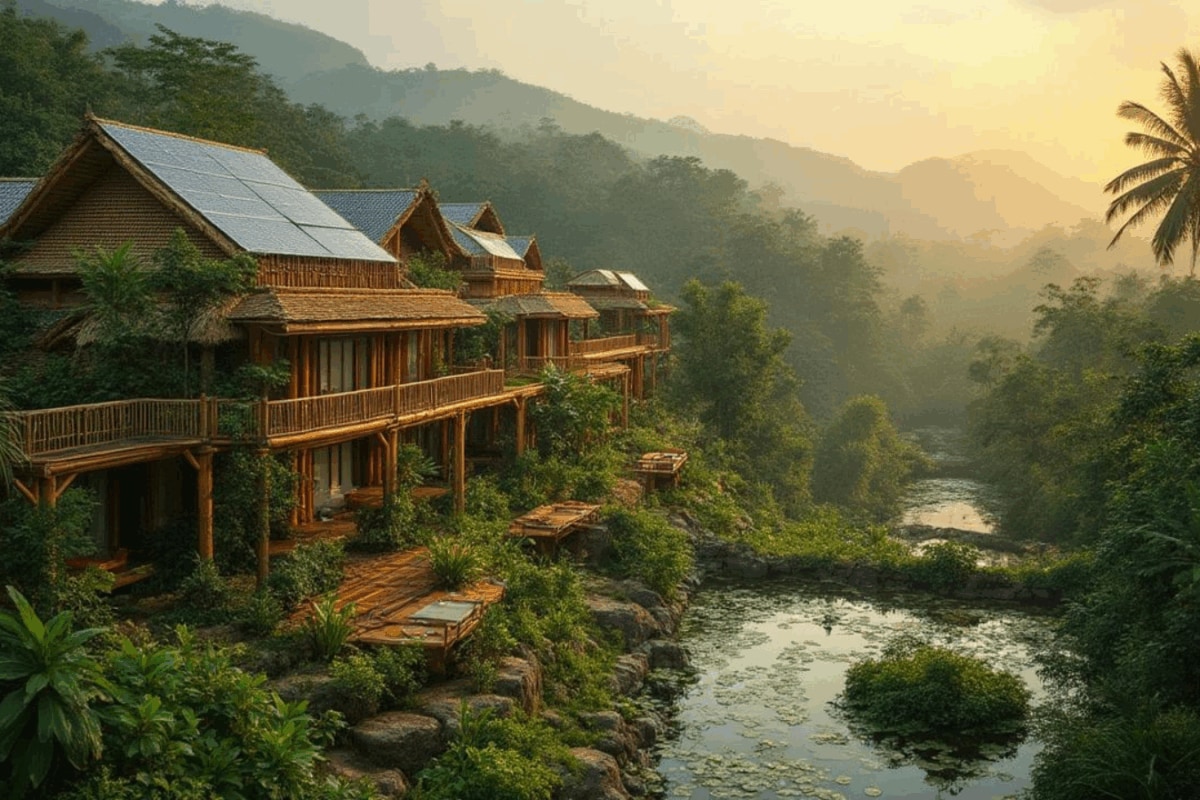
The Evolution of Luxury Hospitality
Luxury hospitality is undergoing a significant transformation, with sustainability becoming an essential aspect rather than a mere differentiator. Modern travelers are now more conscious about the environmental and social impact of their choices. They seek not only exceptional service and aesthetically pleasing spaces but also want to know how hotels manage their resources, protect their surroundings, and contribute to the communities they serve.
This shift is redefining luxury in various settings. In urban areas, sustainability is driven by advanced infrastructure, resource management, and measurable environmental performance. On the other hand, in wilderness destinations, the focus is on ecological restoration, biodiversity, and regenerative practices that actively improve the natural environment. Together, these approaches are creating a new definition of luxury rooted in responsibility rather than excess.
Urban Stewardship: A Hidden Effort
In densely populated urban environments, sustainability often starts behind the scenes. The most impactful changes are usually not visible to guests but significantly influence the hotel’s operations.
IHCL’s ESG+ framework, Paathya, exemplifies this approach. At Taj Mahal in New Delhi, water stewardship has evolved into a sophisticated circular ecosystem. The hotel achieves a 97% water recycling efficiency, with 92% of treated water reused across operations. Rainwater harvesting, greywater recycling, and advanced reuse systems support various functions, from laundry and flushing to cooling towers and landscaping.
Dr Anmol Ahluwalia, Area Director, Operations and General Manager at Taj Mahal, emphasizes that sustainability must extend beyond efficiency metrics. Under Paathya, the focus is on building systems that drive long-term environmental impact. Energy and water stewardship are critical parts of this journey, where the emphasis is on creating circular ecosystems that optimize resources at every stage.
The hotel’s efforts have earned it EarthCheck Platinum Certification and placed it on the path towards LEED Zero Water Certification. Sustainability here is not confined to engineering systems; it also influences the guest experience through initiatives like Mitti ka Swaad at Varq, which celebrates India’s agricultural heritage with seasonal ingredients and traditional cooking techniques.
Engineering Innovation for Resource Efficiency
Taj Palace in New Delhi showcases how engineering innovation can drive resource efficiency at scale. Its advanced water treatment and bottling infrastructure combine reverse osmosis, ozonation, and UV technology, while smart fixtures and sensor-based taps reduce water consumption across public spaces.
According to Pradyumna Singh Rathore, General Manager at Taj Palace, sustainability requires a holistic and integrated approach. Under Paathya, the focus is on embedding resource efficiency into the core of operations, ensuring that every intervention contributes to a larger, measurable impact.
The property’s infrastructure now supports the recycling of up to 80 kilolitres of water daily, while its sewage treatment systems process hundreds of kilolitres for reuse across cooling towers, horticulture, and maintenance operations.
Sustainability Beyond City Limits
As sustainability frameworks mature, their application is increasingly extending beyond city hotels into larger resort ecosystems. At Taj Surajkund Resort & Spa in Delhi NCR, environmental stewardship combines water management with clean energy adoption. The EarthCheck Platinum-certified property treats approximately 3,500 kilolitres of water every month and reuses it across irrigation and cooling systems. Simultaneously, the resort has expanded its solar infrastructure, with combined installations expected to generate nearly 146,000 kWh of renewable energy annually.
Similarly, Taj Damdama Lake Resort & Spa in Gurugram has focused on reducing waste through practical interventions that deliver measurable results. Treated wastewater is reused throughout the property, while sensor-operated systems optimize consumption across guest and service areas. One of its most significant achievements has been the installation of an in-house water bottling facility that has eliminated the need for hundreds of thousands of single-use plastic bottles within months of operation.
For Vinod Pandey, Area Director – Operations and General Manager at Taj Damdama Lake Resort & Spa, the value lies in consistency rather than isolated projects. At IHCL, sustainability is approached as a collective and continuous journey rather than a set of standalone initiatives. Through Paathya, the focus is on building systems that drive long-term value by integrating environmental responsibility into everyday operations.
Rewilding as the Ultimate Luxury
If urban sustainability is often measured through efficiency, wilderness hospitality increasingly defines success through regeneration. At Aahana Resort & Spa in Jim Corbett, sustainability begins with a story of ecological restoration. Spread across 13.5 acres, the property stands on land that was once barren and infertile. Through years of soil regeneration, reforestation, and ecological stewardship, the landscape has been transformed into a thriving ecosystem that now supports more than 4,500 trees, rich biodiversity, and over 200 species of birds.
Unlike many sustainability programs that focus on a single initiative, Aahana’s approach is deeply integrated into every aspect of operations. The resort operates on a zero-waste model and houses what is recognized as Asia’s largest root-zone treatment plant for sewage. Using a natural gravity-based system powered by canna plants rather than chemicals or energy-intensive processes, the facility treats 100% of the resort’s wastewater and recycles nearly 1.5 crore litres of water annually for irrigation.
The same environmental thinking extends to guest experiences. Private pool villas utilize solar-assisted heating systems, UV treatment, and advanced filtration technologies that reduce water wastage by up to 80%, while the resort’s farm-to-fork dining philosophy prioritizes organic produce, local sourcing, and circular procurement practices.
Equally significant is Aahana’s social impact model. With 98% local employment, community cleanliness drives, and ongoing engagement programs, the property recognizes that environmental sustainability and community development are inseparable.
The Future of Luxury Is Regenerative
For years, sustainable hospitality was often framed as a compromise, a necessary adjustment that sat alongside luxury rather than enhancing it. That narrative has fundamentally changed.
Today’s most progressive hotels are demonstrating that resource efficiency, ecological restoration, and elevated guest experiences are not competing priorities but interconnected ambitions. Whether through sophisticated water stewardship systems in the heart of New Delhi or landscape-scale rewilding projects in Jim Corbett, the goal is increasingly the same: to ensure that hospitality leaves a place better than it found it.
In this new era, luxury is no longer defined by how much a property consumes. It is defined by how thoughtfully it gives back.