A Historical Precedent and Modern Controversy
In 1864, during the Civil War, an ambitious government official made a move that would later be seen as reminiscent of a modern-day political figure. Spencer Clark, the first Superintendent of the National Currency Bureau, was tasked with placing the face of Lewis Clark, the famous explorer, on the front of the new 5-cent note. However, instead of following instructions precisely, he decided to place his own image on the note, complete with a beard.
The notes were produced in large quantities, but Congress was outraged. Two years later, they passed the Thayer Amendment, which banned any living person from appearing on U.S. paper money, bonds, or securities. This rule has remained in place for over 160 years, allowing only deceased individuals such as Abraham Lincoln and Alexander Hamilton to be featured on currency.
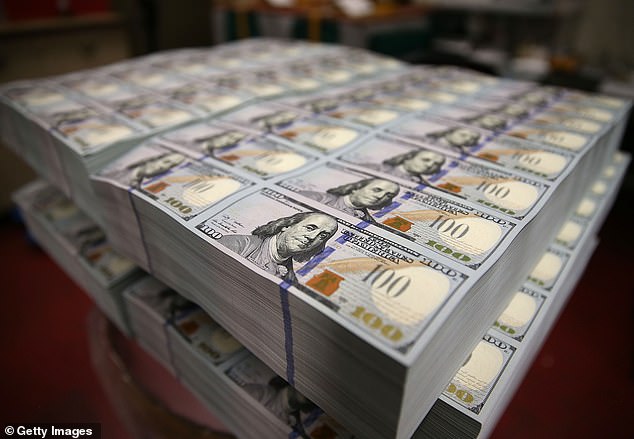
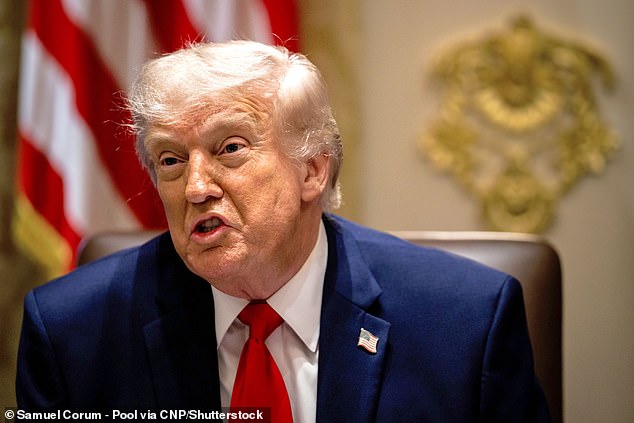
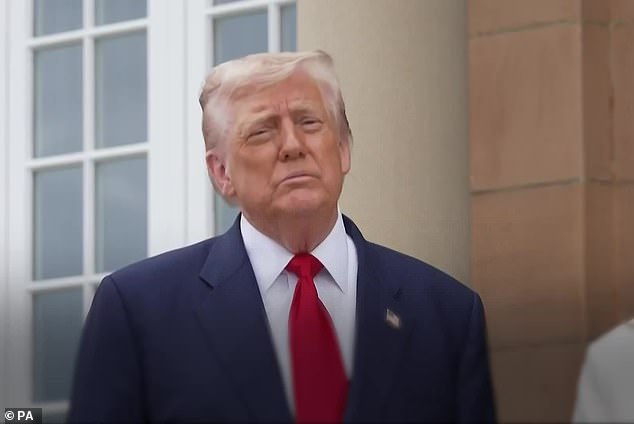
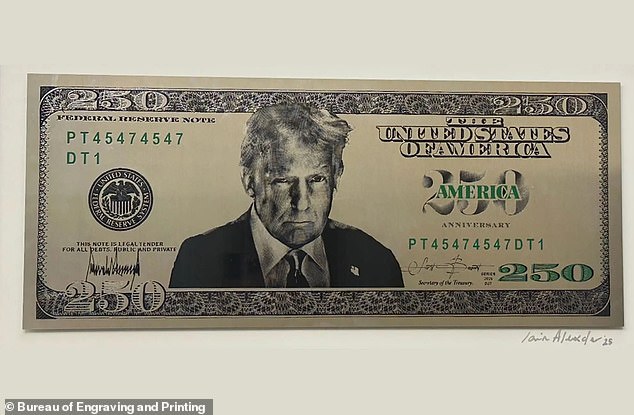
Now, this long-standing tradition is being challenged by Donald J. Trump, who appears to have a strong interest in having his own image on the nation’s currency. In this case, it’s not just a small denomination – it’s a $250 bill, which is worth significantly more than the original 5-cent note.
The Trumpification of the Dollar
The proposed changes are part of a broader effort to “Trumpify” the dollar, leading to accusations from Democrats of presidential egoism and sycophancy from Republican officials. Comedian Bill Maher mocked the idea, saying: “They’re putting out a $250 bill with Trump’s face on it… Republicans in Congress are thrilled about it; they cannot wait to carry it in their wallet. What a switcheroo having Trump’s face next to THEIR [Expletive].”
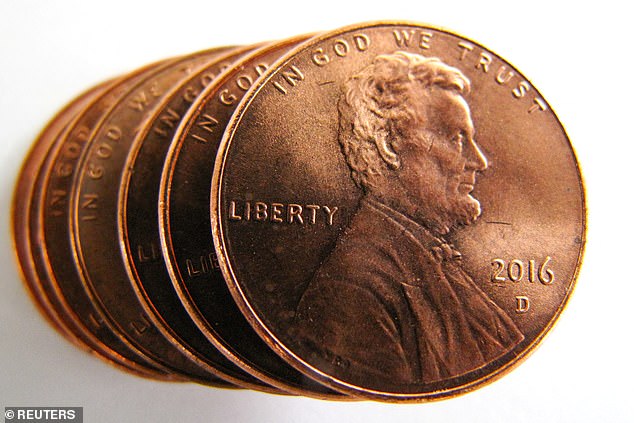
In addition to the $250 bill, Trump has also moved to have his signature placed on other banknotes instead of that of the Treasurer of the United States. There is also a commemorative coin planned with his image on it to mark the 250th anniversary of America. He is also doing away with the penny, which many see as a symbol of inefficiency.
International Examples and Domestic Concerns
One of the arguments advanced for putting the image of Trump or any president on currency is that other countries do it. For example, King Charles III is on all four Bank of England note denominations. The late Queen Elizabeth II was on currency in numerous countries where she was head of state.
However, for many Americans, this is also the biggest reason why Trump should not be on currency. Nations where the head of state is on the notes, including the UK, Saudi Arabia, Jordan, and North Korea, generally have a monarch or a president who was not elected.
Brendan Greeley, author of The Almighty Dollar: 500 Years Of The World’s Most Powerful Money, said: “There was a time when the only time you saw the King or the Emperor was on the coin. That was the moment in which you came into contact with the state. So, I think this is a very ancient and powerful message that it sends.”
Historical Context and Opposition
As the first president, George Washington was averse to the monarchical overtones of himself being on coinage and instead the 1792 Coinage Act specified it should be an image representing ‘liberty.’
Greeley added: “It was only during the Civil War, really, when the federal government started printing one kind of dollar for all Americans, and originally it was supposed to be educational, what we now call patriotic education, pictures of Pocahontas getting baptized and the surrender of General Burgoyne at the Battle of Saratoga.”
There was one partial exception. In the 1920s, President Calvin Coolidge put himself on a half-dollar coin minted to commemorate the 150th anniversary of the Declaration of Independence. The Thayer Amendment did not cover coins. However, there was a forceful backlash, and some of the coins were melted down.
The Design and Reactions
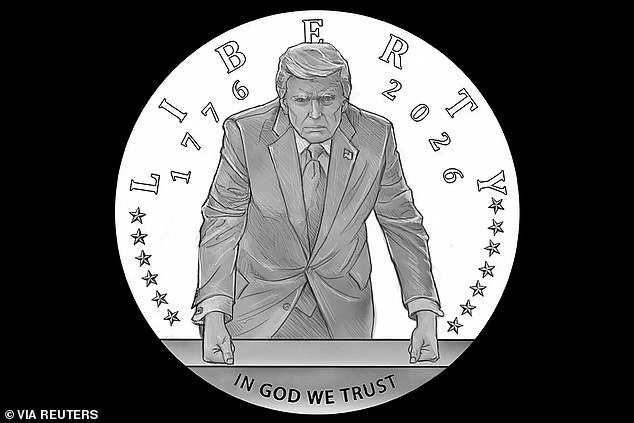
The design for a 24-karat gold commemorative 250th anniversary coin featuring Trump was finalized by the US Commission of Fine Arts in March. Its front features an image of the President in a suit and tie with a stern look on his face, his fists resting on a desk. Lettering on it includes ‘LIBERTY’ and ‘IN GOD WE TRUST’ and the dates 1776-2026.
Trump’s coin will mean ‘we are now in a regime where the president is allowed to put his face on a coin,’ said Greeley. ‘That says something different about America. I think that’s a more profound change than just some decorative choices on our currency.’