Winter Gardening Tips for a Thriving Garden
The first month of winter is a relatively quiet time in the garden, but there are several things you can do now that will ensure your plants thrive. One of the most important tasks is to tend to your compost or set it up if you haven’t already. Compost is an excellent way to add beneficial nutrients to the soil in your veggie patch, and while it takes a few months for grass clippings and food waste to break down, starting now will pay off in the long run.
Winter is the perfect time to feed the soil and prepare your garden for spring. By taking care of the soil in June, you can ensure that your plants will be well-nourished when the growing season begins. Darryl Nichols, founder of Grow It Local, emphasizes the importance of this task. He explains that winter is the time to add compost and organic matter to the soil, which will help support your plants in the coming months.
Sarah Rani from In My Patch agrees with this approach. She suggests that winter is an ideal time to get your compost started so that it’s ready for use in spring. If you have space for compost or are planning to set up a veggie garden in the future, this gives your compost enough time to mature before it’s needed.
If your compost is already sorted, there are plenty of other gardening tasks you can focus on during the winter. Pruning, mulching, and even planting are all activities that can be done during this time. Winter is actually one of the most important periods for gardening, as it allows for structure and planning. This is the time to plant bare-rooted plants like roses, grapes, and fruit trees when they are dormant.
It’s also the best time to clean your gardening tools, sharpen your shears, and plan your spring layout without the pressure of weeds growing rapidly. By taking these steps now, you’ll be better prepared for the busy growing season ahead.
For Sarah Rani, her hard work in the garden earlier in the year is beginning to show results. At this time of year, she is usually picking broccoli and cauliflower, along with other winter vegetables that she planted early. She also plants a second or third round of crops to ensure a consistent supply throughout the season.
“I’ll be planting things like broccoli, cauliflower, and probably another round of peas and snow peas. I keep growing quick-growing crops, so as I’m picking lettuce, I’ll plant fresh seedlings in,” she says.
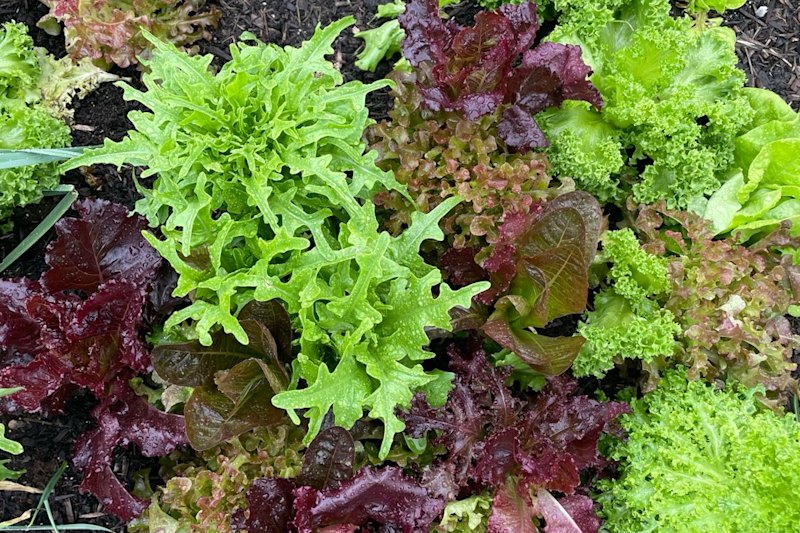
Speaking of lettuce, now is a great time to start growing your own. Although often thought of as a summer vegetable, lettuce grows well in the colder months. Loose leaf is the best option because it allows you to harvest only what you need when you need it.
Lettuce can be started from seed or by purchasing seedlings from a nursery or garden centre, but using seeds is the most cost-effective option and gives you more control over the quality of your crop. However, it’s important to be careful when sowing the seeds, as they are very small.
“You really just want to plant them like a millimetre or two under the soil. So I find getting some dry potting mix in like a little sieve and just sieving a light layer of soil over the top of my seeds gives me the best germination rate,” Rani explains.
Once your seedlings have their second set of leaves, you can transplant them into your veggie patch or a larger pot. Place them in a sunny spot and make sure the soil is moist but not waterlogged. With proper care, you’ll have your own lettuce ready to harvest in eight to 10 weeks.