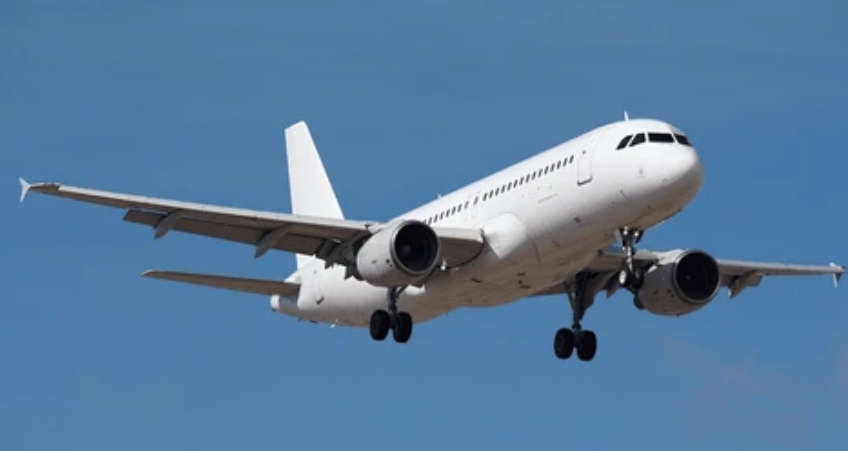
AUSTRALIA – A Qantas flight traveling from London to Perth was forced to make an unscheduled stop in Western Australia after stronger-than-expected headwinds increased fuel consumption, preventing the aircraft from completing the journey nonstop as planned.
Flight QF10, operated by a Boeing 787-9 Dreamliner, had been scheduled to arrive in Perth around midday on Tuesday. Instead, the aircraft diverted to Karratha Airport in the Pilbara region, approximately 1,500 kilometers north of Perth, to refuel before continuing its journey.
According to Qantas, changing weather conditions encountered during the flight required the crew to modify the aircraft’s route, resulting in the need for additional fuel to cover the final stage of the trip.
The aircraft landed in Karratha at 11:51 a.m. local time after departing London Heathrow at 12:28 p.m. British Summer Time the previous day. Following a stop of about one hour, the Dreamliner departed Karratha at 12:58 p.m. and later arrived in Perth at 2:36 p.m. local time.
While diversions of this nature are uncommon, they remain a standard safety measure on long-haul operations when weather conditions affect fuel planning.
The incident comes shortly after Qantas announced details of its highly anticipated Project Sunrise program, which aims to launch nonstop flights between Sydney and London from 2027. Those services are expected to last up to 22 hours, highlighting the operational challenges that changing weather patterns can pose on ultra-long-haul routes.
Karratha Airport, which primarily serves the region’s fly-in, fly-out mining workforce, only recently gained approval to accommodate larger international aircraft. Last month, the airport was designated as a restricted-use international airport and an alternative international airport.
The airport is located in Karratha, a town of roughly 25,000 residents in Western Australia’s resource-rich Pilbara region.
Salim Hijazeen, an aviation lecturer at Swinburne University in Melbourne, said diversion planning is a routine part of long-distance flight operations, particularly on routes that cross vast stretches of ocean.
“Pilots constantly run fuel calculations in flight to ensure their actual fuel burn matches the pre-flight projections,” he said.
Hijazeen explained that flight plans for long-haul services identify alternative airports throughout the journey, allowing crews to respond quickly if conditions change.
“Essentially, they know exactly where to go if anything happens. It’s not a last-minute change where they are frantically looking for an airport; they already know which airport they would divert to,” he said.
Aircraft operating long-haul routes typically carry fuel not only for the scheduled journey but also for potential delays, holding patterns, and diversions. Decisions to divert are generally made well in advance, taking into account airport suitability, weather conditions, and guidance from air traffic control.
The Perth-London service has become a key example of growing demand for direct air links between Australia and the United Kingdom. The current route takes approximately 17 hours, serving as a precursor to the even longer flights planned under Project Sunrise.
Qantas has confirmed that direct Sydney-London flights will be operated using specially modified Airbus A350-1000ULR aircraft designed for ultra-long-range operations. With a range of approximately 18,000 kilometers, the aircraft will be capable of flying to London via different routes depending on prevailing winds and airspace restrictions.
Under current plans, flights from London to Sydney are expected to take between 18 and 20 hours, while journeys from Sydney to London could range from about 19 hours and 25 minutes to as long as 21 hours. Flight paths may vary significantly from day to day, including routes that approach London from the north after crossing the Arctic region. (Jai)