
Saving for a first home in Australia can feel like an uphill battle, with the average deposit now stretching into tens of thousands of dollars. For many, this means a significant lifestyle adjustment is in order. However, for 34-year-old Amy from Birmingham, the challenge isn’t necessarily the rising cost of living, but rather her own spending habits. A self-confessed shopping addict, Amy finds herself prioritising her wardrobe over her nest egg, a habit that’s now jeopardising her dream of homeownership and causing friction in her relationship.
Desperate to get a handle on her finances and finally step onto the property ladder, Amy sought advice from consumer champion, Sarah Davidson.
The Problem: A Shopping Addiction Derailing Homeownership Dreams
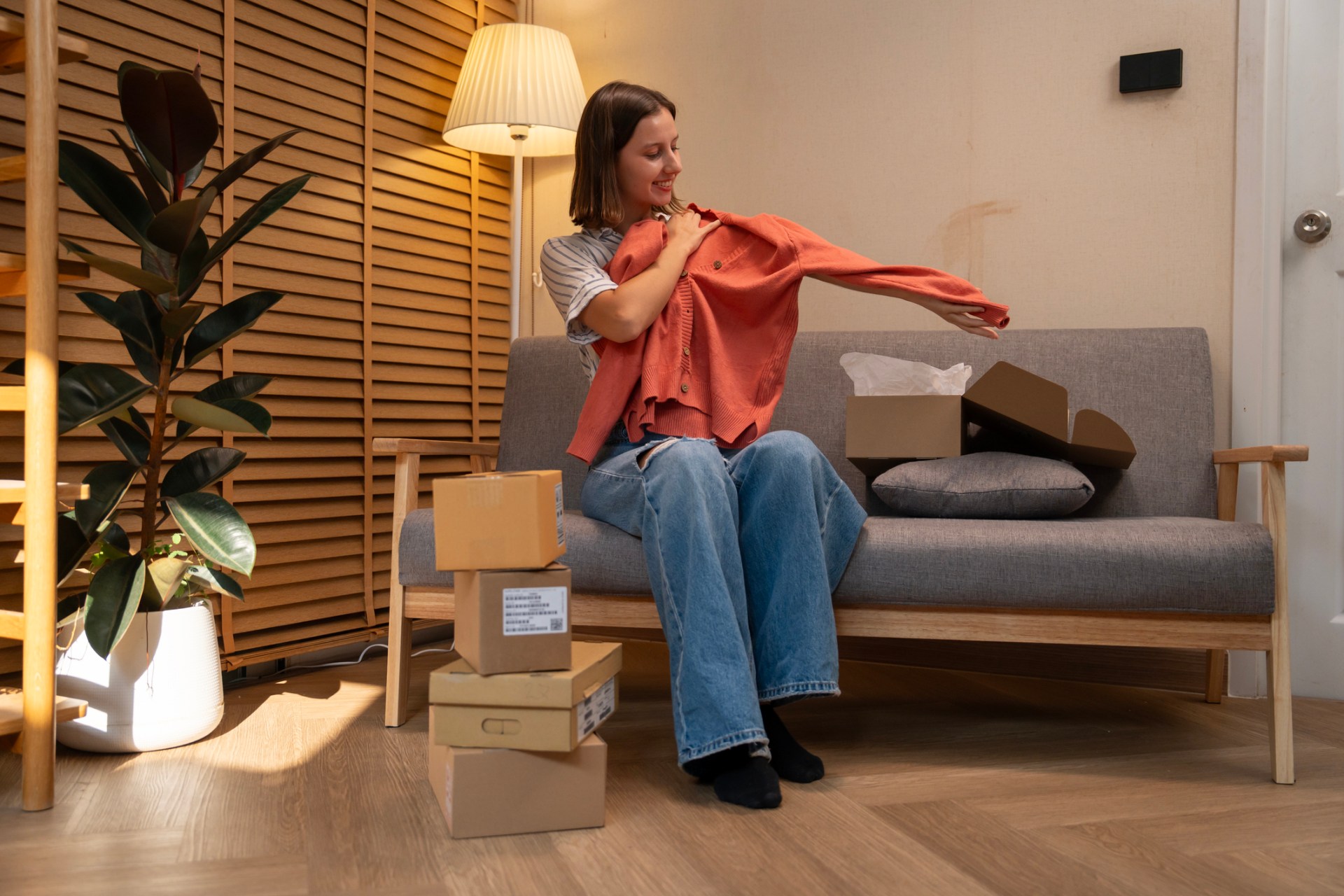
Amy’s confession is stark: “I know this is my own fault, but I’m struggling to save a deposit to buy my first home because I keep spending money. I order something almost every day — clothes, shoes, bags.”
What started as occasional purchases from traditional shops has escalated into an all-consuming habit, particularly with the rise of second-hand shopping apps. “It was bad enough when I was buying from shops, but now I’m completely addicted to buying second-hand through apps, and I convince myself I need something because it’s such good value,” she explains.
The disparity between her savings and her boyfriend’s is a significant source of stress. “My boyfriend and I want to buy a house together, and he’s been really good at saving his half of the deposit. He’s now got just under £15,000 in his Lifetime ISA, whereas I’ve been saving for the same amount of time but have only got £1,890 in my account.”
Amy finally confessed her true financial situation to her boyfriend, who earns £55,000 a year, while Amy’s recruiter salary stands at a substantial £85,000. His reaction was understandably one of anger. “I finally came clean with him and said I haven’t been saving what I said I would. He’s fuming,” she admits. Despite her desire to buy a home, the allure of the “buy” button on her phone is proving irresistible.
Expert Analysis: Is It About the House or the Rush?
Sarah Davidson’s initial response probes the core of Amy’s dilemma: “I have a question for you, Amy. Do you actually want to buy this house? You seem to like buying everything else (I empathise, I’m a shopper too).”
Davidson presents two possible scenarios:
- Scenario 1: Lack of Genuine Desire: Amy doesn’t truly want to buy the house and is using her spending as an excuse. This is a personal matter for Amy and her boyfriend to resolve.
- Scenario 2: A Genuine Shopping Addiction: Amy has an uncontrolled shopping addiction, which has led her to deceive her boyfriend about her savings.
If the latter is true, Davidson outlines a path forward, drawing parallels between shopping addiction and other compulsive behaviours like smoking, alcohol, or gambling. “Being addicted to shopping is just the same as being addicted to smoking, alcohol or gambling,” she states. “And all addictions ultimately stem from the same need: dopamine, the feel-good hormone released in your brain when you get pleasure from something.”
The thrill of the purchase and the anticipation of receiving the item are likely the drivers, rather than a genuine need for the goods themselves. Breaking this cycle is difficult because it involves depriving the brain of a chemical it has become accustomed to.
Practical Strategies for Overcoming Compulsive Spending
Davidson offers a multi-pronged approach to help Amy regain control of her finances and achieve her homeownership goal:
1. Make Shopping More Difficult
- Digital Detox: Delete your digital wallet, saved card details, ‘buy now, pay later’ apps, and all shopping apps from your phone.
- Social Media Audit: Remove any social media apps through which you tend to shop.
- Implement a Waiting Period: For any item you feel you must buy, enforce a 24-hour waiting period. This allows time for impulse to pass.
2. Leverage Technology for Saving
- Automated Savings: Utilise apps like Plum or Moneybox that can automatically save money in the background.
- Bank Features: Explore your bank’s offerings, such as automatic sweeps into savings accounts or ‘pots’ to ringfence money for specific goals.
* ‘Money Not Spent’ Pot: Create a dedicated savings pot labelled ‘money I didn’t spend on clothes’. Every time you resist a purchase, transfer the saved amount into this pot.
* Set a weekly rule to transfer the contents of this pot into your Lifetime ISA. Once the money is in your LISA, it’s significantly harder to access and spend.
* Regular Contributions: Set up a standing order for a fixed, regular payment into your Lifetime ISA. Even starting with £25 a week can make a difference.
3. Visualise Your Goal
- Create a Vision Board: Use platforms like Pinterest to create a board dedicated to decorating and furnishing your future home.
- This allows you to satisfy your scrolling habit by focusing on aspirational purchases for your home, rather than impulsive buys for yourself.
- The Dopamine Hit of Homeownership: Davidson concludes with a powerful motivator: “Walking into your new home will give you the same dopamine hit – and it’ll be a big one by the time it comes.” This long-term reward can provide the sustained satisfaction that impulse shopping currently offers.
By implementing these strategies, Amy can work towards breaking her cycle of compulsive spending, rebuild trust with her boyfriend, and finally achieve her dream of owning her first home.