Drought and the Silent Surge of Antibiotic Resistance
A groundbreaking study has revealed a startling connection between arid conditions and the rise of antibiotic-resistant microorganisms in our soil, a development that carries significant implications for public health worldwide. Researchers at the California Institute of Technology (Caltech) in the United States have uncovered a strong correlation between regional aridity and the prevalence of antibiotic resistance in clinical settings across more than 100 countries.
Antimicrobial resistance (AMR) is a rapidly escalating global health crisis. In the European Union alone, it is already responsible for over 35,000 deaths annually. AMR occurs when pathogens like bacteria, viruses, fungi, and parasites evolve to the point where they no longer respond to antimicrobial medicines. While this is a natural evolutionary process, human activities, particularly the misuse and overuse of antibiotics, have dramatically accelerated its pace.
“Droughts are creating the same effects as overuse of antibiotics in the clinic: they both drive selection for antibiotic resistance,” explained Dianne Newman, a professor of biology and geobiology at Caltech. This “striking correlation,” as she described it, highlights the urgent need for improved, faster diagnostic tools in healthcare and the development of novel therapeutic strategies to combat this growing threat.
The historical roots of antibiotics are deeply intertwined with the soil. As far back as the 1940s, early research into soil microorganisms revealed that natural compounds produced by one organism could inhibit the growth of another. While many of these natural products have since been refined and transformed into the pharmaceutical drugs we use today, soil remains a vast and largely untapped reservoir for discovering new antibiotic-producing organisms. It’s an environment so rich in microbial diversity that an estimated 99 percent of its inhabitants cannot yet be cultivated in laboratory settings.
Despite the soil’s crucial role as a source of antibiotics, the precise ways in which environmental changes to soil ecosystems might foster resistance have remained poorly understood.
Unpacking the Science: How Aridity Fuels Resistance
To address this knowledge gap, Xiaoyu Shan, a postdoctoral scholar at Caltech and lead author of the study, developed a sophisticated computational program. This program was designed to analyse public datasets of microbial genetic sequences from soil samples, specifically searching for genes responsible for producing a wide range of antibiotics.
By integrating this data with clinical surveillance information from 116 countries and extensive land-use datasets from regions including the United States, China, and Europe – encompassing diverse environments like croplands, grasslands, forests, and wetlands – the researchers made a significant discovery. They found a robust correlation between the average frequency of antibiotic resistance observed in hospitals and the local aridity index.
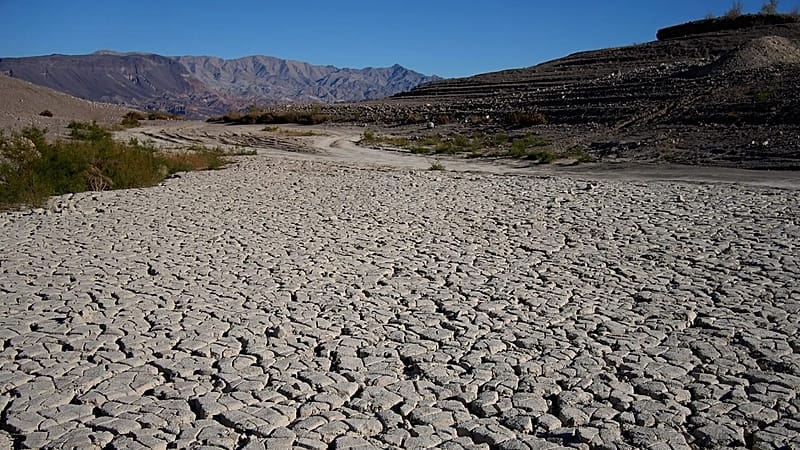
The study identified a key mechanism through which drought contributes to antibiotic resistance: a concentrating effect. As soil dries out, the natural antibiotics present within it become more concentrated in the limited remaining moisture. This increased potency can inadvertently favour the survival and proliferation of antibiotic-resistant microorganisms.
Beyond this direct concentration effect, drought also influences antibiotic resistance in more subtle ways. Scientific research has indicated that the physical stress imposed on bacteria by dry conditions can alter their susceptibility to antibiotics. Furthermore, prolonged dry spells can affect the degradation rates of certain antibiotics within the soil, with lower moisture levels potentially either slowing down or accelerating this process, depending on the specific antibiotic compound.
“We’re interacting with soil all the time, whether it’s recreational or simply by inhaling dust,” Shan noted. “Importantly, bacteria are able to transfer genes to each other, and antibiotic-resistance genes are known to have a high rate of transfer. With trillions of bacteria in the environment, this is a substantial occurrence.” This continuous exchange of genetic material, including resistance genes, amplifies the spread of AMR within microbial communities.
Alarming Projections and the Path Forward
The findings linking drought and AMR are particularly concerning when considering future global trends. Projections suggest a grim outlook:
- Projected Deaths: A 2024 study published in The Lancet estimates that between 2025 and 2050, a staggering 39 million deaths could be directly attributed to AMR.
- Expanding Drylands: Concurrently, climate projections indicate that by the end of this century, as many as 5 billion people may reside in dryland regions.
The researchers emphasise that these findings underscore the critical importance of the “One Health” approach. This principle advocates for understanding and addressing health issues by recognising the interconnectedness of human, animal, plant, and environmental health.
“As climate instability intensifies, such integrative approaches will be critical for anticipating and mitigating the global trajectory of antibiotic resistance,” the researchers concluded. By acknowledging the profound influence of environmental factors like drought on the development and spread of AMR, we can begin to implement more effective, holistic strategies to safeguard public health in an increasingly challenging world.