Pensioners’ Plight: A Call for Dignity and Fair Compensation
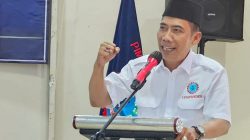
The persistent struggle of pensioners in Nigeria for adequate financial support remains a critical national issue. For years, retired public servants have voiced concerns over meagre pension payouts, a situation that significantly impacts their quality of life and dignity in retirement. The Nigeria Union of Pensioners (NUP) has been at the forefront of advocating for improved conditions, with its President, Godwin Abumisi, shedding light on the systemic challenges and the union’s ongoing efforts.
Constitutional Mandates and Unfulfilled Promises
The foundation of the pensioners’ claims rests on constitutional provisions. According to Section 173 of Nigeria’s 1999 Constitution (as amended), individuals retiring from public service are unequivocally entitled to pension and gratuity. This right is protected, prohibiting any denial or disadvantageous treatment. Furthermore, the constitution stipulates that pensions should be reviewed and increased every five years or whenever the Federal Government adjusts the salaries of active workers, whichever occurs first.
However, the consistent non-implementation of these constitutional directives has led to the current predicament. The failure to adhere to these regular reviews means that pension amounts have not kept pace with the escalating cost of living, leaving many pensioners in a state of financial distress.
The Demand for an Increased Pension: From N32,000 to N60,000
The NUP has put forth a demand for an upward review of the current pension amount from N32,000 to N60,000. This demand is directly linked to the prevailing economic realities and the minimum wage set for active workers. While the constitution does not specify a minimum pension amount, the union argues that pensioners, like all citizens, purchase goods and services from the same markets as those currently employed.
The recent economic climate, exacerbated by the removal of fuel subsidies, has dramatically increased the cost of essential commodities. The proposed N60,000 is seen as a crucial measure to provide a degree of relief, enabling pensioners to meet their basic needs and live with a semblance of dignity.
Economic Realities and the N60,000 Proposal
While the N60,000 figure is a significant increase, President Abumisi acknowledges that it may still not be entirely sufficient given the current economic pressures. However, the union’s strategy is to align their demand with the minimum wage of active workers. Since the current minimum wage stands at N70,000, asking for N60,000 represents a reasonable request that does not exceed the income of those still in service. The expectation is that any future increase in active workers’ salaries will be mirrored by a corresponding adjustment in pensions and gratuities.
The Grim Toll of Hardship: Lives Lost to Financial Strain
The human cost of inadequate pensions is a somber reality. While an exact number of pensioners who have succumbed to hardship due to delayed or insufficient payments is difficult to quantify without detailed record-keeping across all state councils, President Abumisi confirms that the figure is “huge and very disturbing.”
He highlights the plight of pensioners in certain states who continue to receive as little as N5,000 monthly. This dire situation underscores the critical need for intervention. In contrast, the NUP commends the Governor of Kano State, His Excellency Kabir Yusuf, for his decisive action in clearing a substantial backlog of unpaid pension and gratuity arrears, amounting to approximately N27 billion. This commitment to rectifying past omissions is seen as a beacon of hope.
The stories of pensioners dying from frustration and the inability to access their rightful benefits are not uncommon. For many, their pension is their sole source of income, with no external support from family members, particularly those living abroad. The inability to afford basic necessities leads to suffering, and in tragic cases, premature death. The union expresses shame that in a nation celebrating decades of independence, citizens who have served faithfully are left to endure such hardship.
Union’s Role in Advocacy and Intervention
The Nigeria Union of Pensioners plays a vital role in addressing the systemic issues surrounding pension payments. They act as a crucial point of contact for genuine pensioners experiencing payment delays or stoppages. Upon receiving such reports, the NUP intervenes promptly. Once the pensioner’s legitimacy is verified, the union works to ensure their reinstatement on the payroll and the disbursement of all outstanding arrears.
However, the NUP is firm in its stance against individuals who fraudulently claim pension benefits. The union’s advocacy is exclusively for legitimate pensioners, and they do not defend those who seek to exploit the system.
Economic Policies and the Need for Gradual Adjustments
President Abumisi acknowledges the current economic hardships, largely attributed to government policies, particularly the removal of fuel subsidies. He suggests that a phased approach to subsidy removal might have allowed the economy and its citizens to adjust more gradually. Nevertheless, he also expresses optimism that some of the current administration’s policies may yield long-term benefits.
Rethinking Pension Review Frequency
The current constitutional provision for pension reviews every five years is deemed insufficient by the NUP, especially in light of persistent inflation. The union advocates for a more frequent review, ideally every two years. This would allow pension amounts to better align with the rising cost of living, providing pensioners with a more stable financial footing.
The NUP draws parallels with developed nations where salary and pension adjustments are often built into the system. In countries like Britain, for example, automatic adjustments to workers’ salaries are triggered by sustained increases in the prices of essential goods. Nigeria, in contrast, often requires protests and industrial actions to achieve any salary or pension increments.
Future Actions and Direct Engagement
Should the government fail to respond to the union’s demands, the NUP has outlined potential courses of action. While pensioners, due to their retired status, cannot engage in strikes, they can mobilize for peaceful protests and demonstrations. The hope, however, remains that such measures will not become necessary.
If granted an audience with President Bola Tinubu, President Abumisi intends to convey the same message: commendation for his economic reform efforts, while simultaneously highlighting the immense suffering of ordinary Nigerians. He believes that while reforms can be painful, the current level of hardship is becoming unsustainable.
Addressing Pension Fund Administrator Issues
A significant ongoing concern involves pension fund administrators’ alleged refusal to release benefits belonging to deceased family members. The dissolution of the board of the National Pension Commission (PENCOM) has complicated the union’s ability to address this issue effectively. The NUP strongly urges President Tinubu to reconstitute the PENCOM board without delay, enabling them to formally raise and resolve these critical matters with the administrators.