Remarkable Footage Reveals Sperm Whale Birth, Highlighting Unprecedented Maternal Support
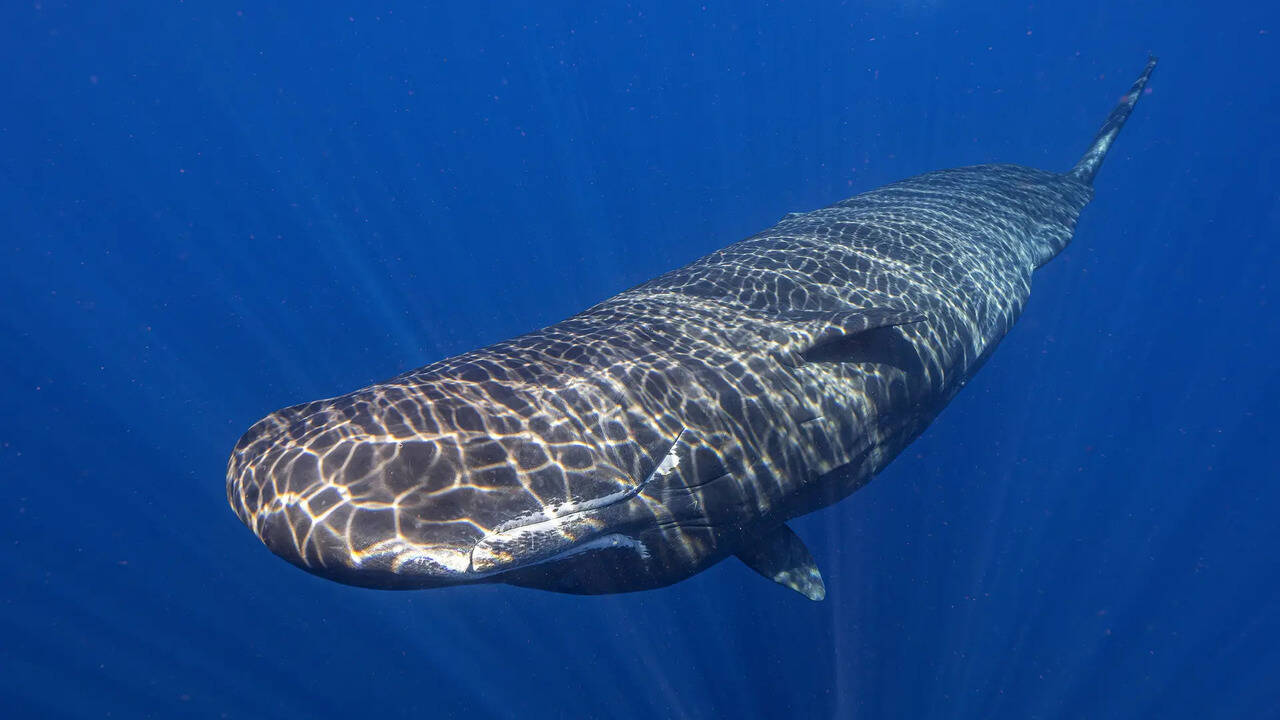
For the first time, scientists have captured rare footage of a sperm whale giving birth, offering an unprecedented glimpse into the complex social behaviour of these magnificent and enigmatic marine mammals. The video, recorded in 2023 off the coast of Dominica, showcases a remarkable level of cooperation among female whales, who worked in unison to support a mother during the critical moments of labour and to assist the newborn calf. This level of coordinated effort is exceptionally uncommon within the animal kingdom, particularly outside of primate societies.
Behavioural ecologist Mauricio Cantor from Oregon State University, who was not involved in the research, described the event as the group “quite literally helping bring the calf into the world.” Understanding how whales socialise and cooperate in their natural, largely submerged environment presents a significant challenge. Historically, documented instances of sperm whale births are exceedingly scarce, with only a handful of accounts documented over the past six decades, often originating from anecdotal observations or historical whaling expeditions.
The extraordinary footage emerged serendipitously. Researchers were onboard a vessel off the Caribbean island of Dominica, engaged in studying whale communication, when they observed an unusual gathering. A pod of eleven sperm whales, predominantly females, surfaced with their heads oriented towards each other, engaging in a series of vigorous thrashing and diving manoeuvres. Recognising the significance of the event, the scientists promptly deployed drones and underwater microphones to meticulously record the proceedings.
The birthing process itself spanned approximately 30 minutes. In the hours that followed, pairs of adult whales were observed diligently supporting the newborn calf, holding it at the water’s surface until it gained the strength and ability to swim independently.
“This was just really a special event,” remarked David Gruber, a co-author of the study and affiliated with the Cetacean Translation Initiative, also known as Project CETI.
Following the observation, the research team developed sophisticated software to analyse the captured data, deciphering the intricate visual and auditory information. The findings from this groundbreaking research have been detailed in two separate studies, published simultaneously in the esteemed journals Scientific Reports and Science.
A striking revelation from the analysis was the extent of communal support provided to the new calf. Whales identified as mothers, sisters, and daughters, even those not directly related to the birthing mother, actively participated in assisting the newborn. This observation underscores the deeply ingrained social structures of sperm whales, which are characterised by close-knit, female-led societies. The new findings demonstrate how these established social dynamics are profoundly evident during the most significant and vulnerable life events.
Shane Gero, another co-author from Project CETI, expressed his awe at the animals’ collective action: “It’s amazing to think about how, when faced with this impossible challenge, these animals come together to succeed.”
Further analysis revealed that the whales produced distinct vocalizations during pivotal moments of the birth. These included slower, elongated sequences of clicks, which scientists hypothesise may have played a crucial role in inter-whale communication, facilitating synchronisation and coordination during the birthing effort.
This remarkable discovery opens up a wealth of new questions for marine biologists. How do these pods organise themselves and arrive at such critical junctures? What cues or signals prompt them to join forces for events like births?
While definitive answers may remain elusive for some time, given the inherent difficulties in obtaining such rare footage, these new findings provide invaluable insights into the complex and often hidden social lives of sperm whales.
“I think it’s just exciting to think about the social lives of these animals,” commented Susan Parks, a biologist from Syracuse University who was not involved in the research. The footage and subsequent analysis offer a rare and cherished window into the intricate world of these magnificent ocean dwellers, highlighting the profound bonds and cooperative behaviours that define their existence.