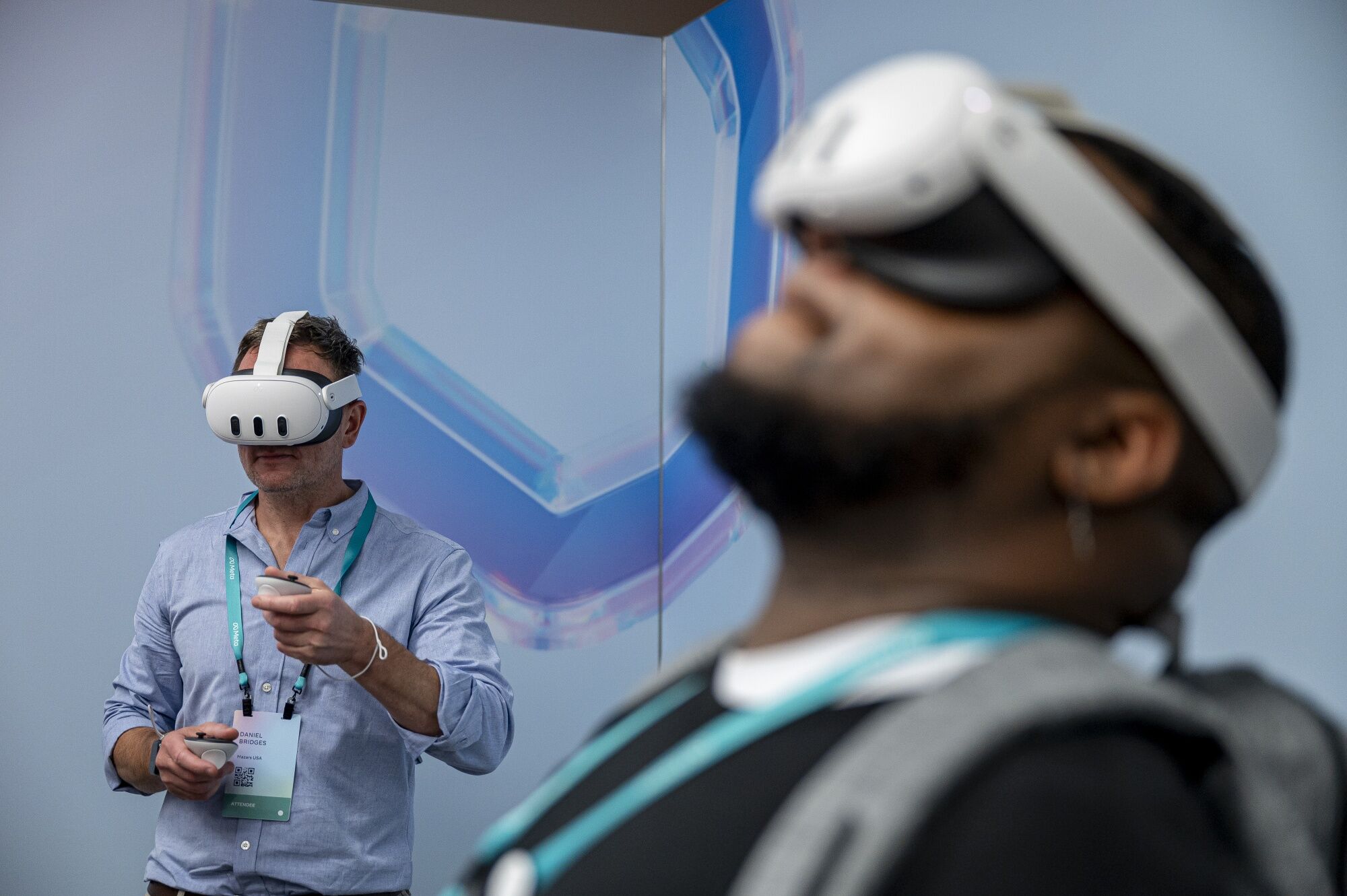
Meta Increases VR Headset Prices Due to Rising Costs
Meta Platforms Inc. is raising the prices of its virtual reality headsets, a move driven by increasing memory chip costs and broader industry challenges. This decision comes as part of a growing trend among tech companies to adjust pricing in response to supply chain pressures.
The company announced that it will increase the price of its entry-level Quest 3S headset by $50 and its higher-end Quest 3 model by $100. The Quest 3S will now cost $350 for the 128 GB version and $450 for the 256 GB variant. The Quest 3 will be priced at $600. These changes will take effect on April 19 and apply not only in the US but also in the UK, Europe, and Japan.
This adjustment follows similar moves by other major tech firms. Apple Inc. and Microsoft Corp. have increased the prices of laptops, while Samsung Electronics Co. has raised the cost of some mobile devices. Other headset manufacturers have either increased their prices or faced product delays due to ongoing supply chain issues.
Meta, which rebranded itself in 2021 to focus on the metaverse and virtual reality, explained that the price hikes are necessary due to rising costs of producing high-performance VR hardware. A company spokesperson stated:
“We’re making this change because the cost of building high-performance VR hardware has risen significantly. To keep delivering the quality of hardware, software and support you expect from the Quest platform, we need to adjust our pricing.”
In addition to the new pricing for the Quest models, the cost of refurbished versions will also increase. However, the price of Meta’s smart glasses remains unchanged for now.
Despite these adjustments, Meta remains committed to the VR market, stating that it believes the category is still the “future of computing.” The company emphasized that the price changes will help it continue delivering on its vision for the future of technology.
However, recent developments suggest that VR may no longer be a top priority for Meta. The company has laid off a significant portion of its hardware division responsible for headsets. It has also discontinued Horizon Worlds, a key metaverse product, and shut down work on several VR games.
This shift in focus is not unique to Meta. Other companies in the VR space have also faced challenges. For example, Valve has experienced product delays due to supply chain issues, and the Pico 4 Ultra headset is set to increase in price in Japan in May. Sony Group Corp. has also raised the prices of its home consoles.
Apple, on the other hand, has not adjusted the price of its Vision Pro headset, which currently costs $3,499. This high price point gives the company limited flexibility to raise prices further.
Industry-Wide Challenges
The current situation reflects broader industry-wide challenges caused by the artificial intelligence boom. Memory chip costs have surged, leading to supply chain shortages that affect multiple sectors. As a result, companies across the tech industry are forced to make difficult decisions about pricing and product development.
While Meta continues to invest in VR, the company’s recent actions indicate a possible realignment of priorities. The future of VR remains uncertain, but Meta and other industry leaders are navigating these challenges with a mix of innovation and strategic adjustments.
As the market evolves, consumers can expect more changes in pricing and product availability. The impact of these shifts will likely be felt across various segments of the tech industry, from hardware to software and beyond.