The Longest Solar Eclipse of the 21st Century
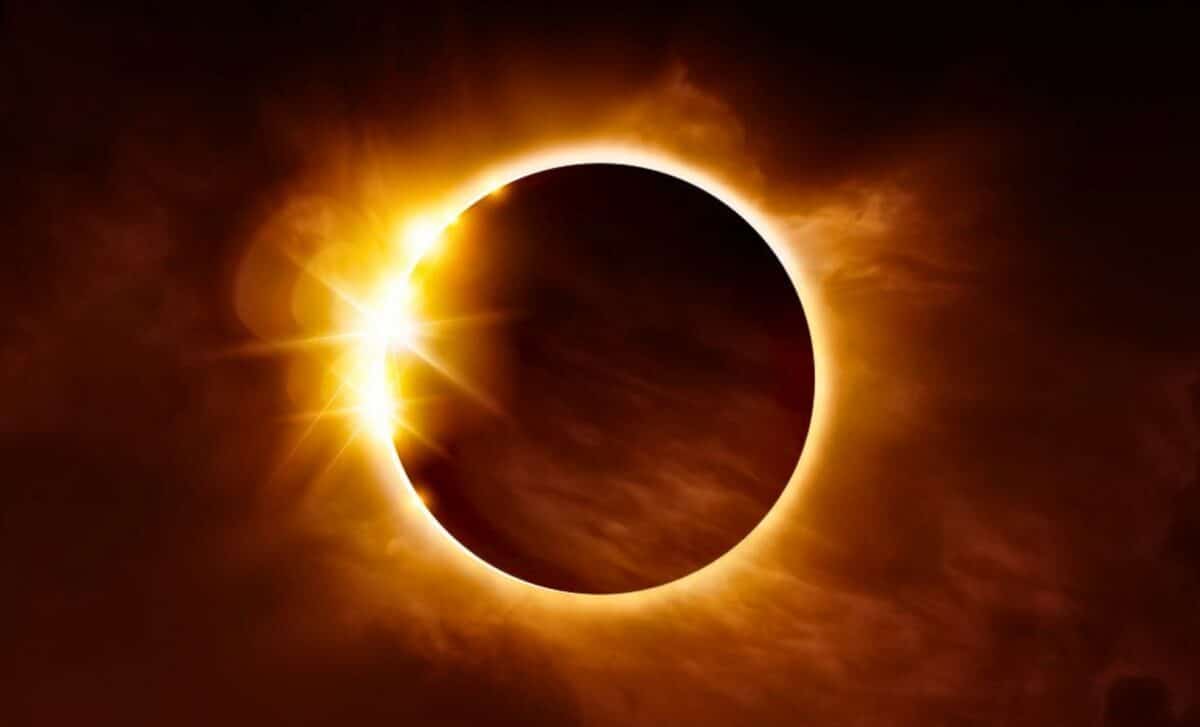
On a scorching August morning, the Sun will vanish from the sky. Across a narrow corridor stretching from the Straits of Gibraltar to the Arabian Peninsula, the Moon will move into position and block the solar disk, transforming midday into deep twilight. For those within this path, the most significant eclipse of the century will begin.
This event is the total solar eclipse of August 2, 2027, confirmed by NASA as the longest such eclipse of the 21st century. According to calculations from the agency’s Goddard Space Flight Center, the maximum totality will last 6 minutes and 23 seconds. No other total solar eclipse this century will reach that duration.
The last time land-based observers experienced such a long totality was in 1991. NASA’s data indicates that the next comparable opportunity won’t occur until 2114, making the 2027 eclipse a rare intersection of celestial timing and geographic reach.
Why This Eclipse Will Be Unusually Long
The extended duration of this eclipse is due to a straightforward mechanism. The Moon will be near perigee, its closest point to Earth, appearing large enough to completely cover the Sun for an unusually long period. Additionally, the point of greatest eclipse will occur in a region where the Sun is nearly overhead, adding precious seconds to the shadow’s movement across the surface.
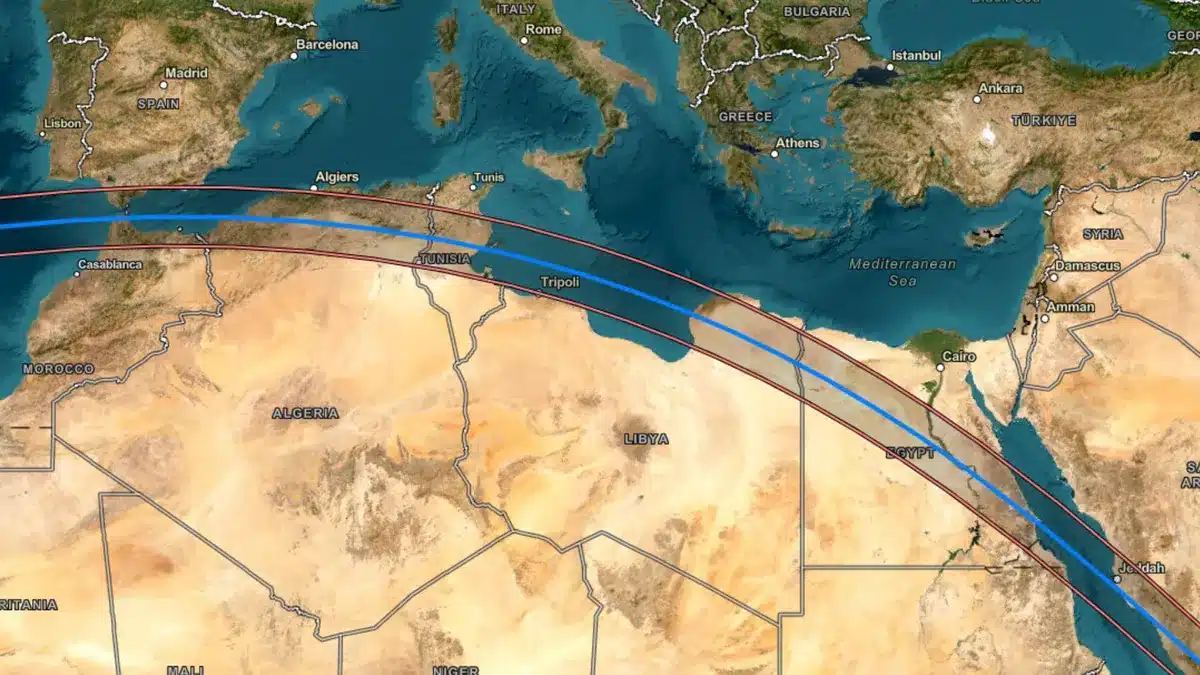
This region is North Africa. The central line of the eclipse will pass through southern Spain, northern Morocco, Algeria, Tunisia, Libya, and Egypt before crossing into Saudi Arabia and Yemen. The duration increases from west to east. Tarifa, at Spain’s southern tip, will experience 4 minutes and 39 seconds of totality. Tangier, just across the Strait, sees 4 minutes and 50 seconds. By Benghazi, Libya, totality reaches 6 minutes and 7 seconds. Luxor, Egypt, records 6 minutes and 19 seconds. Along the Red Sea coast, the figure hits 6 minutes and 20 seconds, just shy of the theoretical maximum.

The Sky Guarantee That Sets This Eclipse Apart
Duration is only part of the appeal. Another factor influencing eclipse-chasing plans is meteorology. August in North Africa brings extreme heat but also virtually cloudless skies along the zone of longest totality.
Jay Anderson, a Canadian meteorologist who produces eclipse climate analyses for Eclipsophile, told Space.com that eastern Libya and western Egypt face “no chance of cloud.” At Luxor, average cloud cover in August is 0.7 percent. The worst observers are likely to encounter is thin cirrus riding the jet stream.
Dust, not cloud, may be the real visibility concern. However, Anderson noted a compensating effect. The same dry desert air that pushes midday temperatures to 43 degrees Celsius will respond quickly when sunlight cuts off. “The temperature will probably drop like a stone when the eclipse happens,” he said.
That clarity is not uniform across the entire track. Around the Straits of Gibraltar, where cruise ships and tour operators are concentrating, average August cloud cover hovers near 30 percent. Localized low-pressure systems funnel moisture into the Strait, creating a persistent complication for that segment of the path.
A Path Dense With People
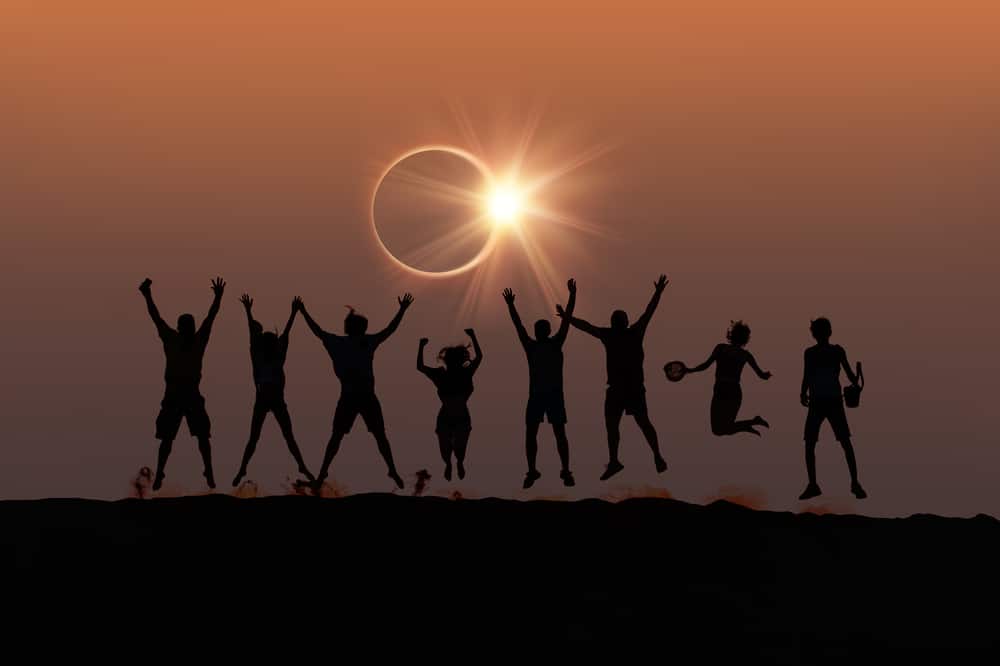
The human dimension is substantial. Timeanddate.com estimates that 88.9 million people live inside the path of totality, more than three times the population that fell under the Moon’s shadow during the North American eclipse of April 2024.
For most, the eclipse arrives around midday. In Luxor, totality occurs at 1:02 p.m. local time with the Sun 82 degrees above the horizon. In Jeddah, it begins at 1:22 p.m. In Tarifa, the moment comes earlier, at 10:45 a.m., with the Sun somewhat lower in the east.
Partial Coverage Across Three Continents
Outside the central band, a deep partial eclipse spreads across much of Africa, Europe, and the Middle East. Lisbon will see 93 percent of the solar disk obscured. Madrid reaches 86 percent. Paris gets 52 percent. London registers 42 percent, and Berlin 34 percent.
Cairo, just south of the path, will see 95 percent coverage. Algiers and Tripoli, hugging the edge, each hit 99.9 percent obscuration without ever slipping into totality. The partial phase extends well over two hours in most of these locations.
What the Eye Will See in the Darkest Minutes
As totality approaches, two rapid optical effects sequence into view. Baily’s Beads appear first, a string of bright points where the last direct rays of sunlight stream through valleys on the Moon’s irregular edge. They yield almost immediately to the diamond ring effect, a solitary flash marking the moment before the corona is fully exposed.
Once the Moon blocks the disk entirely, the corona emerges as a pearly halo. The surrounding sky dims sharply, enough to reveal brighter stars and planets. The temperature drop in dry desert air can be abrupt and disorienting.
Safety Rules Apply From First Contact to Final Sliver
The window for naked-eye viewing is narrow and absolute. Only the period of total obscuration is safe. During every other phase, certified solar viewing glasses must stay on. Even a sliver of direct sunlight, unfiltered, can burn the retina without warning or pain.
NASA notes that the interactive map for the Total Solar Eclipse of 2027 Aug 02 calculates contact times without accounting for mountains and valleys along the lunar limb. Those corrections, which can shift predicted durations by one to three seconds, are normally published 12 to 18 months before eclipse day.
The next total solar eclipse arrives July 22, 2028, visible from Christmas Island, Cocos Islands, parts of Australia, and New Zealand. Its totality will be shorter. The 2027 event remains unmatched in duration, in the reliability of its skies, and in the sheer number of people positioned to step outside and watch the Sun disappear.