The Mysterious Square on Mars
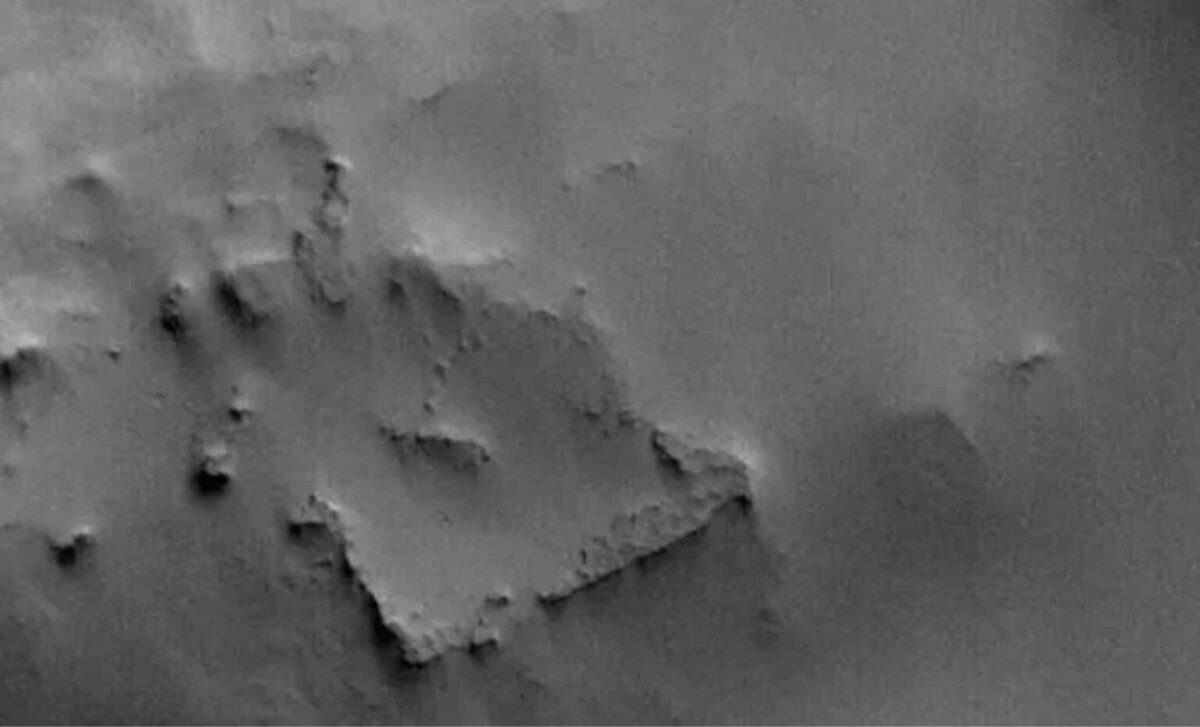
A seemingly perfect square spotted on Mars has sparked widespread curiosity online, with many users suggesting it could be an artificial structure. The image, widely shared on social media, quickly drew attention for its geometric appearance.
The image originates from a 2001 observation by NASA’s Mars Global Surveyor, a mission that played a major role in mapping the Martian surface. A cropped and enhanced version of the original frame isolated a portion of terrain that appears unusually angular.
As the image circulated on platforms like Reddit and X, it reached a broader audience beyond space enthusiasts. The discussion soon shifted from curiosity to speculation, echoing a familiar pattern in how planetary imagery is interpreted when stripped of context.
When an Image Goes Viral Overnight
The resurgence of the image was not purely organic. According to the timeline of its spread, the formation gained significant traction after being shared and commented on by high-profile personalities. Joe Rogan, an American podcaster, reposted the image with a reaction describing it as “wild,” which helped propel it into mainstream visibility. Shortly after, Elon Musk joined the conversation, writing: “We should send astronauts to Mars to investigate!”
The version that circulated most widely was not the full original image. It was a manipulated crop designed to emphasize straight edges and corners, making the formation appear more structured than it actually is.
Greater Image Clarity Reveals What Was Missing
A more complete understanding comes from later observations. In 2018, NASA’s Mars Reconnaissance Orbiter captured the same region using its high-resolution HiRISE camera. “Look at the ‘corner’ that is really a cliffside unrelated to the rest of the ‘square,’ according to Andrew Good of NASA’s Jet Propulsion Laboratory.
As explained by Forbes, this updated image reveals a more complex and irregular landscape. What initially appeared as straight lines resolves into uneven ridges and scattered mounds. The broader view makes it clear that the square-like impression depends heavily on angle, lighting, and image selection.
The comparison between the 2001 and 2018 images highlights how resolution and perspective can dramatically alter interpretation. When seen in context, the formation no longer suggests any kind of artificial geometry.
Mars Doesn’t Look Like What We Think
This type of misinterpretation is not new. According to archival imagery from NASA’s Viking 1 mission in 1976, the famous “Face on Mars” once appeared to show a human-like structure on the planet’s surface. The illusion was caused by shadows and low image resolution.
“At the time, NASA scientists had already correctly interpreted the image as an optical illusion caused by the illumination angle of the Sun, the formation’s surface morphology and the resulting shadows, giving the impression of eyes, nose and mouth,” explained NASA in a statement.
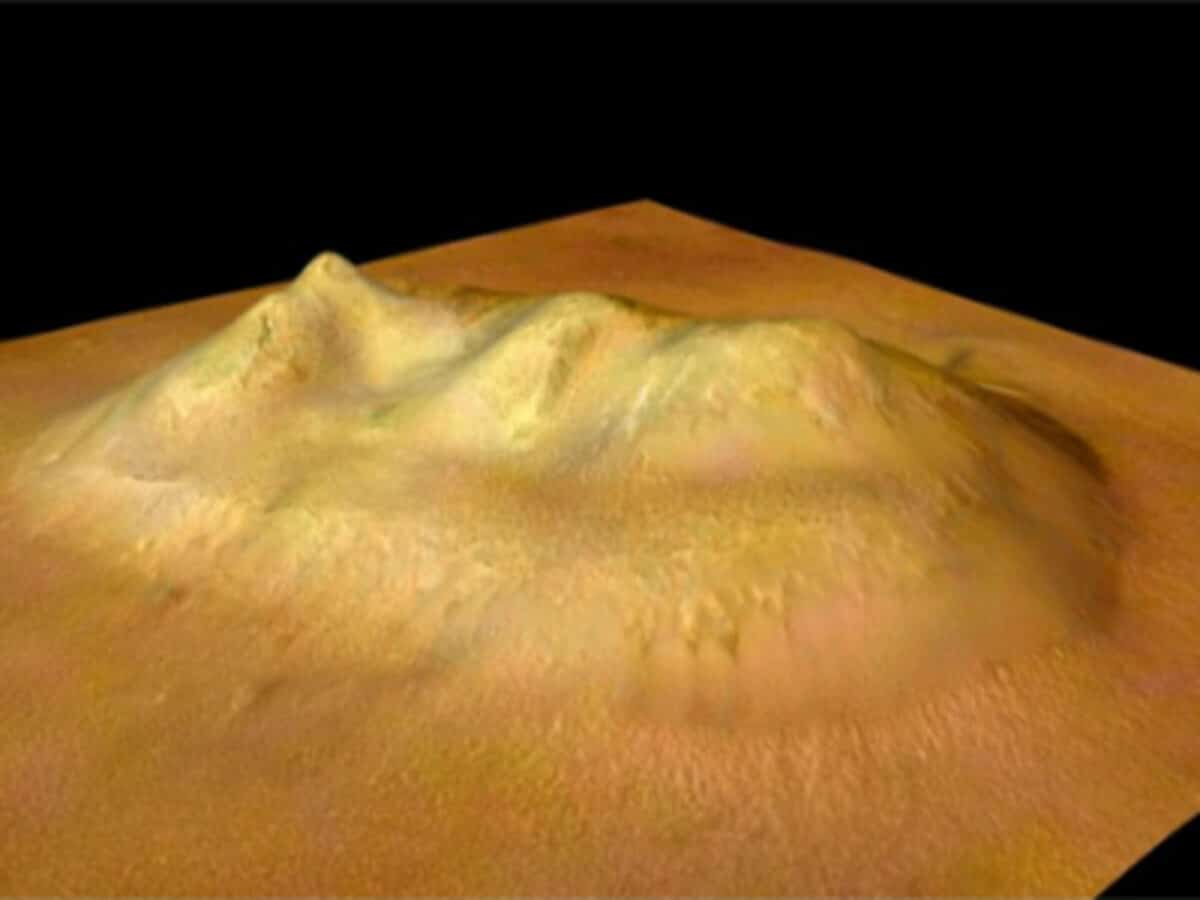
Later images from the MRO provided a clearer view, revealing the feature to be an eroded hill. The same visual mechanism, known as pareidolia, is at work in the case of the Martian square. The human brain tends to recognize familiar shapes even in random or complex patterns.
Mars Remains a Central Focus for Scientific Exploration
Mars remains a central focus for scientific exploration, particularly in the search for signs of ancient microbial life. Current missions are investigating whether the planet once had conditions suitable for life, with future efforts aimed at returning samples to Earth.