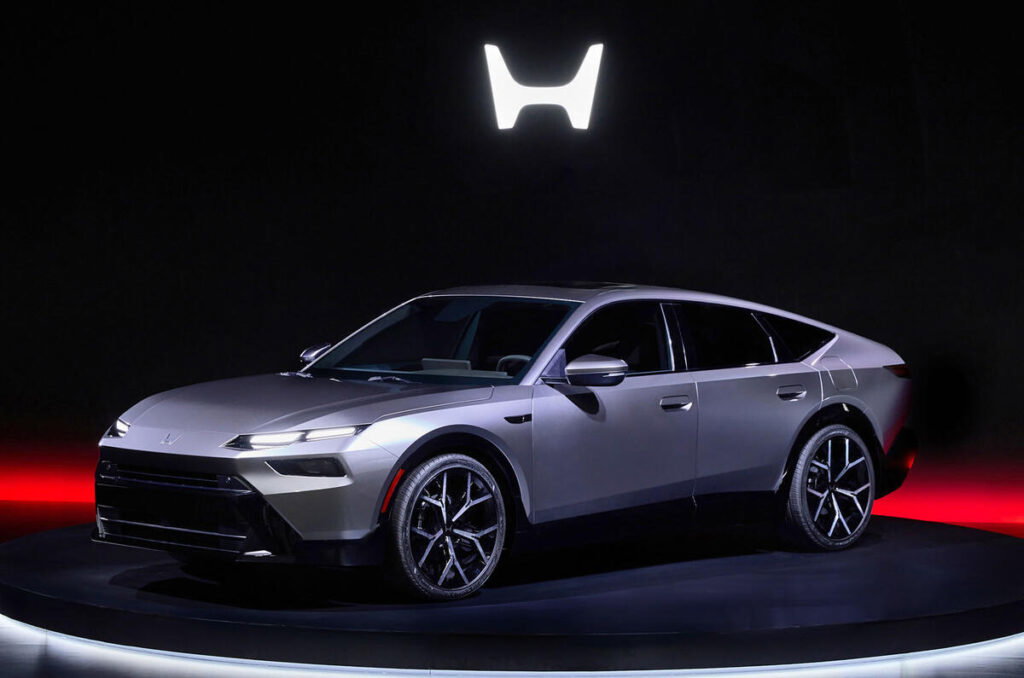
At the 2026 Honda Business Briefing, the automotive company outlined its vision for long-term growth. The strategy highlights four key markets: North America, China, Japan, and India. These regions will be central to Honda’s future operations, with a focus on expanding its presence and adapting to local market needs.
One of the core elements of this plan is a transition towards hybrid powertrains. Honda has also announced that it will introduce 15 new models over the next few years. Two of these models were showcased as concepts during the event, with plans for a 2029 launch. One concept is a sedan that draws inspiration from the 0 Series electric SUV but incorporates design elements from the current eleventh-generation Civic. The other is an SUV under the Acura brand, which is expected to target the premium segment.
Details about these two models remain limited, but Honda has revealed that it is developing a next-generation platform equipped with an all-new hybrid system. This platform aims to improve fuel economy by 10% compared to the current model while reducing costs by 30%. The company is also working on enhancing its hybrid technology to make it more efficient and cost-effective.
North America is set to receive the majority of these upcoming models. These vehicles are expected to target the premium D-segment, though it is still unclear whether they will predominantly be SUVs or sedans. Honda is also focusing on the development of a next-generation Advanced Driver Assistance System (ADAS), which is scheduled to debut in 2028. It is likely that this system will be integrated into one of the new models launched around that time.
To support this expansion, Honda is investing in its North American manufacturing plants to ensure they can produce hybrid vehicles efficiently. The company is also collaborating with LG Energy Solutions to develop batteries for its hybrid powertrains. This partnership involves retooling an existing EV plant to meet the growing demand for hybrid components.
Honda aims to significantly increase the localization of hybrid system components, targeting a level more than four times the current rate. This move is part of a broader effort to strengthen its supply chain and reduce dependency on external suppliers.
Explaining how Honda aims to grow
Honda has faced challenges in recent years, particularly in its car division. Collaborations with Sony and Nissan did not yield the expected results. Now, the Japanese automaker is looking to rebuild its business globally and regain its competitive edge.
The company is currently undergoing a three-year business overhaul. Its goal is to recover losses from EV development by the end of the 2029 fiscal year. Based on further actions, Honda aims to achieve a profit of USD 8.85 billion.
With the shift towards gas and hybrid powertrains, Honda is investing USD 27.8 billion in their development. An additional USD 6.32 billion is being allocated to tech and software advancements. Despite the focus on hybrids, Honda will continue to develop EV hardware and research solid-state batteries, albeit at a more controlled pace. The company has set a cap of USD 5.05 billion for EV investments, ensuring that decisions are made based on market demands.
By the end of fiscal year 2031, Honda aims to see a 10% return on investment. This strategic approach reflects its commitment to balancing innovation with financial sustainability.
Trending slideshow: Here Are The 15 Most Anticipated Cars That Will Release in the Future
Trending slideshow: Top 20 Most Absurd Concept Cars from the Past: One is Outright Comical