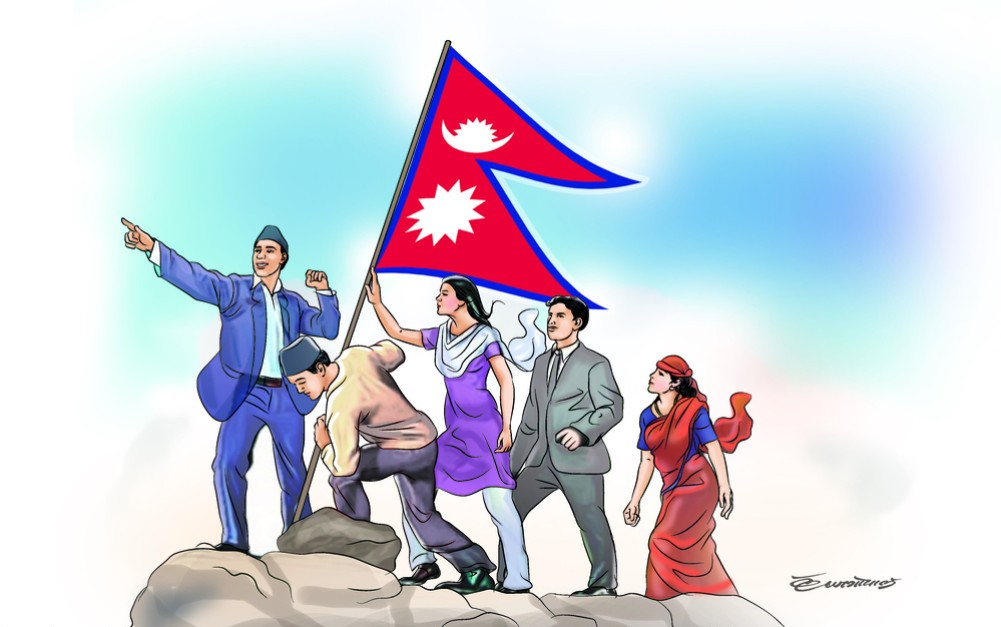
The Significance of History in Nepal
History has always fascinated me, especially in recent times. I have been reflecting on why this subject has become so prominent in my studies and how it influences my understanding of the world around me. This reflection is particularly relevant now, as we witness changes in political dynamics and social organization. The Nepali approach to history is unique, shaped by the way we create and dismantle the narratives of our “heroes and builders,” as highlighted in historian Rishikesh Shah’s book.
One striking observation is how some Nepali politicians, social leaders, and citizens have been reluctant to offer respectful farewells to former Prime Minister Sushila Karki. Her successful snap election was a significant event, yet her legacy seems to be overshadowed. The reasons are clear: she is a woman, and she does not conform to traditional partisan norms, which is actually her strength. However, what stands out is our inability to properly acknowledge the historical shifts that took place during her tenure.
We are entering a new phase in history, one marked by fresh challenges. The words of Western philosopher Martin Heidegger resonate here: “When one’s existence is inauthentically historical, it is loaded down with the legacy of a ‘past’ which has become unrecognisable.” In Nepal, many key moments and modes of history have become unclear, affecting how we interpret events and plan actions.
Youth and Social Change
The current debate about the shared responsibilities of political parties and youth for social change has taken interesting turns. An example that caught my attention is a social media post by Gen Z leader Rakshya Bam. As a prominent figure in the movement leading the country toward progress, she expressed concerns about recent events. Her perspective on politics and democratic governance is evident in her message. She urged Gagan Thapa of the Nepali Congress to consider the opposition’s role and responsibilities in today’s Nepal.
Bam highlights several events that have made people reflect deeply. She points to the suffering experienced by citizens, including children and women, and mentions the insecurity faced by the population. She emphasizes that the opposition must ensure the government hears the voices of the people. Additionally, she notes that since citizens voted to create history, it is everyone’s responsibility to address issues rather than ignore them.
I was pleased to see Rakshya Bam rise as a leader of the Gen Z movement. I had previously known her as a dynamic manager of youth events at the Tikapur Literary Festival.
Ideology and Historical Perspective
Failing to view events through a historical lens can lead to blinkered ideology and short-sighted approaches. Corruption, misuse of power, and undemocratic practices were key factors in the downfall of previous regimes and the challenges faced by political parties. For Generation Z, the main challenge is twofold: establishing a serious and sincere system of democratic governance and ending historically inconsistent practices.
Youth movements have played a crucial role in challenging the system throughout history. However, the “contrived corridors of history,” as described by poet T.S. Eliot, continue to influence our actions and how we shape historical events.
Historical Context of Youth Movements
The role of youth in Nepal’s history has been extensively studied, with notable academic works highlighting their impact. One area worth exploring is how youths have been used and misused in different historical phases.
During the autocratic Rana rule, youths were often targeted when they sought to introduce modern changes. The Rana rulers, while wary of politically enlightened youths, recognized their potential as a force to be reckoned with. Prime Minister Chandra Shumsher Rana, for instance, reluctantly laid the foundation stone of Tri-Chandra College in 1918, reportedly telling his associates that he had laid the foundation of the Rana rule’s grave.
A similar situation occurred in 1934 when Juddha Shumsher allowed some youths to publish a literary magazine called Sharada. Professor Yadunath Khanal referred to these events as tacit agreements between autocrats and the people.
Political Transformations and Youth Engagement
After the 1950 political transformation, which ended the Rana rule, political parties like the Nepali Congress and the Communist Party of Nepal gained significant appeal among youth. Students became essential agents in building relationships with these parties. These connections provided continuity to such alliances.
Student organizations were divided, with those close to political parties functioning as rival groups. Weaker parties operating from India relied heavily on student organizations for organizational support. Students had banners, slogans, crowds, names, and most importantly, determination and courage to stage opposition rallies with overtly political messages. These groups served as small party units.
Following the restoration of democracy, political parties overused student organizations, treating them as extensions of their own structures. They assigned leaders to mediate disputes within student groups. In an article published in this paper, I argued: “Stop misusing academic programs for the advantage of political parties and their cadres. Let competent people work freely. Make your activities transparent and be fair to the academics who are competent and dedicated.” This was after the Supreme Court ordered the restoration of parliament. The government should engage with student political affiliations through consensus, not force.