Discovery of Key Fossils for Siamraptor suwati
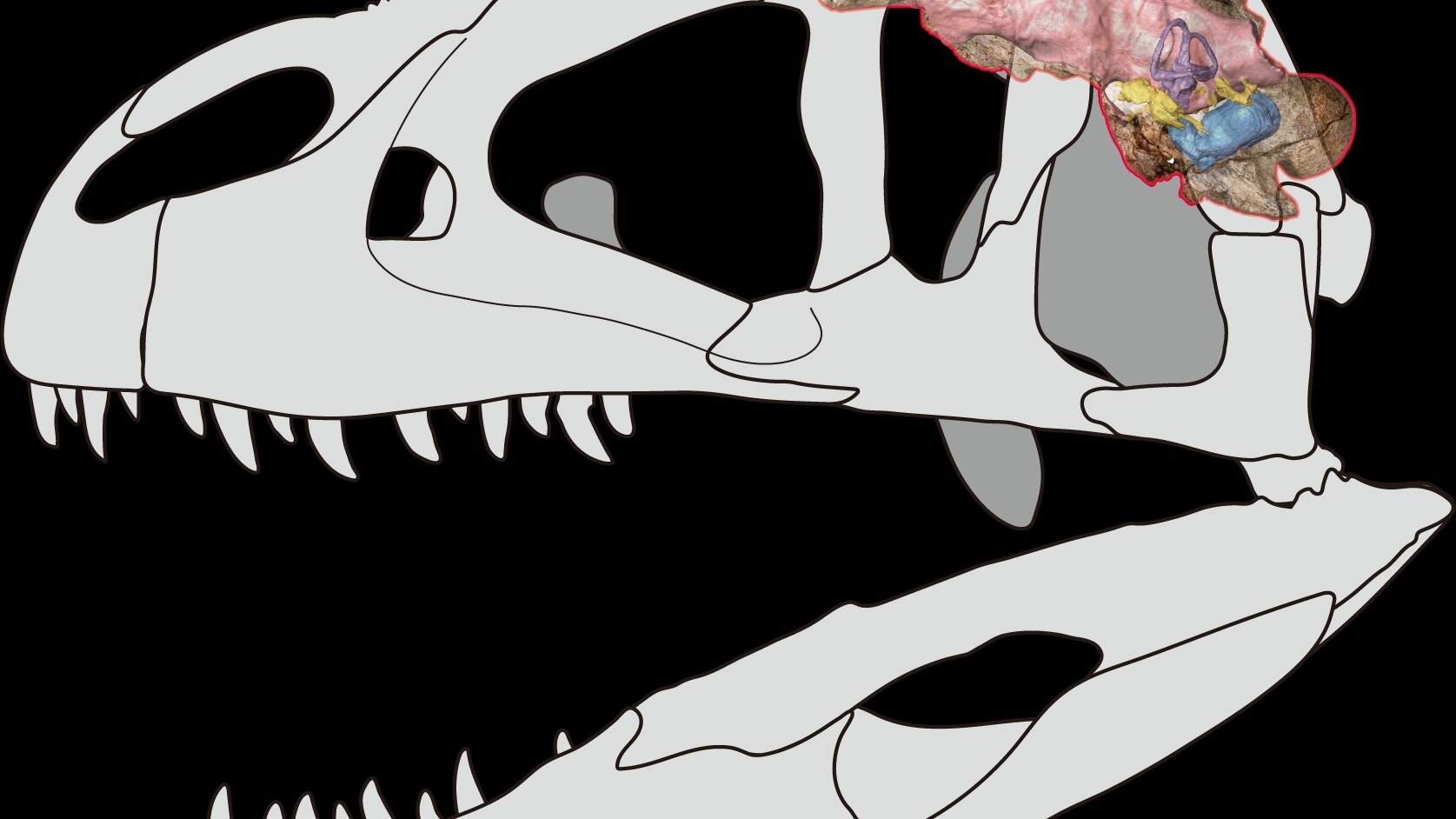
Two significant fossils discovered in Thailand have been confirmed as essential parts of the “shark-toothed” dinosaur known as Siamraptor suwati. This species, first identified by scientists just under 20 years ago, marks the first predatory dinosaur of its kind found in South-East Asia. A recent peer-reviewed study published in the journal PLOS One has now recognized the braincase and a partial skull fragment of this carnivorous dinosaur.
These pieces were recovered from a rock formation in north-eastern Thailand by the Japan-Thailand Dinosaur Project. The braincase was found sometime before 2007, while a partial skull roof was discovered in 2007. According to lead researcher Soki Hattori, the identification of these fossils as belonging to Siamraptor suwati was partly accidental. He explained that he became involved in the research after 2018 when the braincase had an unknown origin. In 2023, the skull roof was placed alongside the braincase, revealing their connection.
“The skull roof was known to come from the same locality as Siamraptor,” said Hattori, “which gave us confidence that the braincase was also from Siamraptor.” Separate research confirmed the braincase’s association with the species, leading to rapid progress in the study.
Understanding the Brain and Evolutionary Significance
The braincase allows scientists to examine the shape of the brain, which appears typical for this group of dinosaurs. Dr. Hattori, an associate professor at Fukui Prefectural Museum, emphasized the importance of this discovery. Siamraptor suwati is part of a group of giant predators known for their “shark-like teeth,” including carcharodontosaurids such as Giganotosaurus and Tyrannotitan, which are comparable in size to Tyrannosaurus and Spinosaurus.
Siamraptor has been classified as a basal member of this group, meaning it diverged early in the evolutionary history of carcharodontosaurids. For scientists, it represents a crucial missing link. Dr. Mike Lee, a professor of evolutionary biology at the South Australian Museum and Flinders University, described the significance of this discovery.
“It links the Allosaurus with the Carcharodontosaurus,” he said. Allosaurus, a relatively small and primitive predator from North America, is about 150 million years old. In contrast, Carcharodontosaurus is considered one of the largest predatory dinosaurs ever to exist. Siamraptor, at around 120 million years old, falls between these two species.
“It has an Allosaurus-like backbone and skeleton but features prominent shark-like teeth like Carcharodontosaurus,” said Dr. Lee. This discovery helps to fill gaps in the evolutionary tree of dinosaurs.
Filling in the Missing Pieces
Vertebrate palaeontologist Phil Bell, an associate professor at the University of New England’s Dino Lab, highlighted the importance of such discoveries. Most known dinosaur species are based on fragmentary remains, making new findings that clearly belong to specific species vital for scientific understanding.
“Skulls are rare because they consist of many small bones that often break apart after death,” Bell explained. “While dinosaur brains don’t fossilize, the bones surrounding the brain provide valuable information about its structure and function.”
The identified fossils include the semicircular canals, a part of the inner ear responsible for balance. Dr. Hattori noted that the orientation of these canals suggests Siamraptor may have held its head slightly elevated, with the snout angled upward. Additionally, the braincase shows signs of robust musculature in the neck region.
Future Research and Discoveries
Despite these advancements, there is still much to learn about Siamraptor suwati. Dr. Hattori mentioned that more parts of the skeleton need to be discovered. For example, while carcharodontosaurians are known for reduced forelimbs, only a single finger bone has been found in Siamraptor, leaving the size and structure of its forelimbs unclear.
“In the skull, the regions from the snout to above the eyes have not yet been discovered,” he said. “Understanding these features will depend on future fossil finds.”
The continued search for more fossils will help paint a clearer picture of this fascinating dinosaur and its place in the prehistoric world.