An Extraordinary Discovery on a Jersey Shore
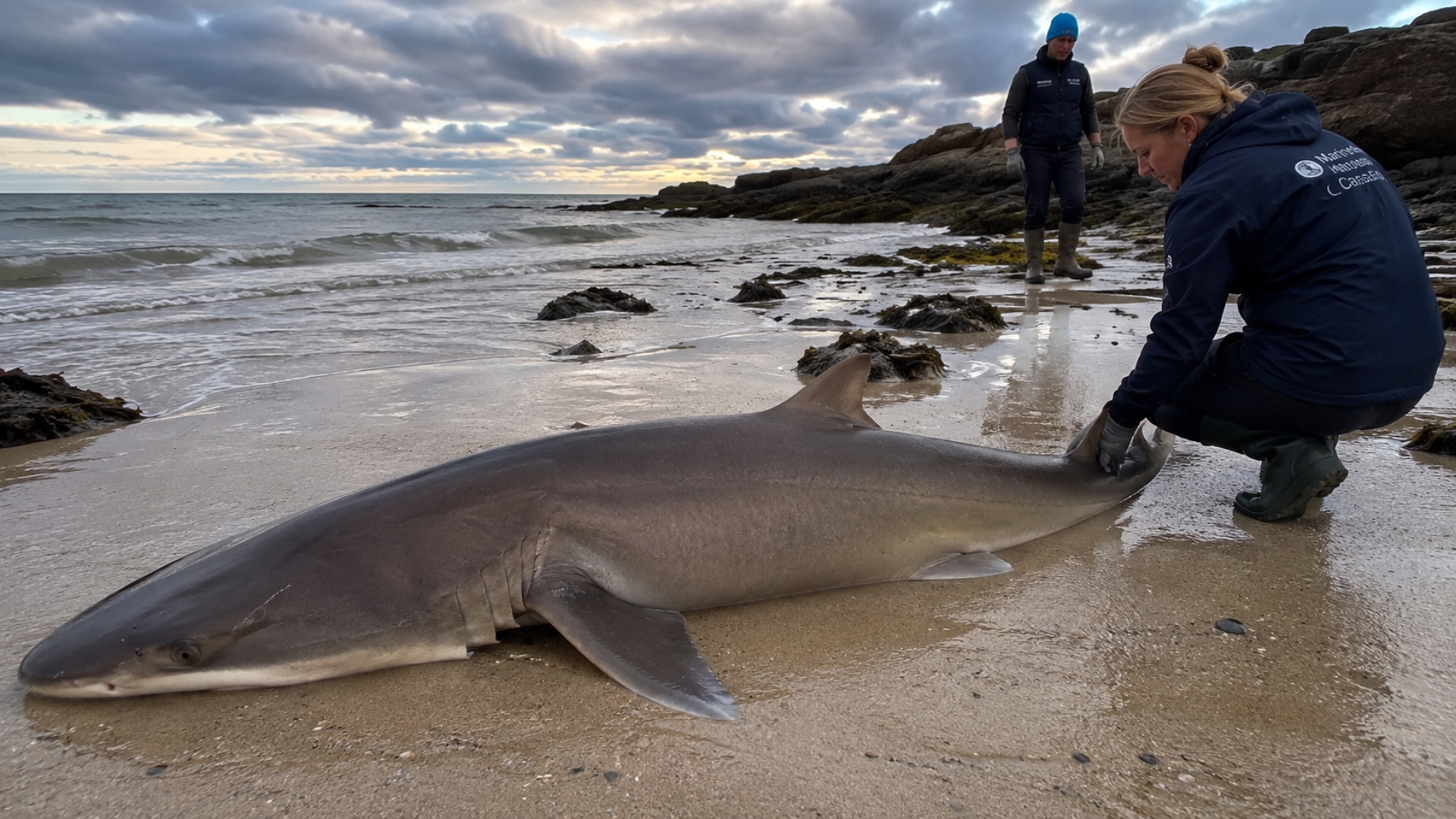
Beachgoers and marine wildlife responders were confronted with a remarkable sight when a large shark washed ashore on a Jersey beach.
The animal, later identified as a smalltooth sand tiger shark, measured approximately 4.3 metres (14 feet) in length and weighed nearly 600 kilograms. Despite showing faint signs of life when discovered, efforts to revive the shark were unsuccessful.
The find was notable not only because of the animal’s size but also because the species had never before been recorded in Jersey waters.
For local marine scientists, it represented a highly unusual and important discovery.
A Rare Visitor From Deep Offshore Waters
The smalltooth sand tiger shark is one of the ocean’s more elusive predators.
Typically associated with deeper offshore environments and warmer waters, the species is rarely encountered by the public. Unlike many coastal sharks that are regularly observed near beaches, smalltooth sand tiger sharks spend much of their lives in deeper parts of the ocean, making sightings uncommon even among experienced researchers.
The species is listed on the International Union for Conservation of Nature (IUCN) Red List and is considered endangered in parts of its range.
Because encounters are so rare, each confirmed record can provide valuable information about distribution, movement, and population trends.
The Cause of Death Remains Unclear
After initially being carried away by the tide, the shark washed ashore again the following day, allowing officials to recover the carcass for examination.
A post-mortem investigation revealed no obvious explanation for the animal’s death. Marine specialists found no evidence of entanglement in fishing gear and no signs suggesting interaction with commercial fisheries.
The absence of visible injuries leaves many questions unanswered.
Large marine animals can succumb to a variety of natural causes, including disease, internal injuries, environmental stress, or age-related factors. In some cases, the exact cause of death is never determined.
For now, scientists can only confirm what the examination did not find rather than what ultimately killed the shark.
A Species Expanding Northward?
One of the most intriguing aspects of the discovery is where it occurred.
The smalltooth sand tiger shark is generally associated with warmer waters than those typically found around the British Isles and the Channel Islands. However, marine researchers have documented a growing number of unusual shark sightings in northern waters in recent years.
British Divers Marine Life Rescue noted that the first confirmed records of the species in UK and Irish waters were only published in 2023, when several individuals were recorded in the English Channel and Celtic Sea.
These observations have prompted discussions about whether warming sea temperatures could be contributing to a gradual shift in the species’ range.
Scientists caution that a handful of sightings does not prove a long-term trend. Marine animal distributions can fluctuate naturally, and unusual appearances do not automatically indicate permanent changes.
Nevertheless, the possibility remains an important area of ongoing research.
Why Rare Sightings Matter
The discovery of an endangered shark far outside the area where it is normally encountered provides researchers with valuable information.
Large marine predators often serve as indicators of broader ecosystem conditions. Changes in their movements can reflect shifts in prey availability, ocean temperatures, currents, or habitat use.
For conservationists, each confirmed sighting helps improve understanding of species that are often difficult to study in the wild.
Because the smalltooth sand tiger shark spends much of its life away from coastlines and human observation, opportunities to gather information are limited.
That makes unusual records such as this particularly significant.
A Reminder of How Much Remains Unknown
The death of the shark is unfortunate, especially given its endangered status. Yet the discovery also highlights how much scientists are still learning about the oceans surrounding Europe.
Even in relatively well-studied waters, unexpected species continue to appear, challenging assumptions about where marine animals live and how they respond to changing environmental conditions.
Whether this shark was an isolated wanderer, part of a broader movement, or evidence of a gradual shift in distribution remains uncertain.
What is clear is that its appearance has provided researchers with a rare opportunity to study a species that few people ever see and a reminder that the oceans still hold many mysteries beneath the surface.