Yahoo’s AI Gambit: Can “Scout” Revive the Internet Giant?
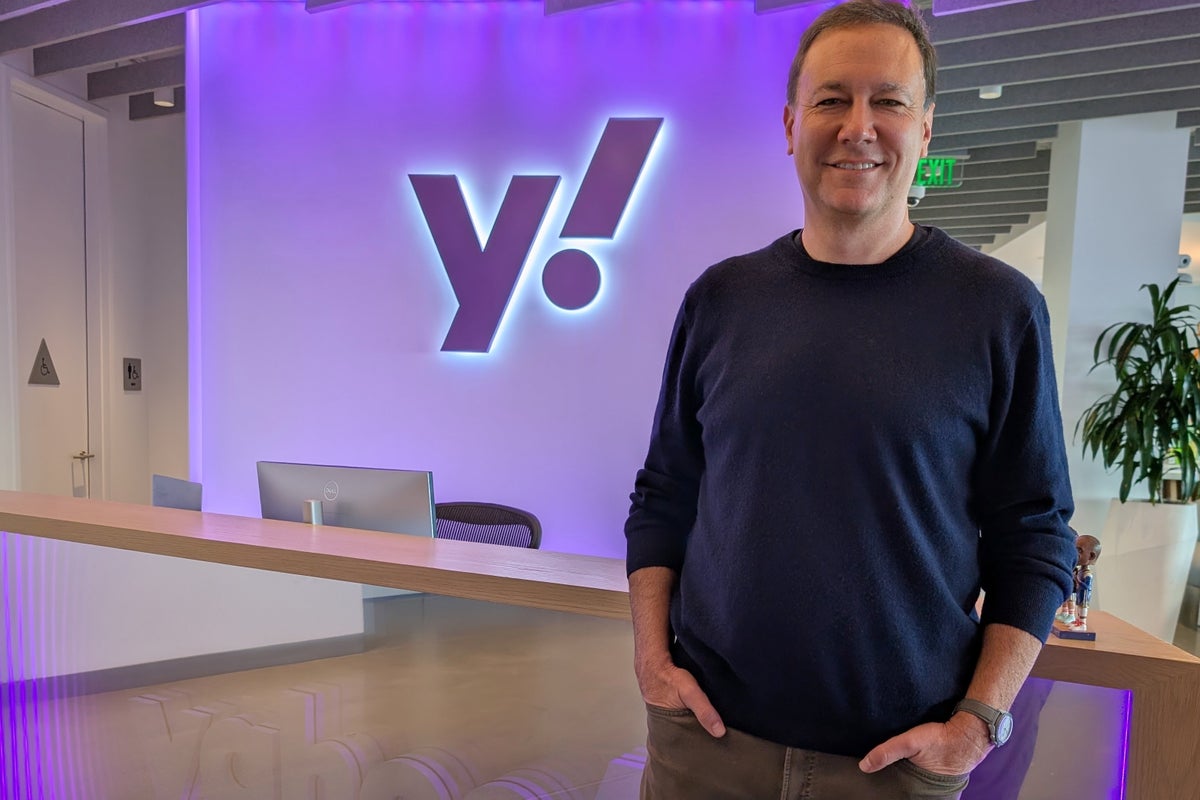
Yahoo, a name synonymous with the early days of the internet, is making a bold move into the future with “Scout,” a new artificial intelligence-powered answer engine. This AI isn’t shy, offering a candid assessment of Yahoo’s past when questioned by The Associated Press. “Yahoo’s journey illustrates how a company with an early advantage can disappear without continuous innovation,” Scout explained, helpfully providing links to back up its analysis.
This self-aware insight sets the stage for CEO Jim Lanzone’s ambitious plans. He aims to harness the power of AI to expand Yahoo’s already substantial global user base of 700 million. These users remain devoted to Yahoo’s enduring services in finance, sports, news, fantasy, and email, even after a history of stumbles that nearly erased the brand.
Lanzone, 55, is no stranger to turning around struggling tech companies. He’s openly admitted that Yahoo has always been his “white whale of turnarounds,” a challenge he believed he could conquer. His opportunity finally arrived in September 2021 when the private equity firm Apollo Global Management acquired Yahoo for $5 billion. This figure is a mere fraction of its peak valuation of $125 billion during the dot-com boom of the early 2000s. This acquisition followed Verizon Communications’ less-than-successful attempt to merge Yahoo’s online operations with AOL, another internet pioneer, in 2017.
Verizon’s acquisition of Yahoo’s online assets was largely a consequence of the company’s consistent missteps under seven different chief executives over a period of 16 years. Jeremy Ring, one of Yahoo’s earliest employees who began selling ads from his New York apartment in 1996, notes that while Yahoo’s past hasn’t been its undoing, it has left a lasting stigma. “Even though Yahoo isn’t what it once was, it hasn’t turned into a Blockbuster or Radio Shack story either,” Ring commented, referencing his 2018 book “We Were Yahoo!” He remains cautiously optimistic about Yahoo’s future, questioning whether AI will be enough to attract top engineering talent to compete with larger tech giants.
Lanzone’s initial strategy involved a significant “teardown” of Yahoo’s less functional components. This included offloading some of its advertising technology, selling off publishers like TechCrunch and Rivals, and discontinuing AOL’s internet dial-up service, a move that disconnected its final 500 users. Despite these cuts, Lanzone states that Yahoo is “very profitable” and generating billions in revenue, though he declined to provide specific figures.
With the cleanup complete, Lanzone has focused on overhauling the remaining assets. This has led to significant upgrades in Yahoo’s popular fantasy sports division and a substantial revamp of its email service, which continues to hold the position of the second-largest email provider on the web, trailing only Google’s Gmail.
The recent introduction of Scout to Yahoo’s 250 million U.S. users signals a strong commitment to the AI movement. Yahoo hopes that Scout’s technology will streamline online searches and deliver more personalised results, tailored to individual user preferences. Lanzone also envisions Scout acting as a “flywheel,” continuously driving traffic to Yahoo’s other services.
Yahoo’s competitive landscape is a familiar one, dominated by Google, the very company that contributed to Yahoo’s decline two decades ago. Google continues to integrate AI into its search engine with technologies like Gemini. On top of this, Yahoo must contend with other prominent AI chatbots such as OpenAI’s ChatGPT and Anthropic’s Claude, as well as answer engines like Perplexity.
In a tacit acknowledgement of its position, Yahoo is currently licensing AI technology from Anthropic to power Scout. Lanzone distinguishes Scout from other AI chatbots by stating it does not simulate human conversations, thus avoiding the creation of a “fake personal relationship.” He highlights its uniqueness, even though Yahoo did not invent the underlying AI technology.
Yahoo’s struggle to regain search traffic has been a protracted battle, dating back to the late 1990s. This decline began shortly after Stanford University graduate students Jerry Yang and David Filo founded the company as the internet’s first comprehensive website directory. As the internet evolved into a platform for entertainment and commerce, Yahoo shifted its focus from directing users elsewhere to creating a comprehensive website that users wouldn’t want to leave. This strategic pivot inadvertently created an opening for two other Stanford graduates, Larry Page and Sergey Brin, to develop Google.
Yahoo famously declined an opportunity to acquire Google for a mere $1 million in 1998. Instead, it doubled down on its all-in-one website strategy, paying little attention to search technology. By 2000, Yahoo was outsourcing its search functionality to another company. In a twist of irony, Yahoo hired Google to power its search engine and even promoted Google’s brand on its own website.
By 2002, Yahoo attempted to purchase Google for $3 billion, but Page and Brin held out for $5 billion. This negotiation impasse propelled Google onto a path towards becoming an internet empire, now valued at $3.7 trillion under its parent company, Alphabet Inc.
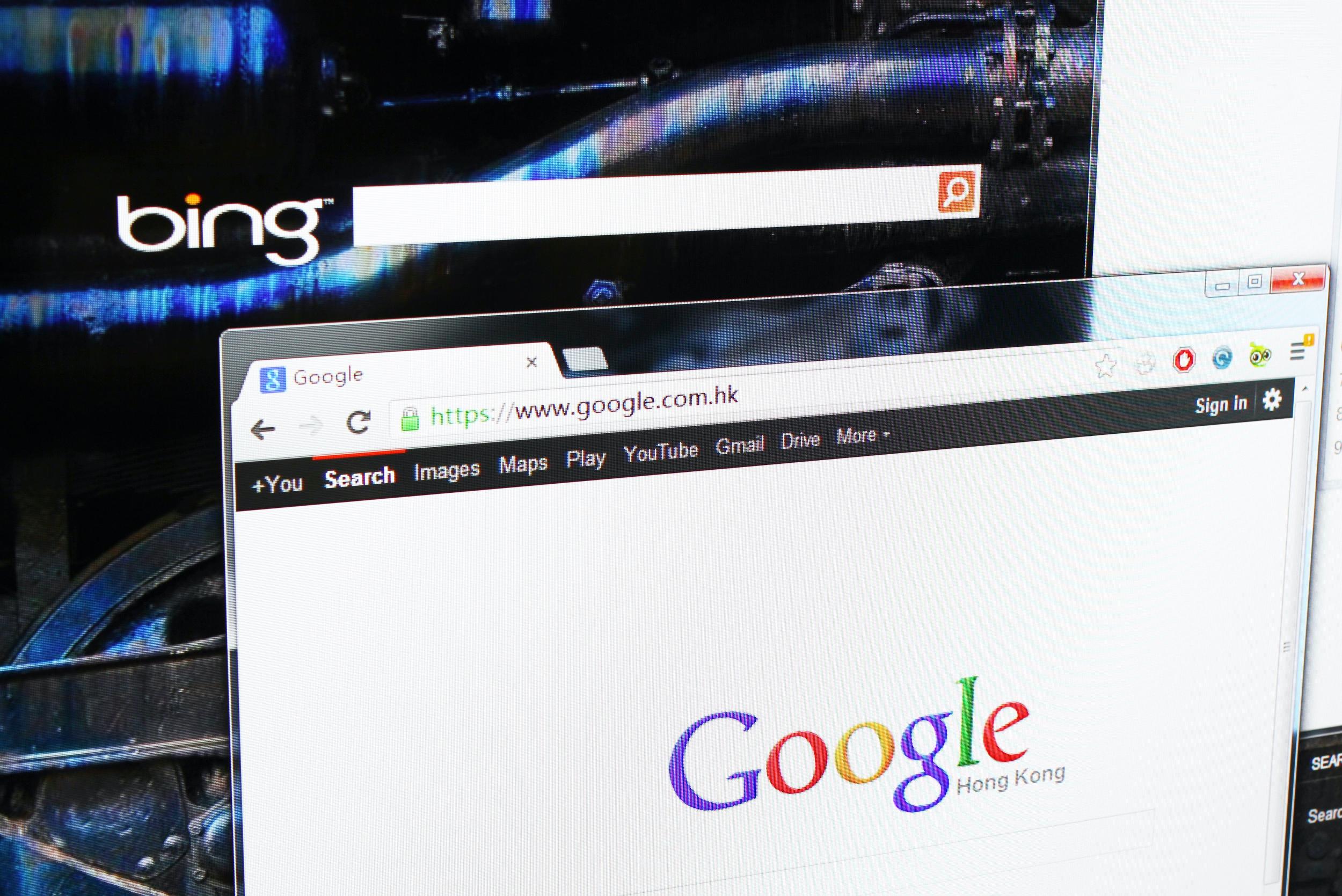
Yahoo experienced a rapid succession of seven CEOs, including former Google executive Marissa Mayer, in a relentless but ultimately futile effort to catch up in the search arena. This era culminated in the sale of Yahoo to Verizon for $4.5 billion, ending its 21-year run as a publicly traded company. During this period, Yahoo also rejected a substantial $44.6 billion takeover bid from Microsoft in 2008, eventually agreeing to license Microsoft’s Bing search engine.
Lanzone concedes that if Yahoo’s bet on Scout proves successful, it could pave the way for a return to the stock market. This would mark a significant comeback over 30 years after its 1996 initial public offering, which fanned the flames of the dot-com frenzy among investors. Lanzone believes that a renewed Yahoo IPO could still generate considerable excitement.
“We still have one of the biggest audiences on the internet, and that audience has been pretty loyal through a lot of ups and downs,” he stated. “If we just ‘super-serve’ them, good things will happen.”