A Mysterious Scar on the Nullarbor Plain
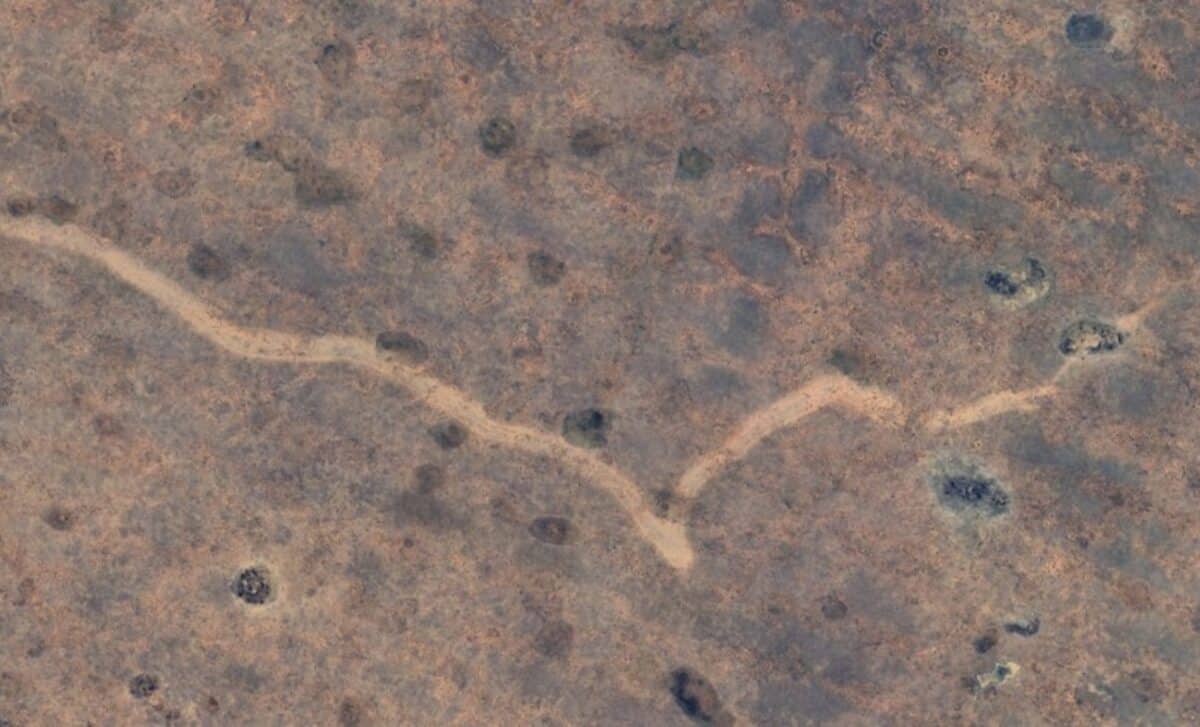
A massive, unusual scar has been discovered on satellite images of Australia’s Nullarbor Plain, leading scientists to an unexpected revelation: a powerful tornado that went unnoticed at the time. This event left only a long mark across the landscape, revealing the hidden impact of nature’s forces.
The discovery began when a caver was exploring Google Earth and noticed an odd line cutting through the dry terrain. This simple observation caught the attention of researchers, who decided to investigate further. In such a remote location as the Nullarbor Plain, where very few people live, major weather events can occur without any witnesses. That is why satellite imagery and follow-up fieldwork are often the only ways to understand what really happened.
The Massive Scar That Left Scientists Puzzled
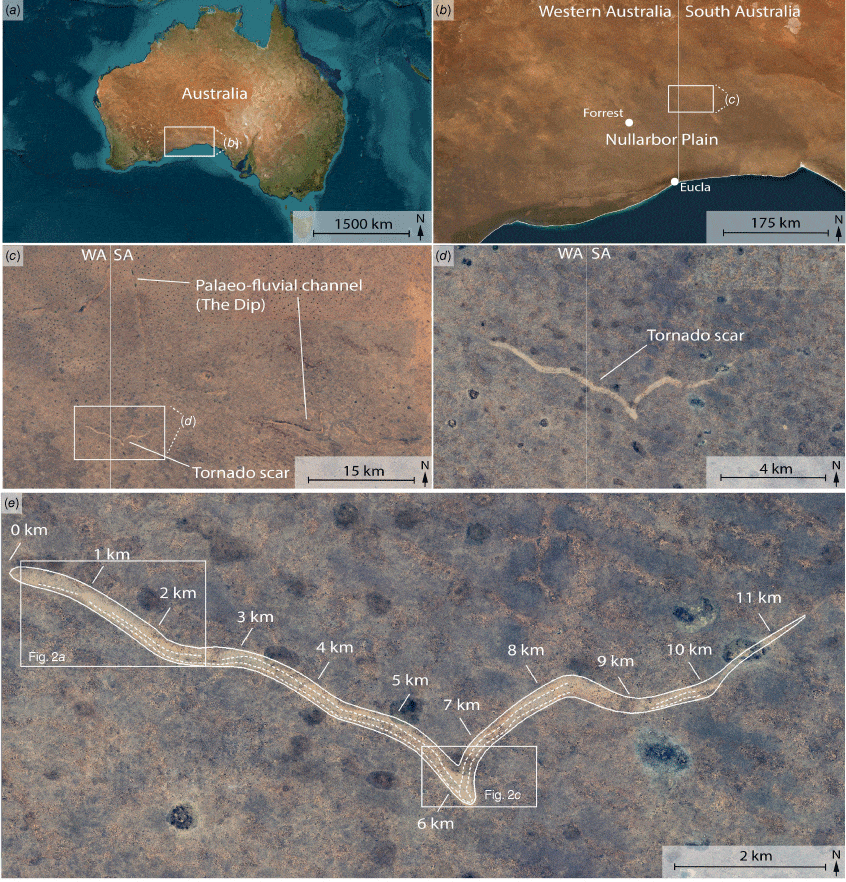
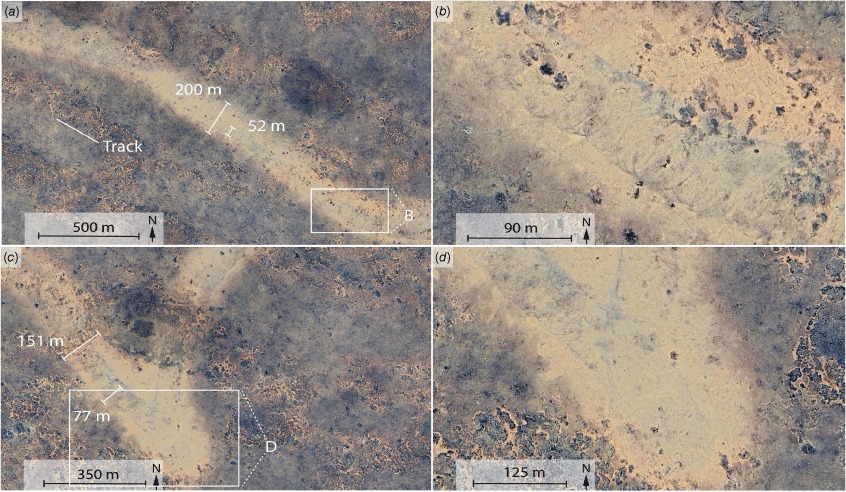
The scar stretches about 11 kilometers long and measures between 160 and 250 meters wide, running across Western Australia into South Australia. Research published in the Journal of Southern Hemisphere Earth Systems Science explains that scientists identified this feature by comparing satellite images taken over time. They were able to narrow the timing down to between November 16 and 18, 2022. Around the same area, circular blue patches appeared in the imagery, which were likely temporary pools of water left by heavy rain.
The researchers link these signs to a strong storm system moving through the region. The scar itself lies roughly 20 kilometers north of the Trans-Australian Railway and about 90 kilometers east-northeast of Forrest, a former railway settlement.
Strong Clues Pointing to a Violent Tornado
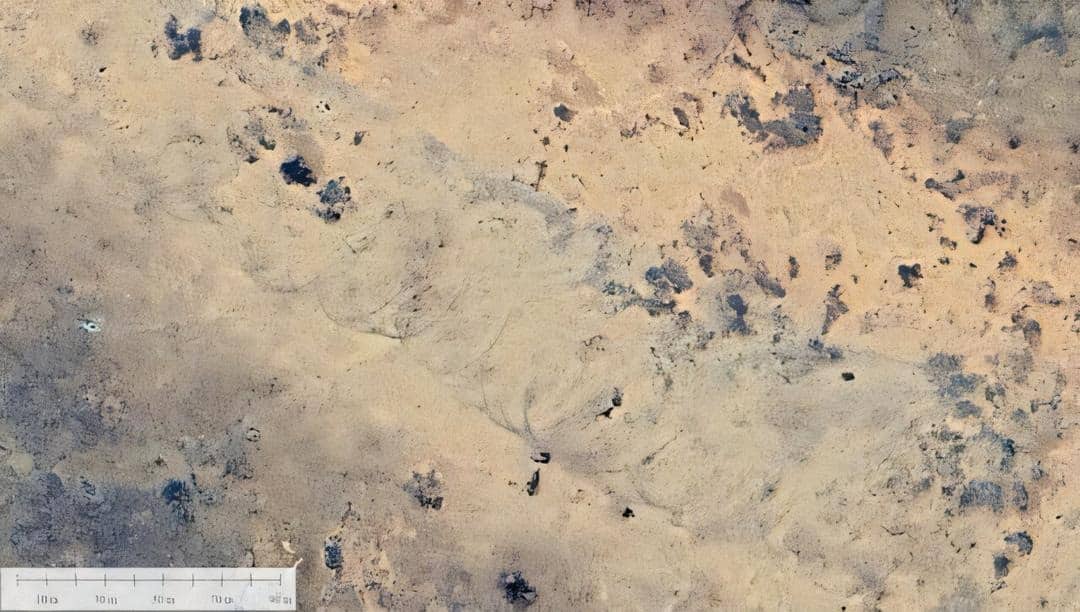
When scientists visited the site months later, they found distinct cycloidal marks along the scar. Dr. John Allen, a meteorologist at Central Michigan University, who had no role in the study, said:
“Cycloidal marks are quite evident, and these are seen in US tornado damage paths.” He added, “The appearance of the path without substantive evidence of flooding as an alternative cause would further lend support to this argument.”
The study indicates that the storm likely reached F2 to F3 intensity, with winds over 200 km/h. The track suggests the tornado moved from west to east and rotated clockwise. It likely lasted between seven and 13 minutes, carving a visible path through the landscape.
The weather data from back then also shows lots of clouds and heavy rainfall. That backs up the idea that these ground features came from a powerful storm. And the researchers add that the erosion along the scar shows a serious impact on the ground, with dirt and bits of plants torn away along the tornado’s path.
Why No One Saw It Happen
Even with that level of intensity, the tornado did not hit any towns or infrastructure. The Nullarbor Plain is extremely isolated, with huge stretches of flat, treeless land and very limited human activity.
The research team notes that this isolation explains why the event went unnoticed. Only three tornadoes had ever been recorded in this region before, and interestingly, they all occurred in November, just like this one.
This recurring timing hints at a seasonal pattern, though the area remains poorly documented. The scar was still visible 18 months later. In such a dry environment, vegetation grows slowly, so the land had not fully recovered.
“We usually see tornadoes as eyewitnesses or concerning how much destruction they left behind,” said study author Matej Lipar, a physical geographer from the Slovenian Academy of Sciences and Arts. “But here it basically just kind of ‘signed’ itself on the surface of the Nullarbor and because there’s not much vegetation, it just remained clearly visible up until today.” That gave scientists a rare chance to study the aftermath long after the storm had passed.