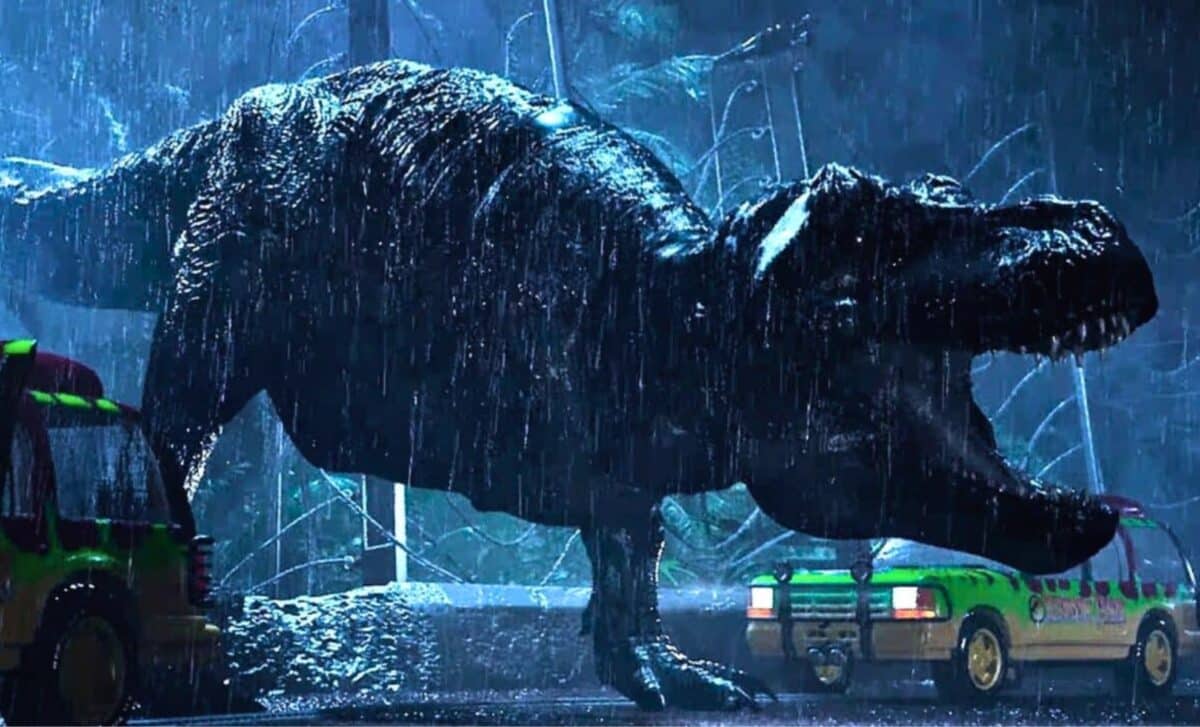
For three decades, the Tyrannosaurus rex has been depicted in popular culture as a massive, flat-footed creature, each step echoing like a demolition charge. This image, famously portrayed in the 1993 chase sequence of Jurassic Park, has influenced everything from museum exhibits to blockbuster films. However, recent research is challenging this long-held perception.
A team of paleontologists has now re-examined the T. rex’s movement patterns, revealing that the dinosaur did not walk with its heel on the ground at all. Instead, it moved with a digitigrade, toe-first gait similar to that of modern-day ostriches. This groundbreaking study, published in the journal Royal Society Open Science, marks a significant shift in how we understand one of the most iconic dinosaurs in history.
What a Toe-First Step Means
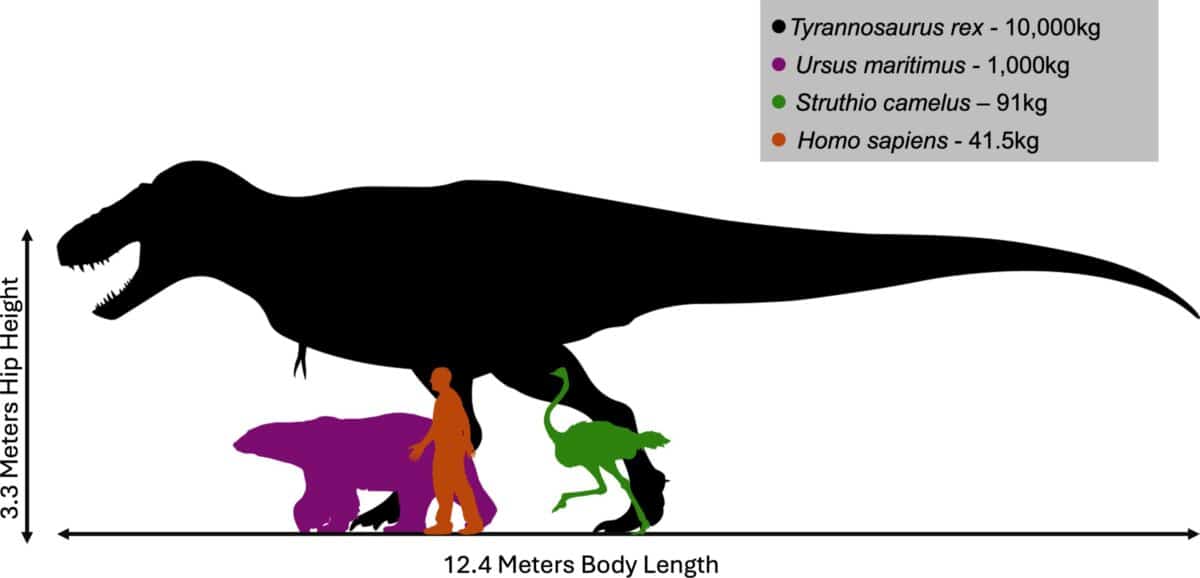
Mammals such as humans and bears are considered plantigrade, meaning they distribute their weight from the heel to the toes across the entire sole. In contrast, birds are digitigrade, keeping their heels elevated and carrying their mass on the front of the foot. This posture allows for longer limbs and efficient energy return through elastic tendons.
The research team analyzed fossilized T. rex leg and foot bones and created three models of foot strike: back-foot, mid-foot, and toe-first. They then applied speed equations that scale with body size and tested the biomechanical consequences of each model. The digitigrade model consistently fit the skeletal structure best, suggesting that the T. rex landed on its toes with a spring-loaded step rather than slamming its entire foot into the ground.
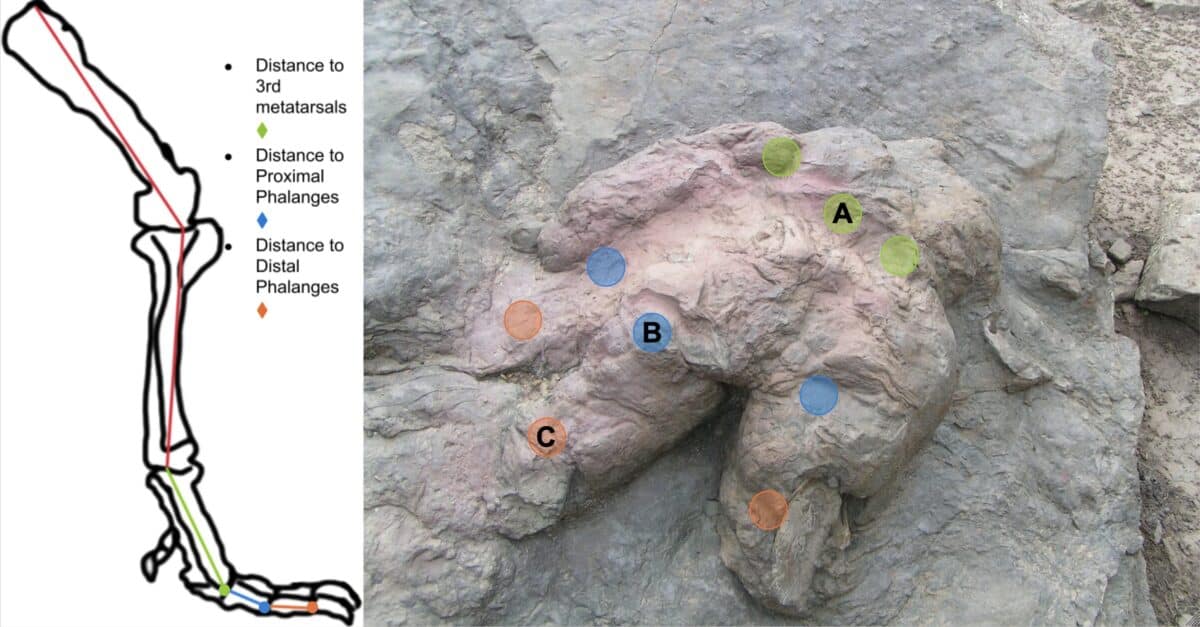
Fossil footprints have also contributed to this new understanding. The study notes that many theropod trackways show deeper impressions beneath the toes than across the rest of the foot, a pattern consistent with forward-loaded weight distribution. While environmental factors such as mud or sand can influence footprint formation, the researchers treated this evidence as supportive rather than definitive.
A Faster Predator Emerges
Revising the foot-strike model has broader implications beyond posture. It alters speed estimates, with the study suggesting that an adult T. rex could reach velocities between approximately 5 and 11 meters per second—about 11 to 25 miles per hour. This is roughly 20% faster than previous estimates based on a flatter foot posture.
While this speed range doesn’t make the T. rex a sprinting predator like those seen in Hollywood, it does reframe the animal as more agile and efficient than previously thought. A toe-first step enhances energy return, balance, and stride efficiency, which are crucial for a massive carnivore navigating uneven terrain.
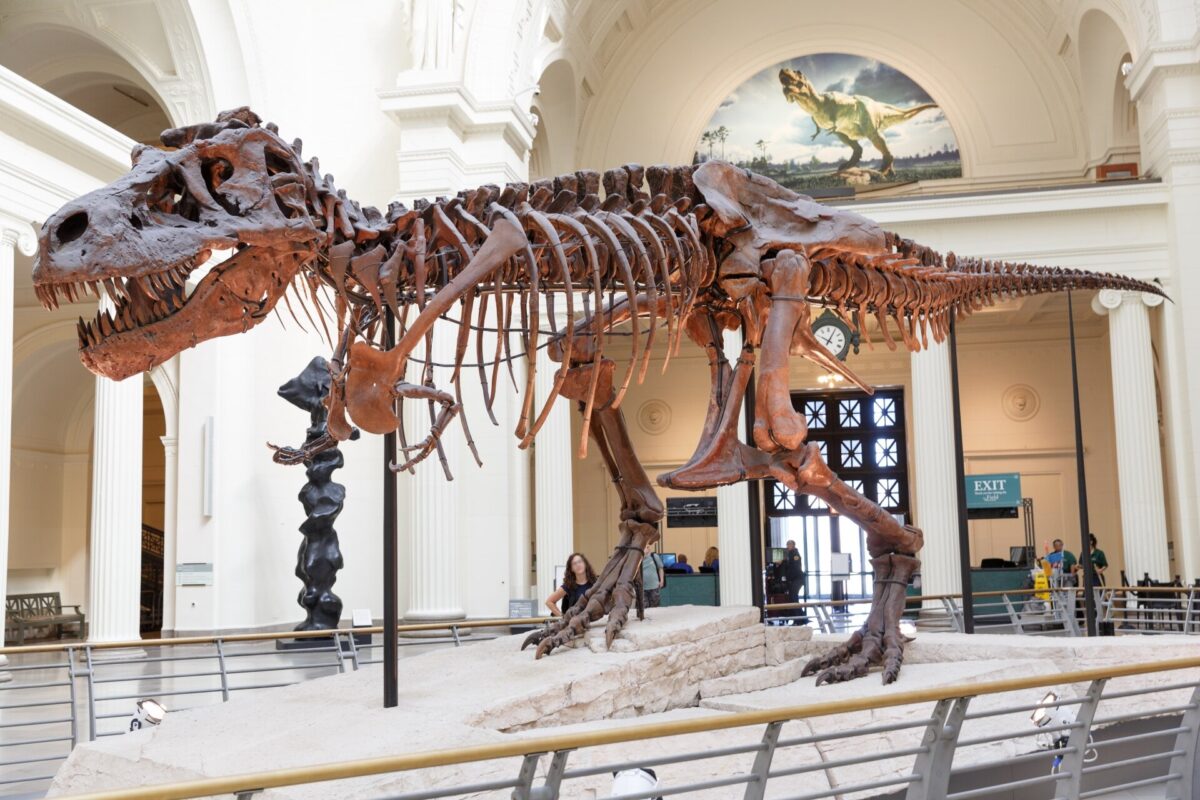
Age also played a role in performance. Juvenile T. rex, being smaller and lighter, may have been capable of reaching the upper end of this speed range. Fully grown adults, such as the famous specimen Sue, were likely limited to around 11 miles per hour. This mirrors patterns observed in living large animals, where increased body mass limits top speed despite greater muscle power.
A Long-Running Debate Gets a New Lever
The question of T. rex speed has sparked debate among scientists for years. A landmark 2002 paper by John R. Hutchinson and Mariano Garcia argued that extreme speeds would require impossibly bulky leg muscles, setting a hard limit on how fast the dinosaur could run. The new research accepts these physiological constraints but introduces foot strike as a previously overlooked factor that fine-tunes speed estimates within these limits.
The way a foot contacts the ground affects stride length, joint loading, and the storage and release of elastic energy. The digitigrade model suggests that T. rex extracted more forward motion from each muscular contraction than earlier plantigrade models assumed. This doesn’t mean the T. rex was radically different, but it offers a more accurate understanding of the animal that once roamed the Earth.
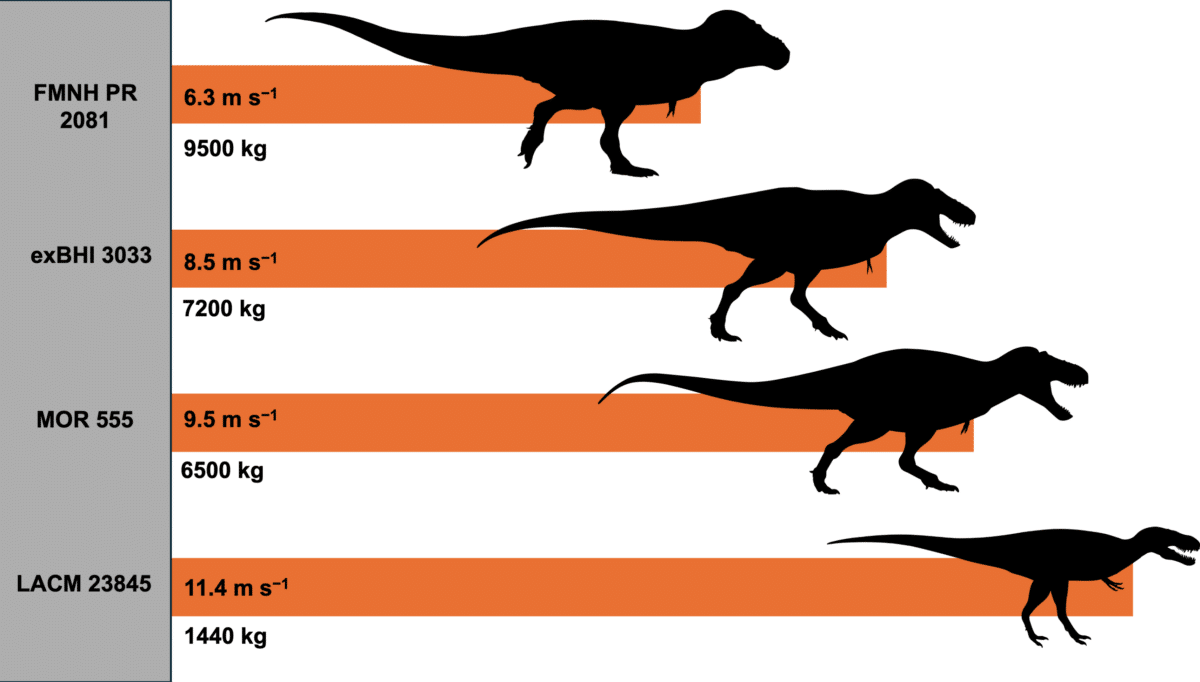
This study highlights a broader trend in paleontology toward integrating multiple data sources. Skeletal anatomy, footprint analysis, and comparisons with living archosaurs—birds and crocodilians—were all used in the research. No single method can fully explain the biomechanics of an extinct species, but the convergence of several lines of evidence strengthens the conclusion.
Rethinking Museum Halls and Movie Screens
The findings have practical implications beyond academic circles. Fossil trackways can now be interpreted with greater accuracy, and biomechanical simulations used in research and education can incorporate a more realistic foot-strike model. Museums displaying T. rex skeletons in a flat-footed stance may reconsider their exhibits, and documentary filmmakers who have long relied on the heel-first gait may adjust their animations.
The research also reinforces the evolutionary link between theropod dinosaurs and modern birds. A T. rex moving on its toes across Cretaceous floodplains belongs to the same locomotor lineage that produced the striding gait of an ostrich. While the T. rex remains one of the most formidable predators in Earth’s history, it now appears as a more precise product of its environment—efficient on its feet and balanced atop limbs resembling those of a bird.
The study was led by Adrian Tussel Boeye of the College of the Atlantic, with co-authors Kyle Logan Atkins Weltman of Oklahoma State University College of Osteopathic Medicine, J. Logan King of Colorado Northwestern Community College, and the late Scott Swann.