Students Pursue Space Dreams in the Outback
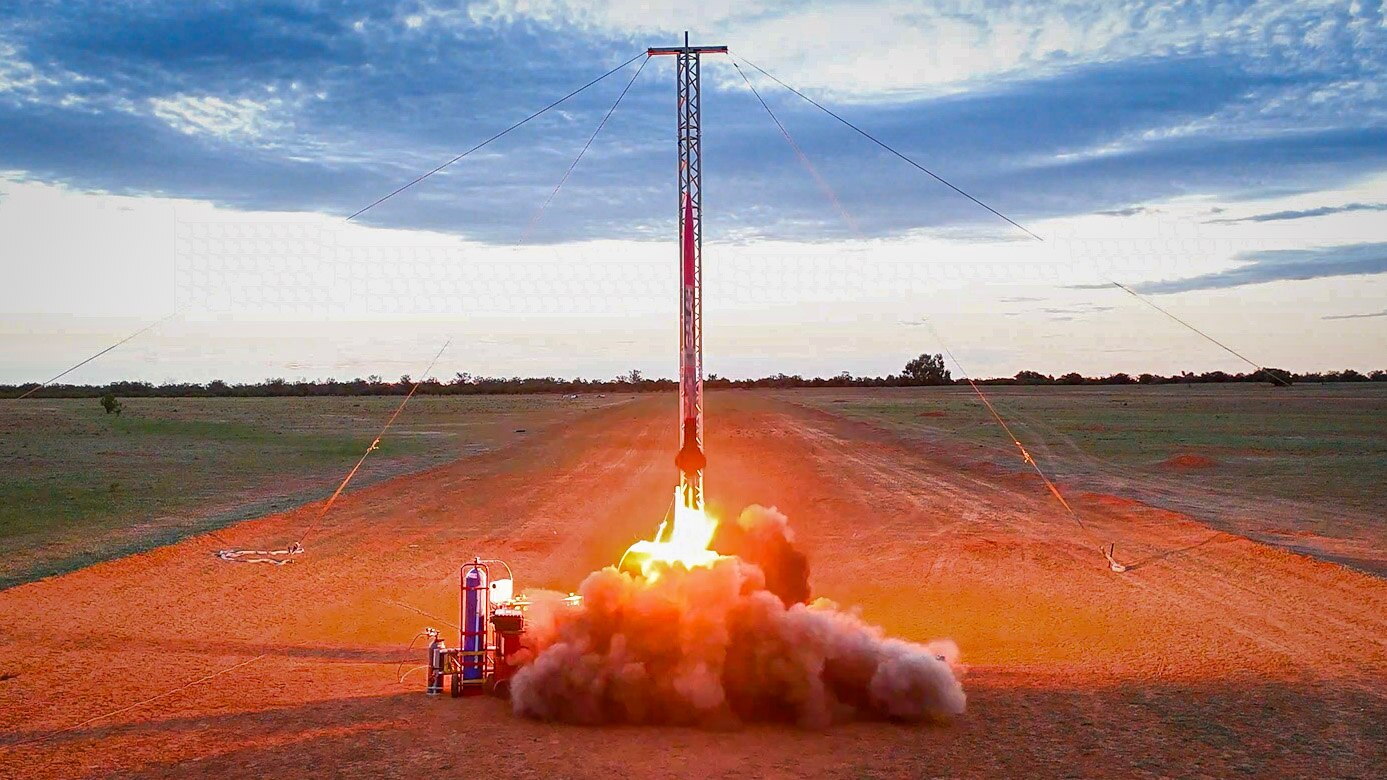
Students with ambitions in the space industry have been traveling to the far west of New South Wales to test their skills and send their creations into the sky. While the Artemis II mission was orbiting in space, the University of Sydney’s (USYD) student rocketry team embarked on a 12-hour road trip to a sheep station located between Mildura and Broken Hill.
They carried with them parts for a sounding rocket named Galah. Upon arrival, they meticulously reassembled it, aiming to send it to an altitude of 10,000 feet (3,048 metres). Every component of the projectile was designed by the students, and the closer they got to their target altitude, the better their performance was judged to be.
Outback Rocket Launching
The USYD Rocketry Team has been making the journey to Tolarno Station every Easter since 2022. Around 90 students spend months working on a project where a rocket named after an Australian bird is designed, manufactured, and refined. The team also decides on the target altitude, with previous teams achieving peak heights of 10,000 and 30,000 feet.
Project manager Michael Bogeholz explained that the team isn’t limited to mechanical, aerospace, or mechatronic engineering students. “We get people from all areas of the university, from arts majors to science majors to computer science majors, to help put this rocket together,” he said. “Not only do we have a technical side but we also have an operations side which handles our finances, business, media, and sponsorships.”
Although the university has a facility between Sydney and Canberra where components can be tested, nothing compares to the excitement, adrenaline, and tension of launch week in the outback. The trip to Tolarno Station is all about outcomes. The propulsion, flight systems, payload, modeling, and ground support teams launch the rocket twice in a week (weather permitting) to validate their hard work and seek repeatable results.
Eyes on the Skies
The rocketry program has seen a shift in its participant credentials and leadership opportunities in recent years. In 2022, most team members were in their late years, third or fourth year, but now, many members are in their first, second, and third years. Among those who have upskilled and taken on leadership roles is Lillie Mellin.
She is a fifth-year student studying a Bachelor of Mechatronic Engineering and a Bachelor of Law. She is the systems engineer for the Galah project, having previously held roles as a senior engineer and in ground control. “It’s hands-on and technically much more demanding than other experiences at uni, so you’re just forced to learn so much,” she said. “It’s been a really good insight into how engineering works in the real world, which we try and follow as closely as we possibly can as a student team.”
Charlie Balderstone, a third-year Mechatronic Engineering student, is the technical director of the Galah project. He helped lead a team of 27 people to a successful launch sequence. “We’re split across a range of disciplines, from electronics to control the rocket, structures, to make any repairs that need to happen, and propulsion fluids people,” he said. “Back in Sydney, we’ve got about 60. There’s a lot of people back closer to home listening in on all the information we can give them from out here. Obviously, it’s cool to watch a rocket go up, and it is 10 times cooler when it is something that you’ve put together.”
The Sky Isn’t the Limit
Once the outback launch week concludes, the team must decide who to send to the International Rocket Engineering Competition with the Galah rocket. It is an event where student rocketry teams from around the globe come together, aiming to get as close to their target altitudes as possible within their various categories.
The USYD team has entered the 10,000ft Student Researched and Developed Hybrid/Liquid competition. They will face off against a team from RMIT University in Melbourne, as well as four American, one Canadian, and one Turkish university teams. Galah is the USYD rocketry team’s fourth rocket aiming for 10,000 feet. Two of their previous efforts have won international competitions.
Pardalote came first last year in its category after reaching 10,342 feet (3,152m), and Silvereye came first in 2019, reaching 10,027 feet (3,056m). The Galah rocket managed a peak height of 10,200 feet (3,108m) during its launch at Tolarno Station.
Space Career Opportunities
Mr. Balderstone believes the skills learned through the rocketry program provide students with the best opportunity to enter the Australian space industry. “These competitions want to see that we have a very in-depth understanding of every part of the system, and that understanding is hard to come by, even in industry,” he said. “They are primarily about how accurately you can simulate the rocket, how accurately you can make sure it slows down in time to hit that 10,000-foot number right on the dot.”
By targeting that through the student level of the workforce, he believes it sets up very well for the future of engineers in Australia. Ms. Mellin said the experience had made her realize her passion lay in the engineering component of her degree. “Since joining rocketry, that’s kind of opened my eyes to that side of engineering and those kind of industries,” she said. “I’m definitely leaning towards the engineering portion, with law kind of assisting my engineering degree with those soft skills.”