A Legacy of Innovation and Evolution
The Volkswagen Transporter has a long and storied history that dates back to 1950 when the first split-windscreen Type 2, also known as the Kombi van, was introduced. This model shared mechanical components with its equally iconic T1 ‘Beetle’ sedan sibling, marking the beginning of a legacy that continues to evolve today.
Over the years, the Transporter has gone through seven generations, with the latest iteration benefiting from a global alliance with Ford. This partnership allows both automotive giants to share vehicle underpinnings and other technologies, streamlining new model development and reducing costs. This collaboration is evident in models like the VW Amarok ute, which is based on the Ford Ranger.
The latest Transporter shares a similar relationship with Ford’s mid-size Transit Custom range, including the full-electric e-Transporter variant based on the E-Transit Custom. We recently spent a working week aboard this electrified model to see how it measures up from a tradie’s perspective.
Pricing and Features
The latest Transporter range includes traditional TDI diesel-powered 2WD models with list pricing (before on-road costs) of $58,590 for the short wheelbase (SWB) and $60,590 for the long wheelbase (LWB). 4Motion all-wheel drive variants are also available in both SWB ($62,590) and LWB ($64,590) configurations.
The e-Transporter, which comes standard with a single electric motor, single-speed automatic, and rear-wheel drive, is the highest-priced model in the range with list pricing of $83,590 for the SWB and $85,590 for the LWB. This is higher than full-electric mid-size van rivals like the closely related Ford E-Transit Custom Trend LWB ($77,590 plus on-roads) and sharper priced LDV eDeliver 7 ($74,200 driveaway), but considerably lower than the Mercedes-Benz eVito 112 LWB which lists at $98,951.
Design and Practicality
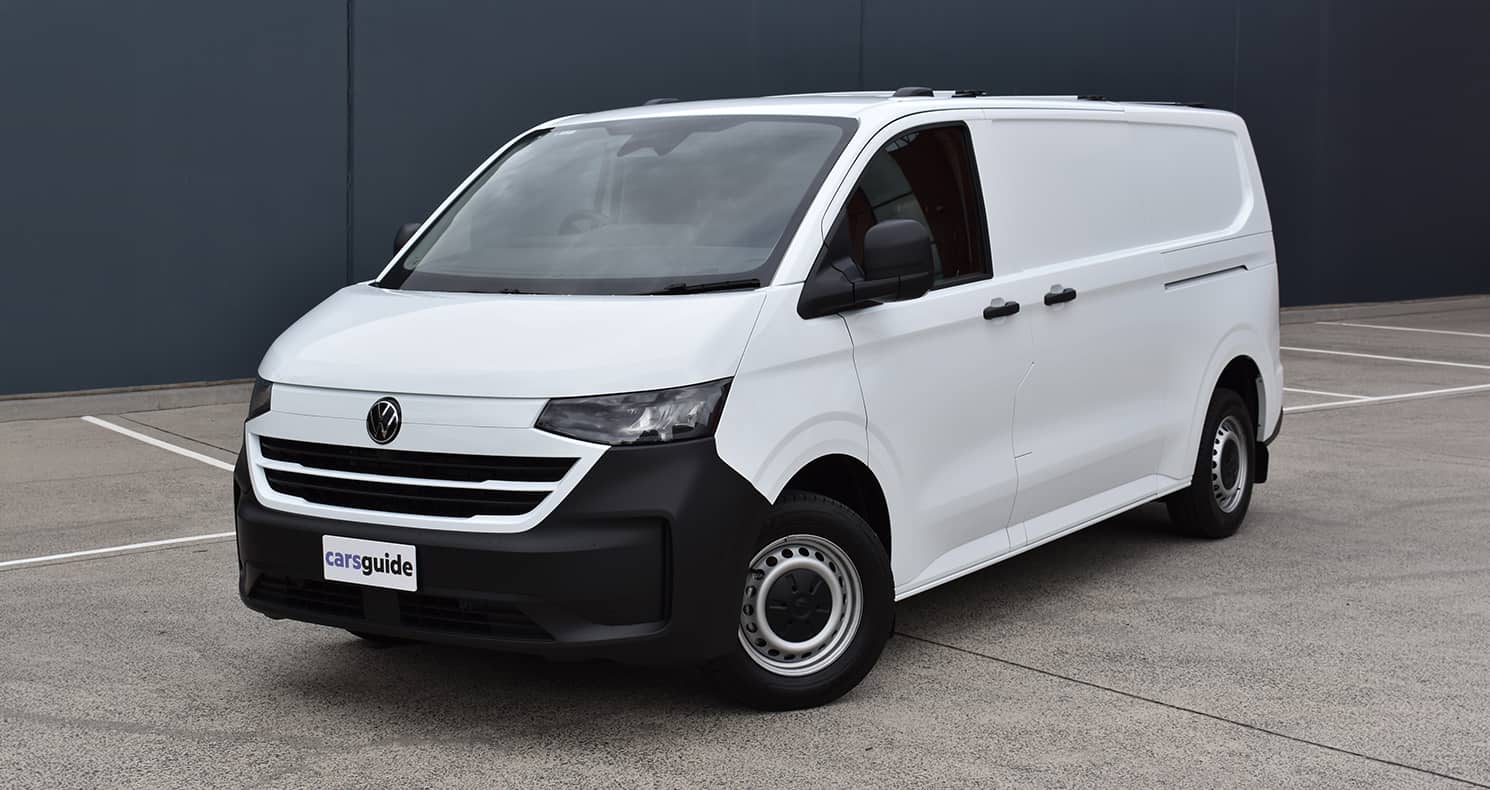
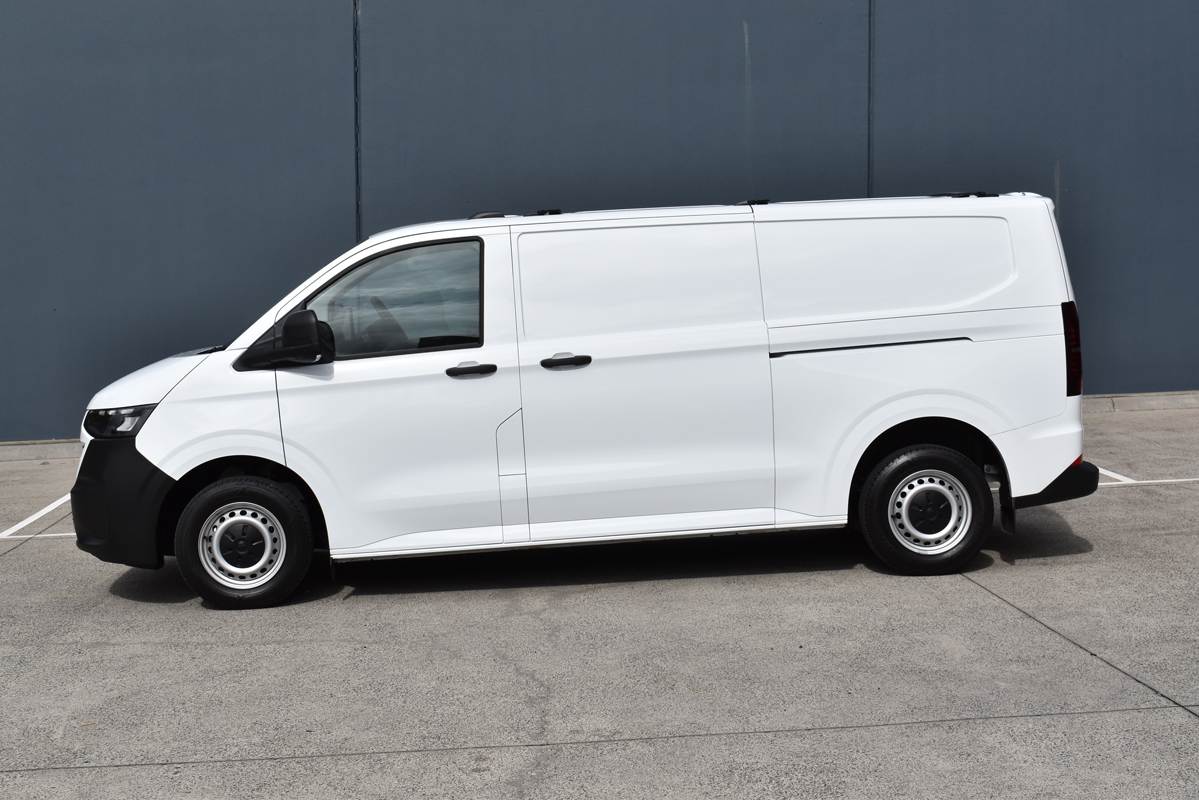
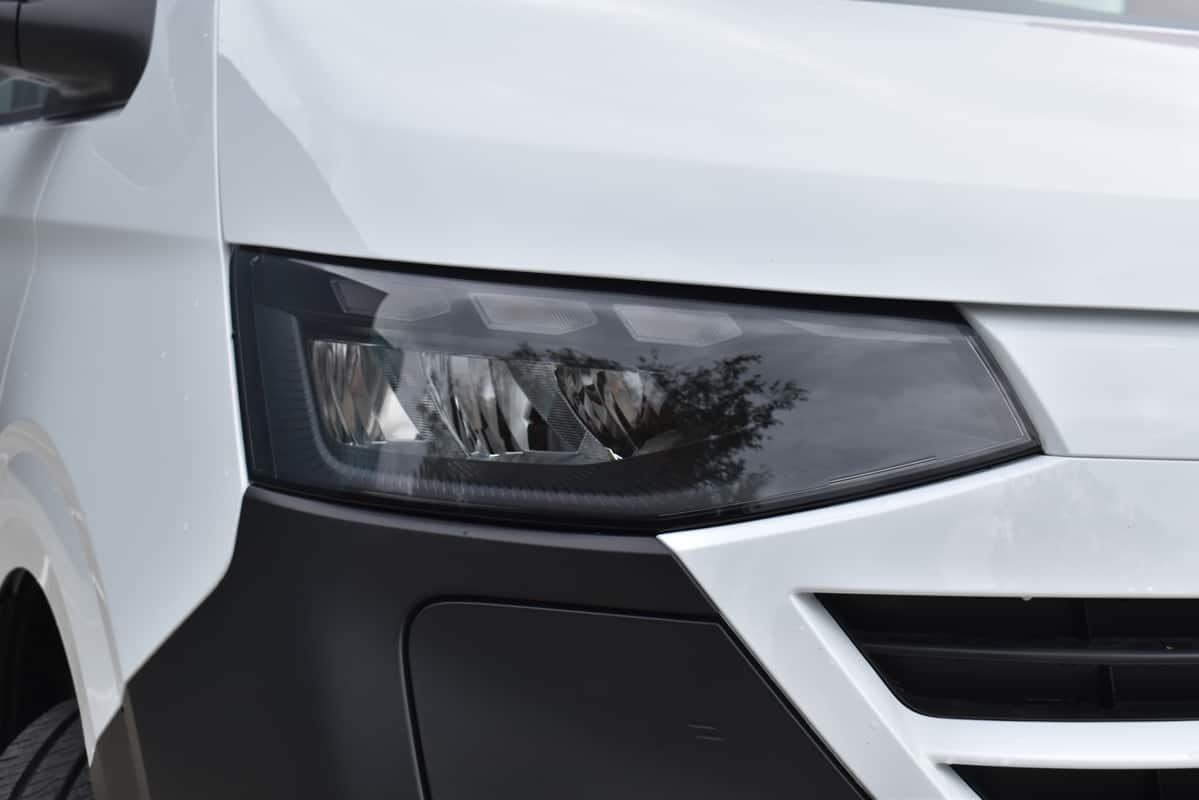
Our test vehicle is the LWB version, which comes standard with 16-inch steel wheels and 215/65 R16C tyres but no spare (tyre sealant/12v inflator kit only), LED headlights/DRLs/tail-lights/internal lighting, three folding roof racks, heated exterior mirrors, a heated tailgate window with wiper, and more.
The cabin and cargo bay are separated by a metal bulkhead, plus there’s keyless start, single-zone climate control, heated seating for three, 12-inch digital instrument display, 13-inch multimedia touchscreen with Apple CarPlay, Android Auto connectivity, and digital radio, wireless phone charging, seven USB ports, two 12V sockets, and more.
Buyers can personalise e-Transporters with no-cost options like deletion of the cabin bulkhead, plus cargo bay options you must pay extra for, including a right-hand side sliding door, dual powered sliding doors, rear barn-doors, side windows, a wooden floor liner, aircraft-style load-securing rails, and shelving/cabinet preparation.
Performance and Technology
Volkswagen Commercial Vehicles also works closely with aftermarket vehicle converters to facilitate commercial and camper installations, including no-cost options like a swivel front passenger seat and a second (12V) battery.
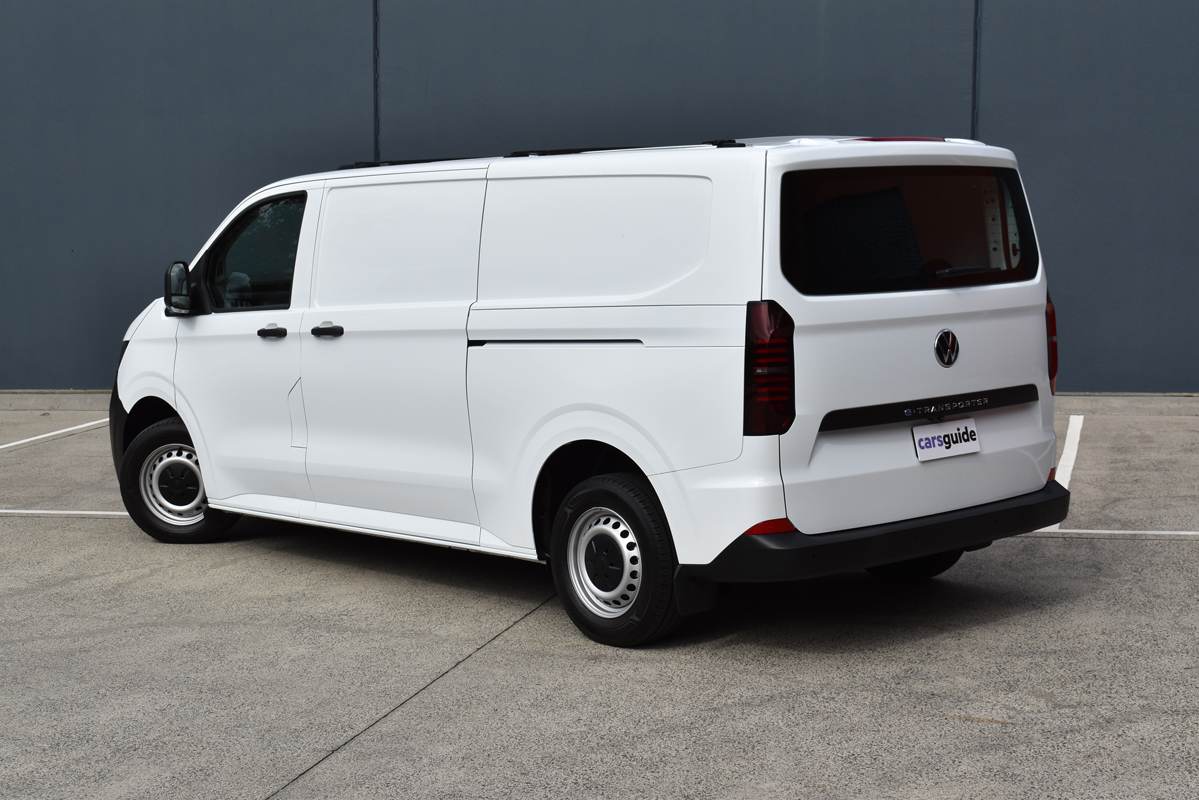
Although based on the E-Transit Custom, the e-Transporter (like the Amarok) does a commendable job in establishing its own identity, with noticeable differences in styling and a spacious and functional cabin design with a distinct VW commercial vehicle look and feel.
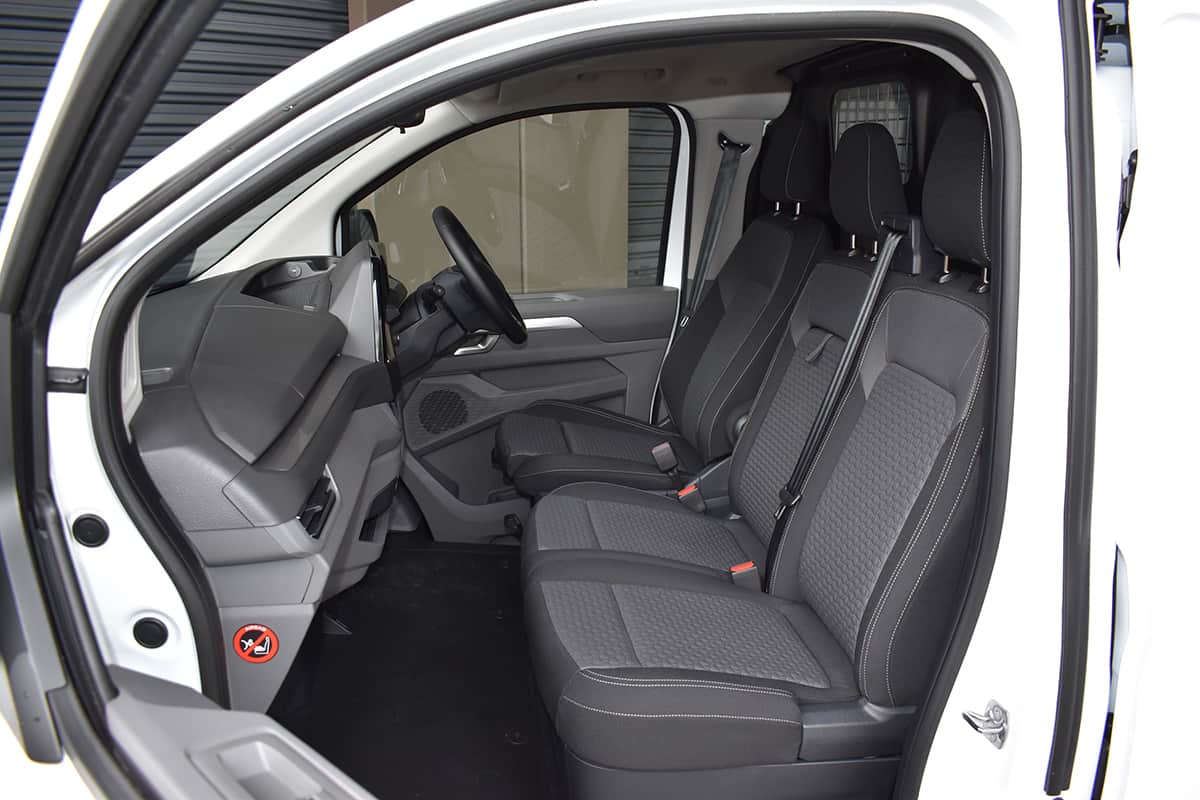
Its dash design is free of protrusions, leaving enough floor space between it and the seats to allow drivers convenient ‘walk-through’ access from one side of the cab to the other. Our LWB example is clearly designed with hard work in mind, armed with 16-inch steel wheels and unpainted dark grey plastic evident in areas most vulnerable to wear and tear, including the bumpers, hubcaps, door handles, and mirror shells.
Space and Tech Inside
The heavy propulsion battery mounted beneath the load floor is largely responsible for the e-Transporter’s sizeable 2540kg kerb weight, which when deducted from its 3225kg GVM leaves a payload of 685kg. However, Volkswagen’s published rating is higher at 760kg, as European payload measurement typically allows for a 75kg driver. Even so, that’s still a modest payload compared to numerous mid-size diesel rivals (including its TDI Transporter equivalent) offering up to one tonne or more.
About 150kg of the e-Transporter’s payload can be carried on the clever trio of folding roof racks courtesy of its Ford donor, which lie flush with the roof when not in use but can quickly be locked in vertical positions to carry loads as needed.
Driving Experience
Our test vehicle is also rated to tow up to 2300kg of braked trailer, but Volkswagen does not publish a GCM figure (how much it can legally carry and tow at the same time), so we don’t know if it can tow its maximum trailer weight while carrying its maximum payload.
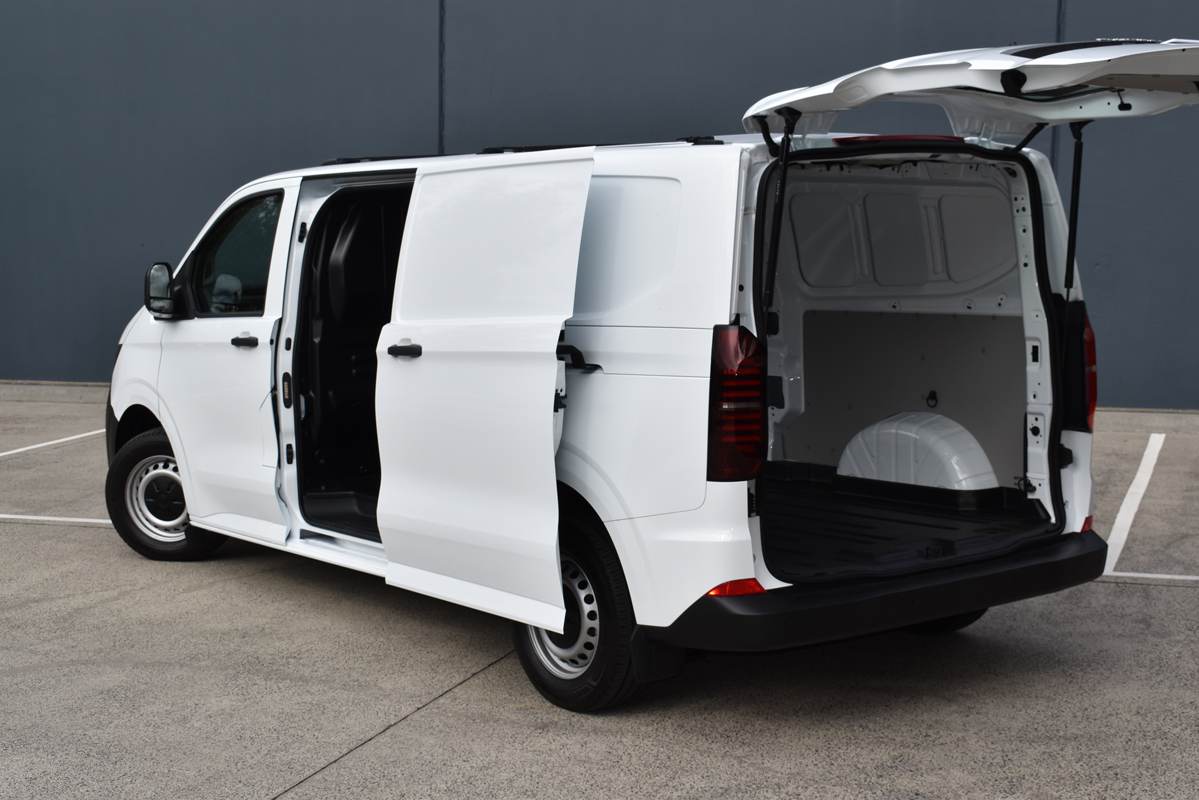
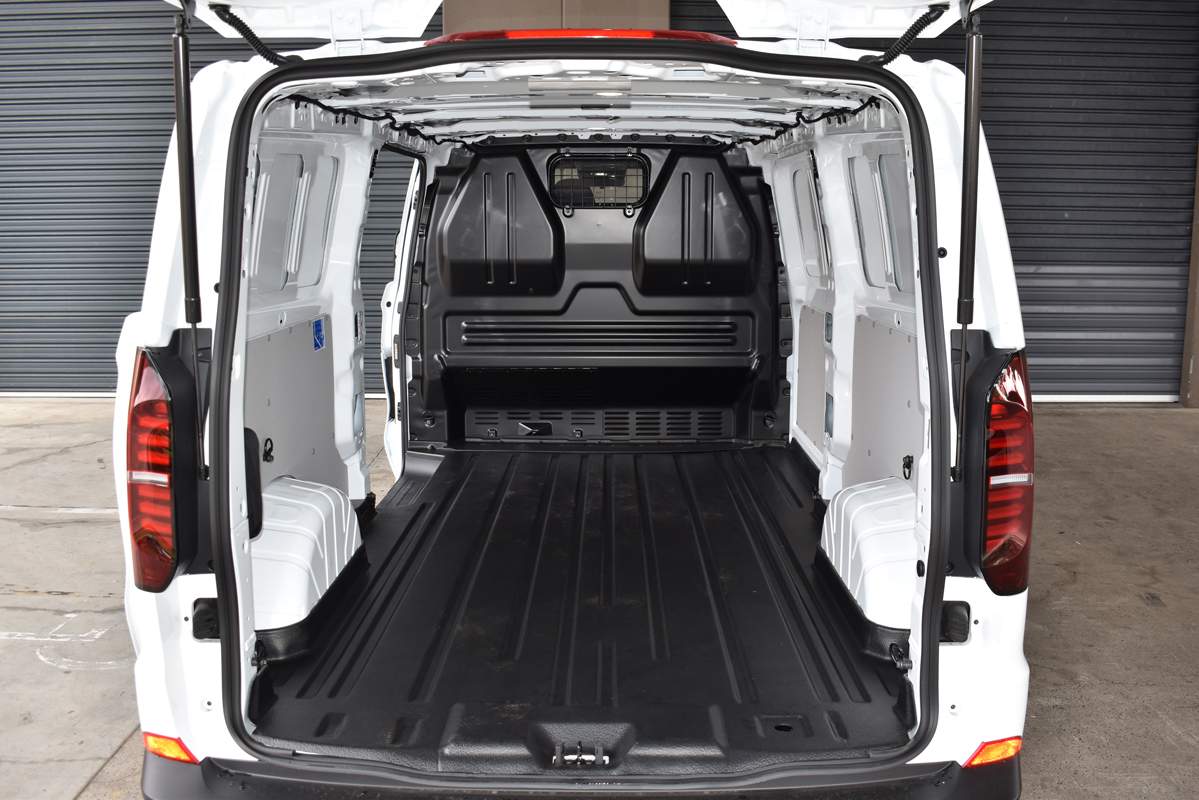
The cargo bay, which offers up to 6.8 cubic metres of load volume, is accessed through a standard passenger-side sliding door with 1030mm opening width or the swing-up tailgate. The load floor, which comes standard with a protective liner, is 3002mm long and 1777mm wide with 1392mm between the rear wheel housings. This means it can carry two standard Aussie pallets or three Euro pallets secured by a choice of eight load anchorage points.
Motor and Charging
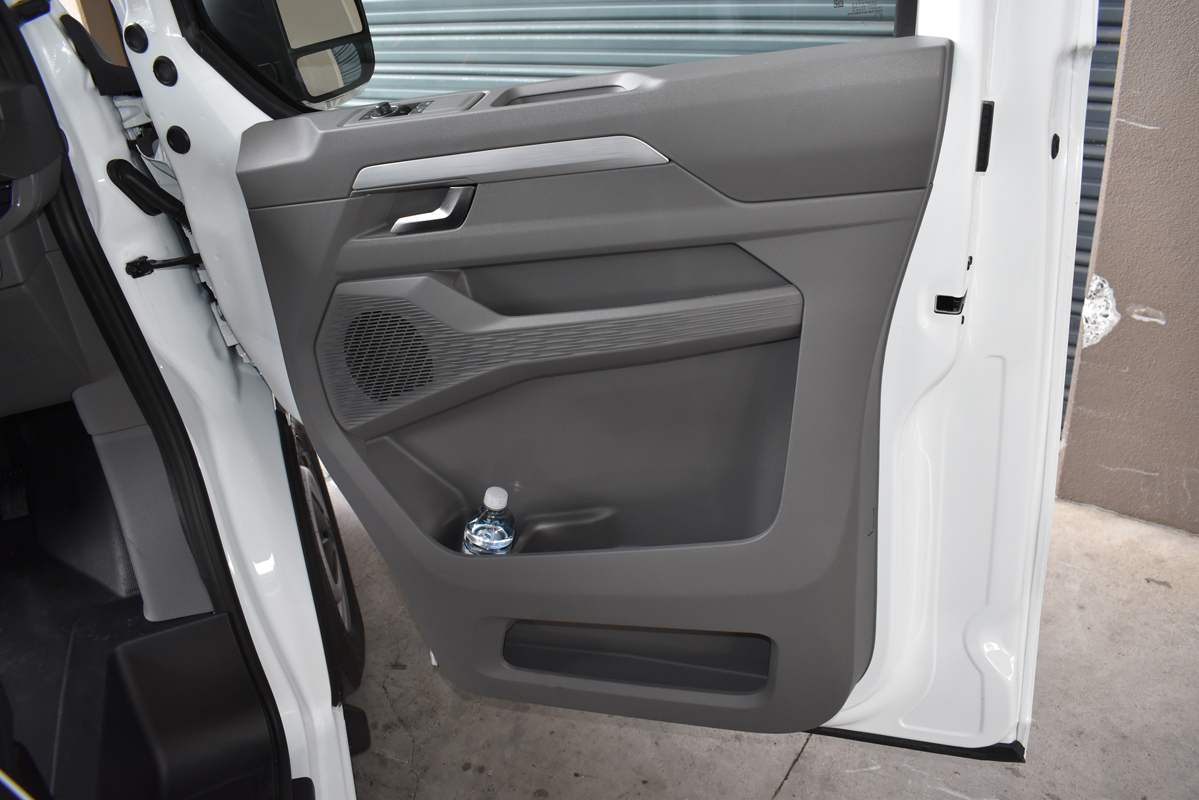
A section of load floor length can also be extended to 3450mm by opening a hinged hatch on the lower left of the cabin bulkhead, which can be handy for carrying long lengths of timber, pipe, conduit, carpet rolls, etc. The walls are also neatly lined to mid-height, and there’s a 12V socket. There’s also ample cabin storage with three tiers of storage (including large-bottle holders) in each front door, plus cupholders on each side of the dash-pad, which also has a large open tray in the centre with a pair of USB ports.
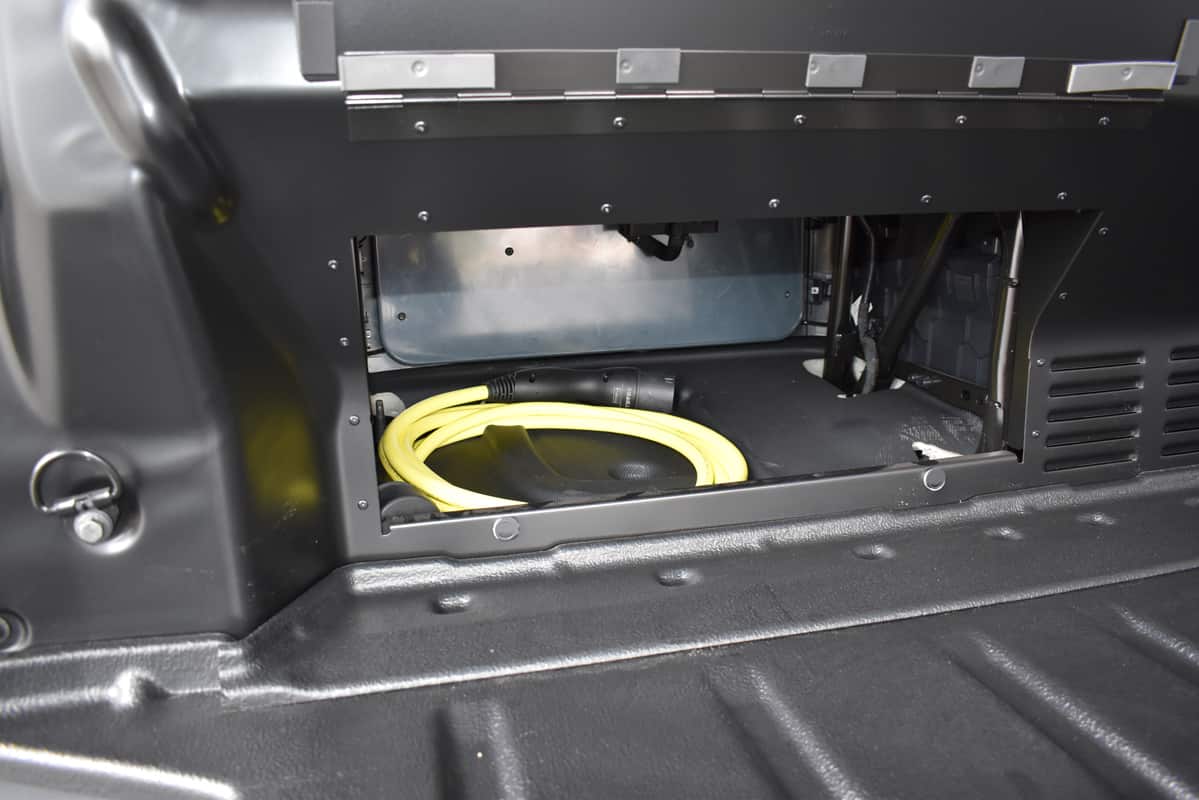
The lower dash includes a large glove box, driver’s pop-out cupholder, wireless phone charging pad, 12V socket, and more USB ports, while the centre seat backrest folds forward to serve as a mobile work desk. Beneath the hinged base cushions on the passenger bench seat is a cavernous hidden storage area which is ideal for the five-metre-long charging cable.
Range and Charging Time
The e-Transporter’s single electric motor, which produces 210kW of power and 415Nm of torque, drives the rear wheels through a single-speed automatic transmission. It offers numerous drive modes including ‘Normal’, ‘Eco’, ‘Sport’, ‘Slippery’, and ‘Tow/Haul’, plus there’s a ‘B’ button on the gear selector which optimises regenerative braking for largely one-pedal driving and maximum energy harvesting.
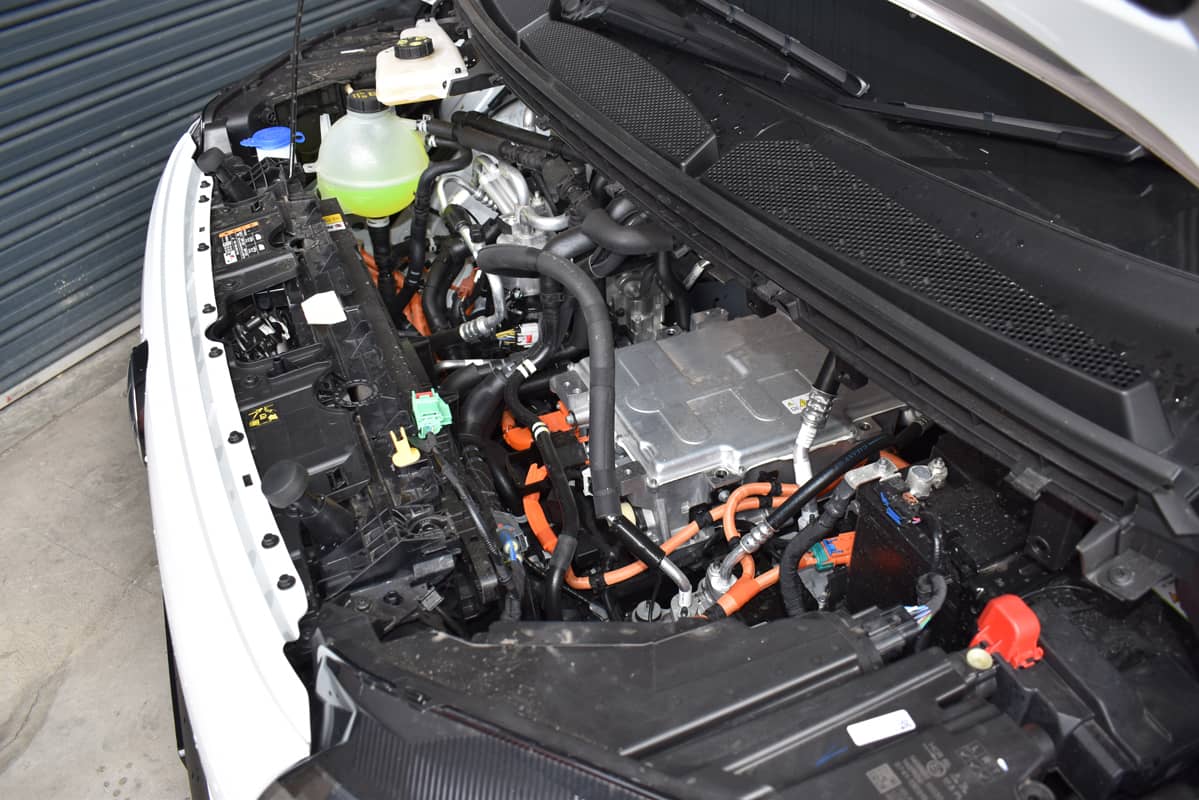
The motor and transmission are neatly combined in a compact unit mounted beneath the load floor driving the rear wheels. This design has an inherent traction advantage over front-wheel drive rivals, particularly when towing and hauling heavy loads on low-grip surfaces.
Driving Range and Charging
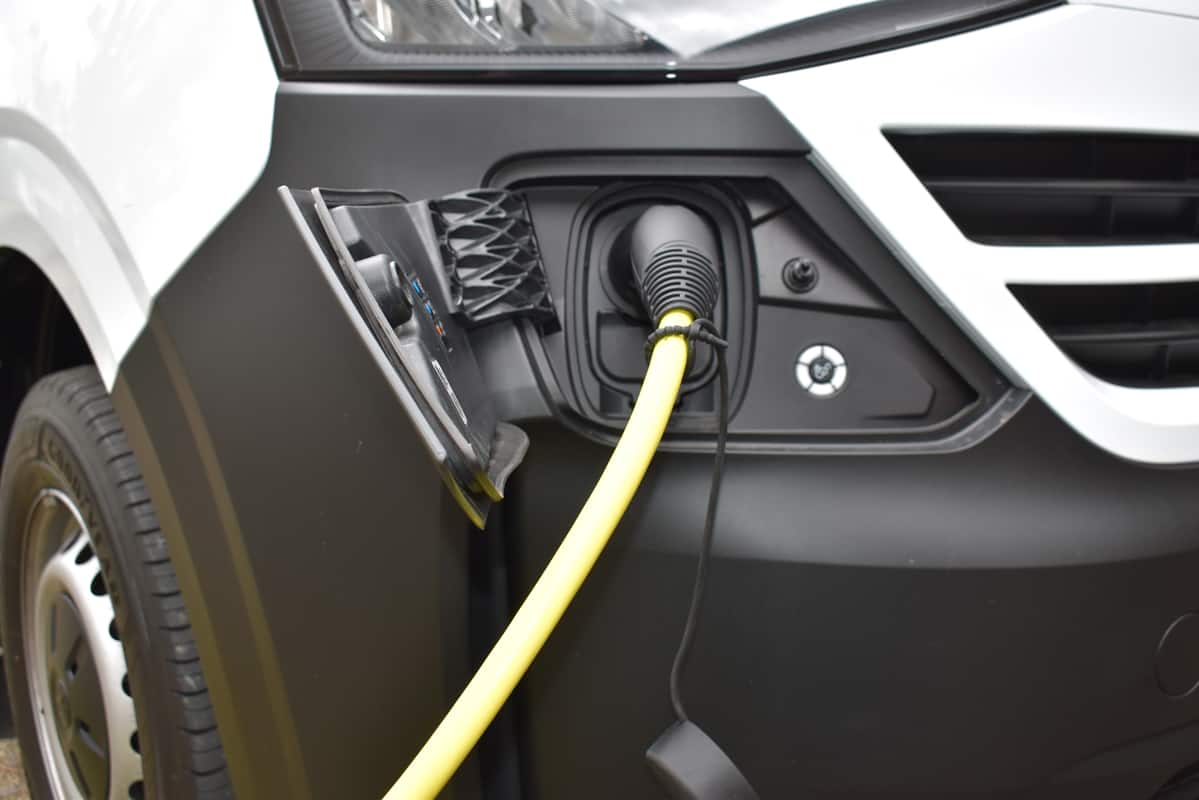
Volkswagen claims a combined (urban/extra-urban) cycle electric WLTP driving range of up to 330km from a single charge of its 64kWh lithium-ion propulsion battery, which can be charged from zero to 100 per cent in around seven hours and 30 minutes using a three-phase 11kW AC charger and 10-80 per cent in just 38 minutes using 125kW DC fast charging.
The dash display confirmed a 100 per cent charge and estimated driving range of up to 298km when we collected the test vehicle. After completing 103km of metropolitan driving, there was 65 per cent charge and 186km range remaining, which was consistent with the original onboard estimate.
Driving Experience
It has a big left footrest and ample steering wheel and seat adjustment, with the latter including a fold-down inboard armrest, power lumbar support, and even manual extension of the base cushion to provide extra thigh support. The large truck-style door mirrors feature a wide-angle view in their lower third, which combined with blind-spot monitoring and other active features ensures commanding side and rear surveillance for the driver.
More than 400Nm of torque is ample for a mid-size van, and with most of that delivered instantly from standing starts thanks to the electric motor, it has zippy acceleration that’s ideal for metro driving.
Safety Equipment
The e-Transporter does not have an ANCAP rating as yet but comes standard with multiple airbags and a suite of active features including AEB with pedestrian and cyclist detection, front cross-traffic assist with swerve support, lane keeping assist, blind-spot monitoring, traffic sign recognition including ‘wrong way’ warning, front and rear parking sensors, tyre pressure monitoring, a reversing camera, adaptive cruise control, and more.
Warranty and Running Costs
This van comes standard with a five-year/unlimited km warranty with roadside assist plus a separate eight-year/160,000km propulsion battery warranty. Scheduled servicing is every 12 months/30,000km, whichever occurs first. Volkswagen offers three-year and five-year prepaid service plans with average costs of around $400-$450 per service.
These terms are competitive with rivals like the LDV eDeliver 7 and Ford E-Transit Custom, with the LDV offering lower servicing costs and a longer battery warranty. The e-Transporter’s servicing is also considerably cheaper than its eVito German rival.
Verdict
Although closely related to Ford’s E-Transit Custom, the e-Transporter has carved its own niche in appealing to VW Transporter loyalists and businesses wanting to project a chic Euro image. For tradies and other service providers, its driving range is best suited to metro duties, which, if combined with the convenience of daily back-to-base charging, could make it a practical solution for many working roles.