Progress in Reducing Carbon Emissions
Formula 1 has made significant progress in reducing its carbon emissions, with a reported 12% decrease in 2025 and a 35% reduction over the past eight years. This achievement keeps the sport on track to meet its goal of a 50% reduction by 2030. The organization has set a target to become “Net Zero” by that year, which involves cutting its own emissions by 50% compared to 2018 levels. For the remaining unavoidable emissions linked to its busy 24-race calendar, Formula 1 plans to use an “offset using credible programme.”
In its latest report, verified by carbon accounting company Normative, Formula 1 operations across factories, race tracks, and travel between events emitted 148,805 tco2e (tonnes of carbon dioxide equivalent). This represents an 11.8% reduction compared to the 2024 figure of 168,720 tco2e. When compared to the 2018 baseline of 228,793 tco2e, the sport has achieved a 35% reduction over the past eight years, maintaining its trajectory to halve emissions by 2030.
Key Areas of Reduction
The most notable reductions have occurred at the various factories and facilities managed by Formula 1 and its teams, as they transitioned to renewable energy sources. This shift has significantly contributed to the overall emission cuts.
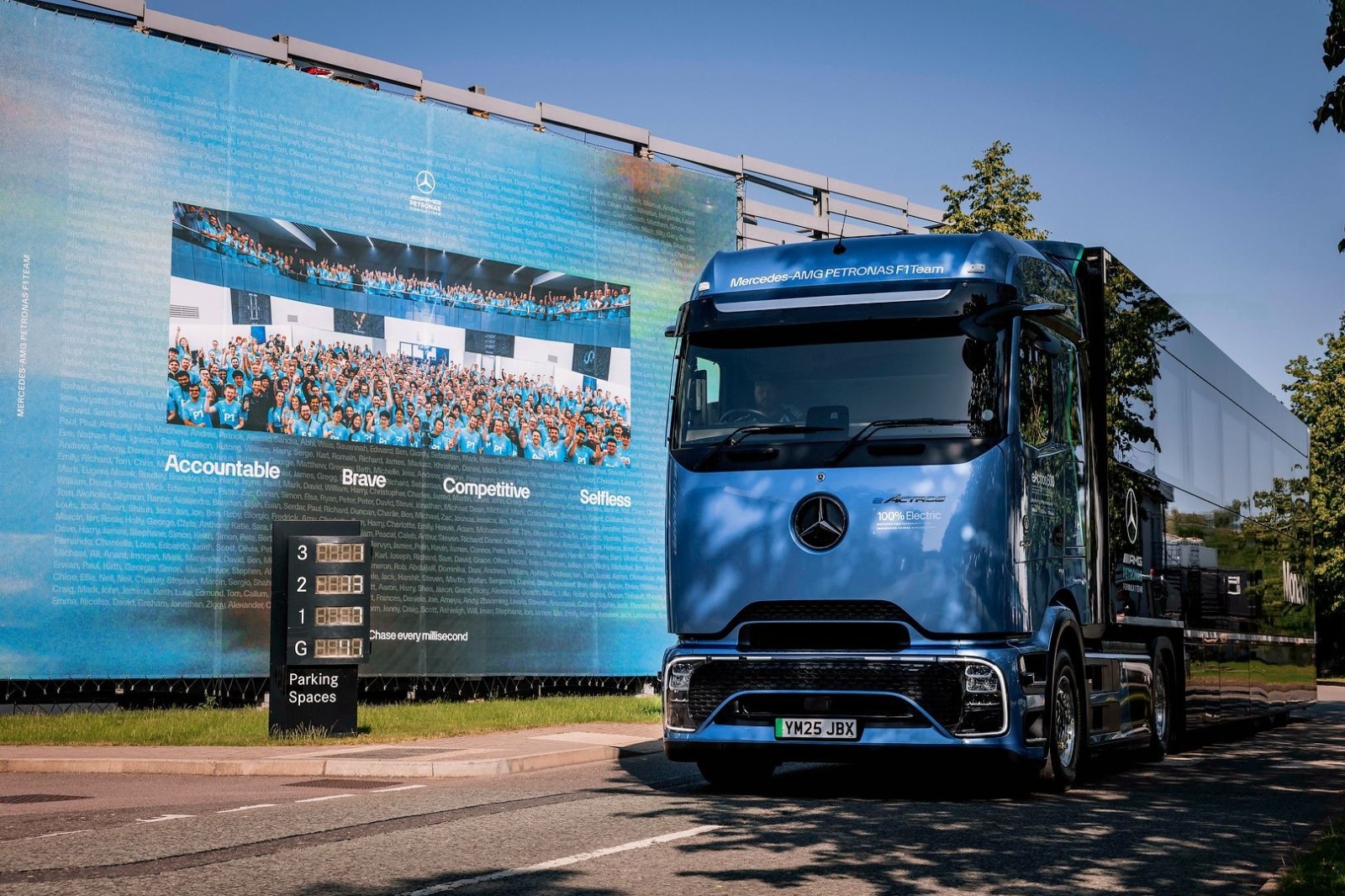
Additionally, Formula 1 has been working to reduce travel emissions by increasing investments in sustainable aviation fuel and expanding remote operations. This has led to a decrease in the amount of freight shipped to each race. More teams are also switching to sustainable fuel for their trucks, while Formula 1 has started investing in sustainable maritime fuel for its sea freight.
Following successful trials at the 2023 Austrian Grand Prix, Formula 1 has now implemented renewable energy at all European races for its paddock operations. This is done using a combination of solar power and HVO (hydrotreated vegetable oil).
Future Strategies for Sustainability
Looking ahead, Formula 1 Management (FOM) plans to further reduce emissions by basing more equipment in regional hubs rather than transporting it back and forth from the UK. It is expected that 50% of Formula 1’s current broadcast and related freight will be removed from air transport by 2030. For 2026 and beyond, the plan to twin the Montreal and Miami races is anticipated to bring additional savings.
Ellen Jones, head of ESG at Formula 1, emphasized the importance of sustainability in every decision the organization makes. She stated, “By doubling the sport’s investment in sustainable aviation fuel (SAF), making our first investment in sustainable maritime fuel, and continuing to work closely with promoters, teams and partners, we are driving further emissions reductions while accelerating the adoption of the latest technologies.”
“These actions demonstrate our continued determination to lead through sustainable innovation. As we move towards our net zero by 2030 goal, the Future Race Operations Programme will deliver further significant reductions in the years ahead, alongside the full impact of calendar rationalisation, which will come into effect from the 2026 season.”
“Together, these initiatives show that sustainable operations are not only possible at a global scale, but can be delivered without compromising the performance, ambition or spectacle that define Formula 1.”