Pat O’Brien has worked with hundreds of patients with dementia. She’s been smacked, punched and abused, and she’s comforted tearful and distressed elderly people as they struggle to accept the basic but vital support they need. She’s also witnessed firsthand the heartbreaking reality of children providing their parents’ personal care for the first time.
‘There are people who have had a long day at work, and they are dreading going home, because they know they have to wash the intimate areas of a parent, something they never imagined they would have to do in their wildest dreams. It is demanding, challenging and very upsetting,’ says Pat, from Cambourne in Cornwall. With 31 years’ experience as a physiotherapist working with people with dementia and other neurological conditions, she knows how difficult something as simple as bathing can be. The experience can leave patients frightened, humiliated or cold, despite carers’ best efforts.
An essential task
‘If you don’t wash somebody properly, they’re going to start to smell, and you can get skin breakdown and painful infections,’ Pat explains. ‘Keeping on top of somebody else’s hygiene needs is really important for their dignity and respect – it’s a basic human right.’ Unfortunately, the act of undressing someone can often trigger their fight or flight system. And for bed-bound adults, carers often struggle to keep patients comfortable, dignified and warm using only towels and soapy water – or worse, a quick wet wipe wash – triggering distress and aggressive behaviour, says Pat, 66.
‘With dementia, it’s about keeping people in a calm emotional space, rather than agitating them by trying to remove their clothes to give them a wash. It’s about being sensitive to the person and working out why they are resisting.’ Pat recalls one gentleman who refused care until she realised the wardrobe door was open. He had been in the army, and the lack of order unsettled him. Another wandered the corridors saying he ‘didn’t know where to put it’ – until Pat realised he was searching for the toilet.
‘Understanding these small idiosyncrasies allows you to build a genuine connection.’
‘They are often faced with having their intimate areas washed by people they perceive as strangers, and before long they are labelled as ‘difficult’, when actually their behaviour is understandable. ‘There’s very little you can do to preserve the dignity of a large 80-year-old man who needs to be washed in bed using nothing more than a towel. How are carers meant to keep that person warm and dignified with just that? ‘It drove me to despair. I used to think – how is it that in the 21st century we can put a man on the moon, but not solve this problem?’
Creating a solution
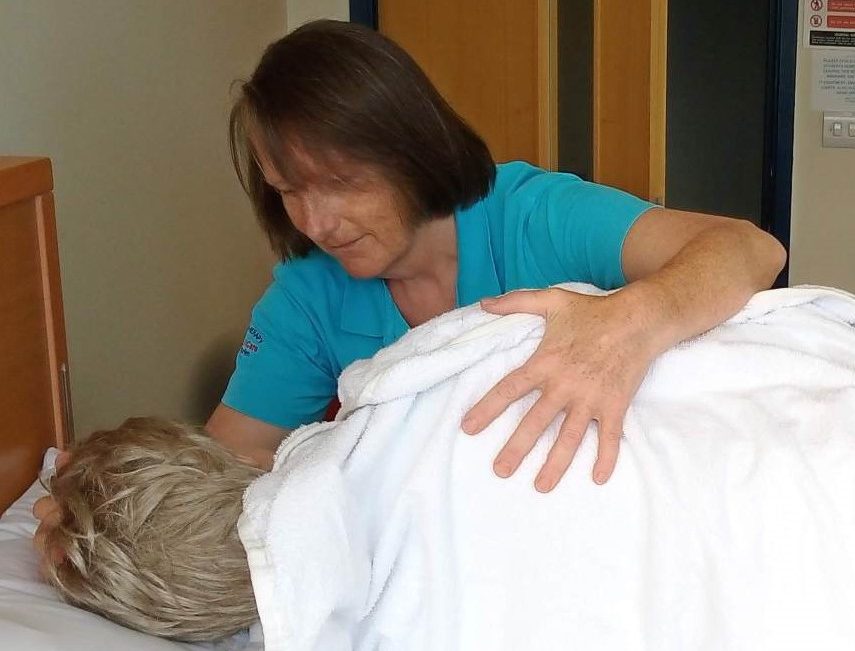
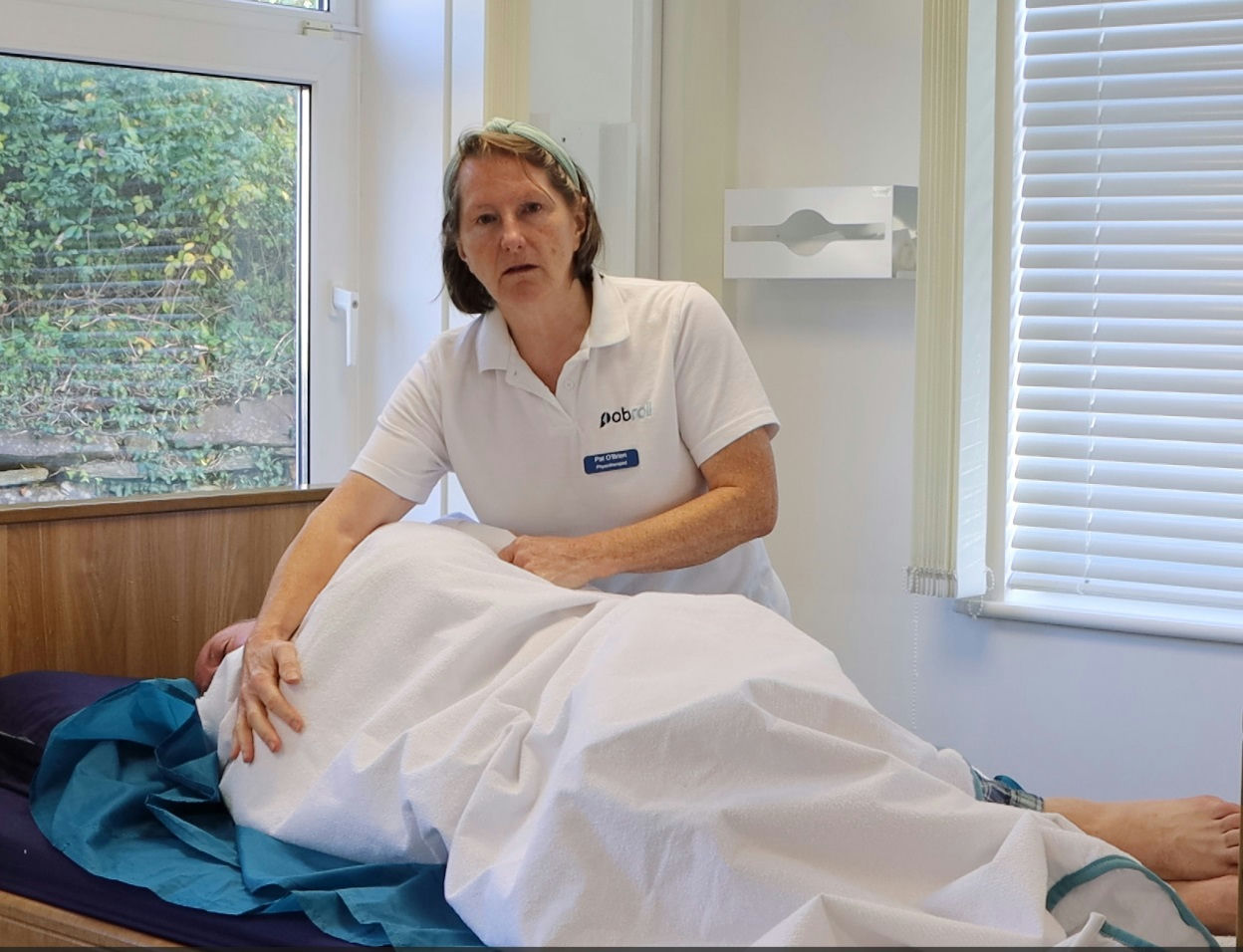
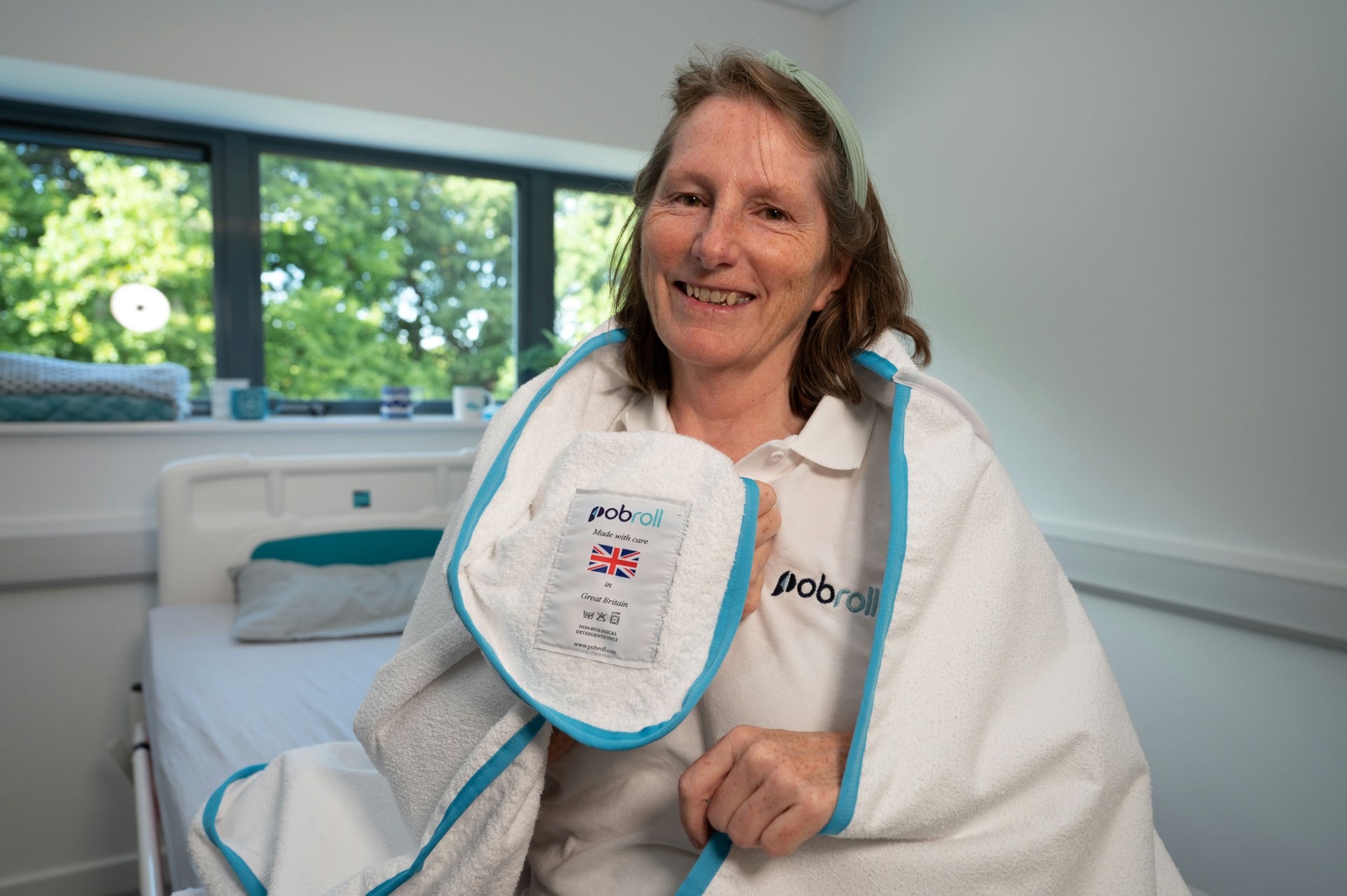
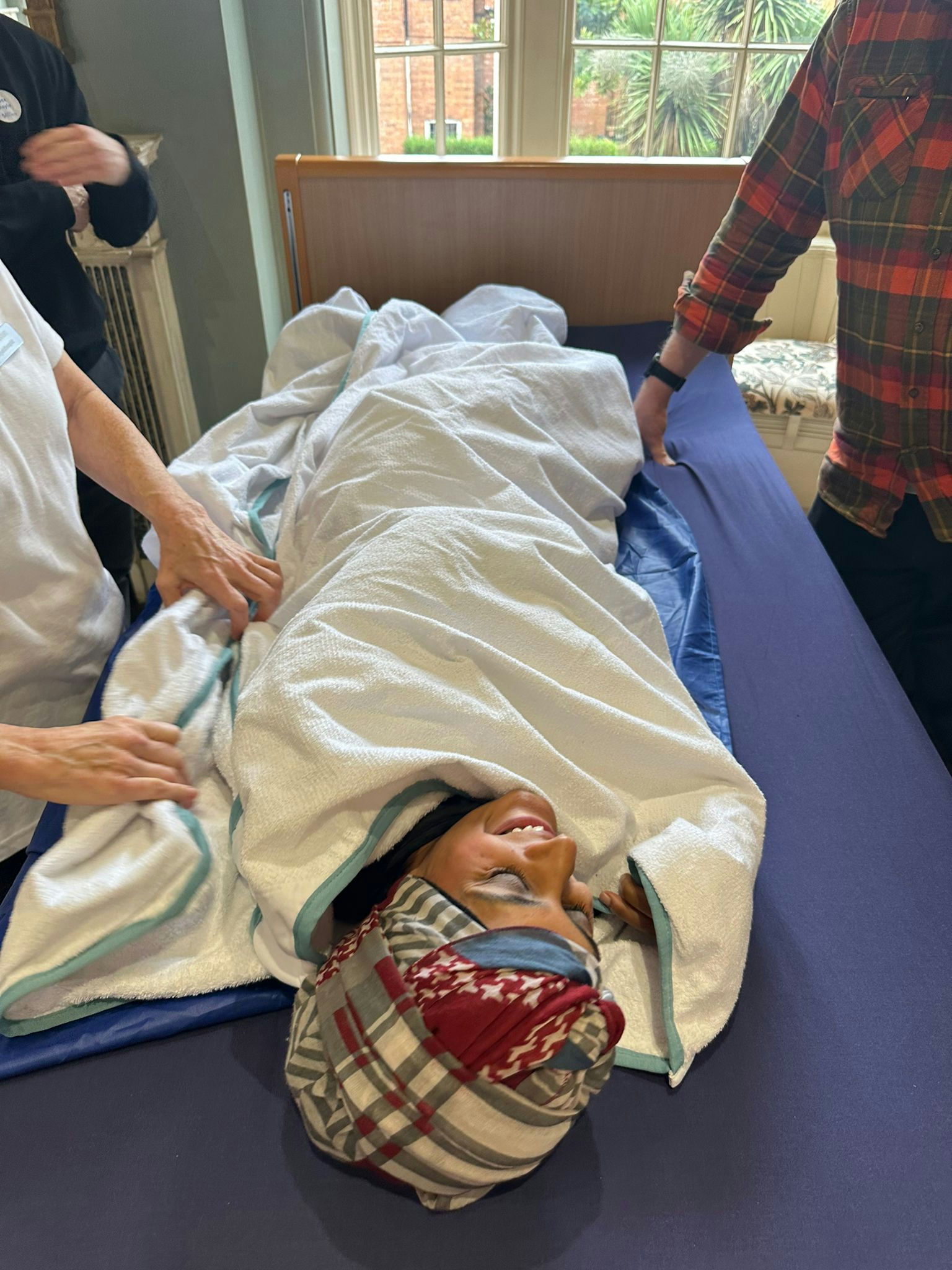
So, in 2018, Pat developed her own solution and created a rectangular, sleeping bag-like towel the size of a single bed. A patient could be rolled onto it, staying warm and covered while carers wash one part of the body at a time, and it is totally waterproof, to keep the sheets and mattress dry. Calling it the Pobroll, after her own name, the idea was for it to help patients feel contained, whether at home or in care.
‘It creates a warm environment which helps prevent distress. It also reduces embarrassment,’ says Pat, who was a member of the first-ever women’s rugby squad to play a club match at Twickenham. ‘It’s simple, but it allows carers to engage more calmly. If behaviour is triggered by embarrassment, cold or the experience of undressing, then it’s about reducing that. The idea is that they are swaddled like a baby and feel safely held.’
A friend of hers, whom she calls ‘Debbie’ to protect her family’s privacy, asked Pat for her new creation when her mother was diagnosed with Alzheimer’s disease. Debbie and her sister had promised to keep their mother at home, but found bathing increasingly difficult, as their mum would resist, pulling her clothes back on.
‘The situation became overwhelming. Both sisters were extremely distressed, and worst of all, it was damaging their relationship with their mother. All three of them would end up in tears, and their mum began to see them as a threat,’ remembers Pat. ‘They were close to deciding they would need to move her into a care home to preserve their relationship – then they remembered the Pobroll I’d given them.’ It proved transformative – their mother remained calmer, and the sisters felt more in control, says Pat.
‘Debbie later told me she was able to care for her mum at home until she died three months later. They were incredibly grateful.’
A significant impact
Pat began introducing her creation to private homes and care providers in 2020 after delays caused by the pandemic. She saw its potential early on while caring for a challenging patient with complex needs.
‘He was very vulnerable, and attempts to carry out personal care would trigger panic,’ Pat remembers. ‘He could become physically aggressive and so distressed that he would vomit. It was extremely challenging for everyone involved. Some carers were reluctant to work with him because they felt unsafe. He was often being physically held during care, which is distressing for everyone. So one day, I decided to try the Pobroll. We wrapped him in it, and although he reacted at first, very quickly he calmed down and lay still. A nurse said to me she felt safe for the first time and that he wasn’t hurting himself. It was a turning point.’
Now Pat is working with the Alzheimer’s Society’s Accelerator Programme, which supports people in developing innovative products to help those with dementia, to introduce her creation to as many people who need it as possible.
Knowing that dementia is a cruel and unrelenting disease, she offers simple but important advice for those supporting a loved one with the condition.
‘It is very hard for families. Often, there is a tendency to correct or challenge – for example, if someone doesn’t recognise a person in a photograph. But that can increase anxiety and remind them of what they are losing. Instead, distract, reassure and be gentle. People can sense genuine kindness,’ she says.
‘It’s about meeting the person where they are – not where you want them to be. Letting go of Mum or Dad 10 or 20 years ago is incredibly difficult, but essential. If you treat people with kindness, gentleness and respect, you won’t go far wrong. It will still be painful, but it will be better. In the face of a disease that only moves in one direction, acceptance is key. Focus on how the person is today, and try to create the calmest, most comfortable space you can for them.’
When my husband started repeating himself, I knew something was very wrong
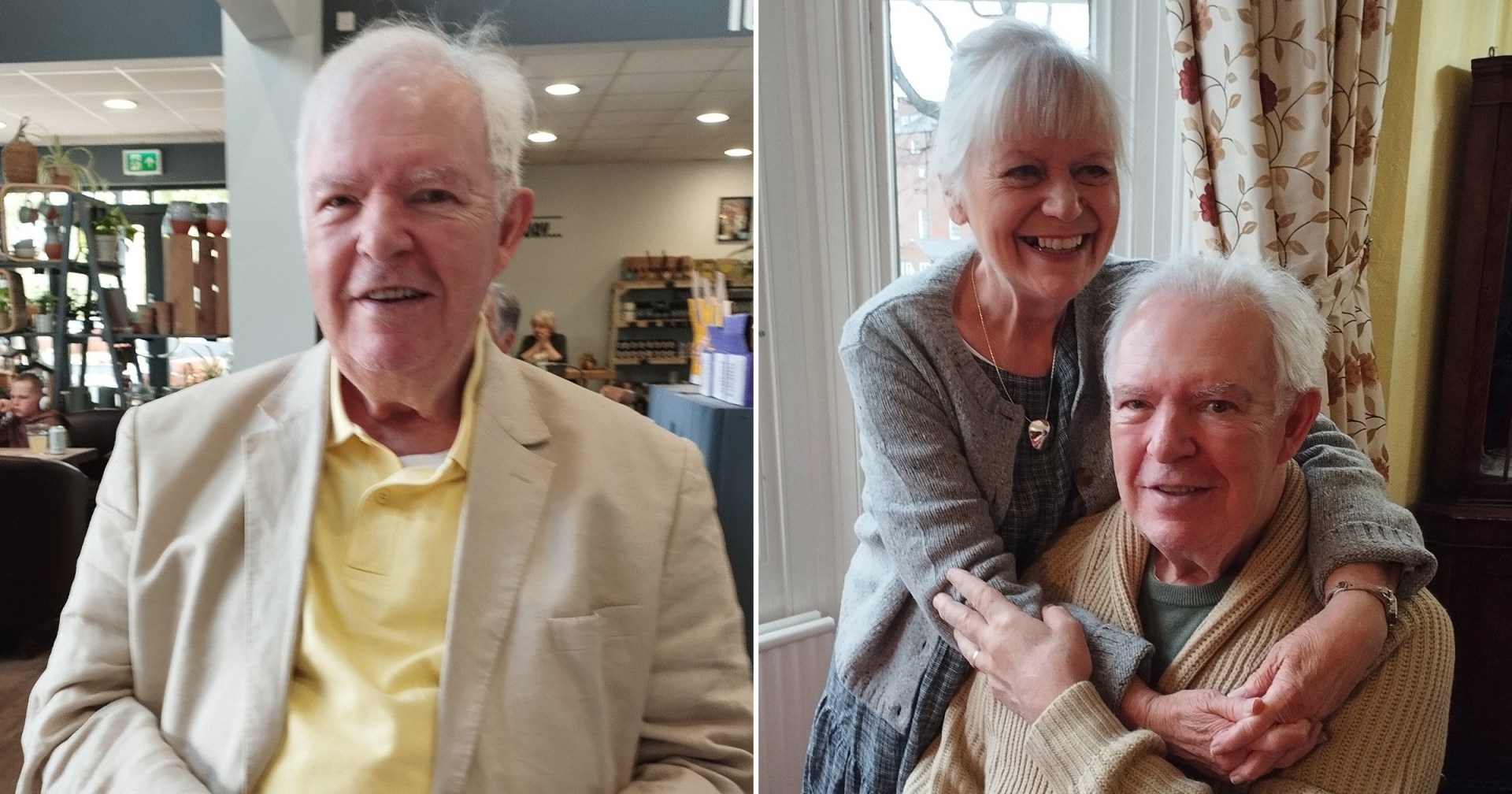
Jane Jennings shares her experience of discovering her husband, Colin, had been diagnosed with Alzheimer’s disease.
‘There’s never a pen in this house!,’ grumbled my husband, Colin, as he rushed to the shops. We had plenty of pens; but Colin was dashing out, yet again, to buy another huge bundle of biros – as many as 50 at a time. I sighed. This bizarre behaviour was common at this point – because Colin had been diagnosed with Alzheimer’s disease at just 68 years old.
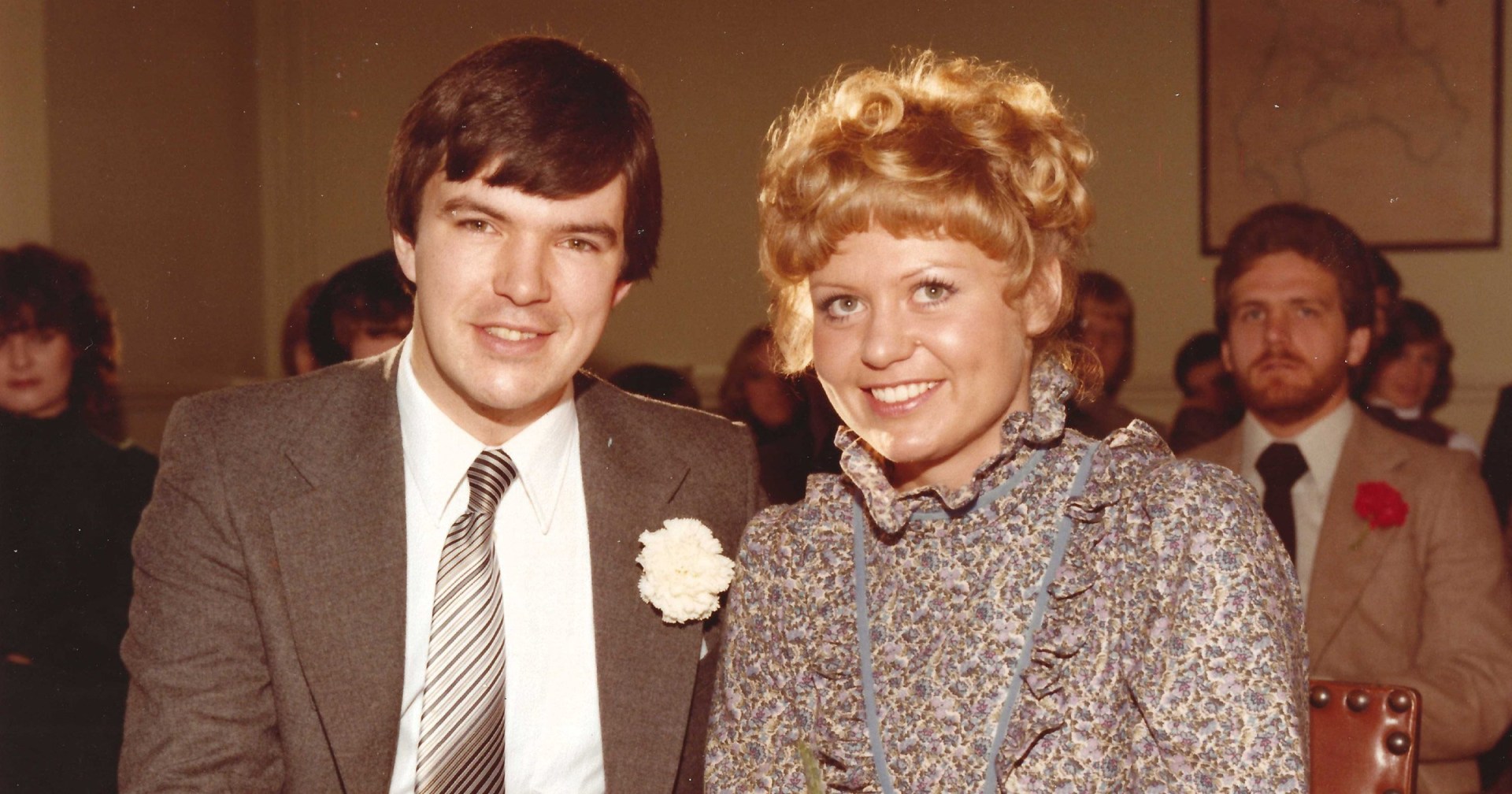
I met Colin one Sunday in April 1978 at my local pub. I liked everything about him; he was clever and attractive, with a lovely smile and a great sense of humour. Eight months later, I married him. I put my career on hold because we wanted to start a family; but this was not to be. I couldn’t conceive. We tried IVF, which failed – I was later diagnosed with severe endometriosis and then suffered a premature menopause.
But we got past it together. As the years rolled on, life was good – we were best friends and fancied the pants off each other –until 2021, when something happened that changed our lives forever. At this point, we were living peacefully in France, having moved there when Colin retired; when one day, wholly uncharacteristically, when he was around 65, Colin suddenly started repeating himself. Every time he said something, he would say it again a minute or two later. He got to the point where he kept on repeating whatever it was he had first said, as though he was stuck in a groove.
He’d also stopped processing anything I was saying – he’d just stare at me as though he couldn’t understand. Our conversations became entirely cyclical. Eventually, we went for tests and an MRI scan; which showed Colin had Alzheimer’s. To say I was devastated would be an enormous understatement. I knew how serious the diagnosis was – both my parents (and, later, my brother) died of complications from Alzheimer’s. Colin, on the other hand, again just shrugged it off. In fact, he was in complete denial.
At first, the avalanche of odd instances – like rushing out to buy endless packs of biros – seemed almost laughable. Until he started getting up at 3:00am to make breakfast; lighting all four jets on the gas hob and leaving them lit. Not laughable. And persuading him back to bed was all but impossible, given Colin had suddenly become uncharacteristically angry. He became violent, smashing glasses, ornaments and crockery. But Colin is not – and never has been, in any way – a violent man.
If, during the day, he tried to leave the house, I could not calm him. But he was at risk out on his own. Once, on a trip back to England, he disappeared to fetch something from our car and didn’t come back for four hours. When, eventually, he returned it was in a state of collapse. Back home in France, he deteriorated further. Nurses were coming in three times a day to check on him. He was on some form of tranquillizer to keep him calm; but nothing helped. He only got worse.
Colin was now leaving the house at all hours of the night. I became afraid to sleep. I tried locking all the doors and windows and hiding the keys – whereupon he smashed a window. Anger had turned into physical violence with me whenever I attempted to check him. But I knew it wasn’t Colin attacking me; it was Alzheimer’s disease attacking him.
Colin and I have lost everything; our home, our life together, everything we have lived and worked for.
On 1st January 2023, just as we were sitting down to lunch, he suddenly stormed out of the house. The police brought him home the following morning – he had overturned our car, totally writing it off. By some miracle Colin was not injured; nor, mercifully, was anybody else. But we’d reached the end of the line, and he was admitted to full-time care. Even with nurses coming in three times a day, I could no longer safely look after my husband at home.
Colin was very angry about going into care. He kept saying he was perfectly all right; but he had no self-awareness of his condition. For me, again, it was devastating. We hadn’t been apart for 46 years. In April 2024 I hired a private ambulance to bring Colin back to England, to a care home seven miles from the pub where we’d first met. I thought returning to my home territory where I still have friends and family would help us both; and it has worked out very well.
Now, Colin has stabilised. He is very settled in care and often tells me he is happy. I go to see him every day, and he is mostly calm and cheerful. Sometimes I take him out for coffee and cake. But he has no functioning memory, short or long-term. He still recognises me – but, although I try with all my might not to think of it, I know there will almost inevitably come a time when he does not.
The anger is still very much there; in the last year, Colin has suffered three episodes when he has been violent and difficult to calm. He doesn’t know where he is; the day of the week; the time on his wristwatch. Overall, he is still lovely – but he’s a different person.